
Alberta Slim
The remarkable story of Eric Charles Edwards—Canada’s yodelling cowboy, recording artist and travelling showman.
In the world of Canadian country music, some names are well known and well documented, while others remain less familiar to the general public. VinylCentric brings you one of those stories.
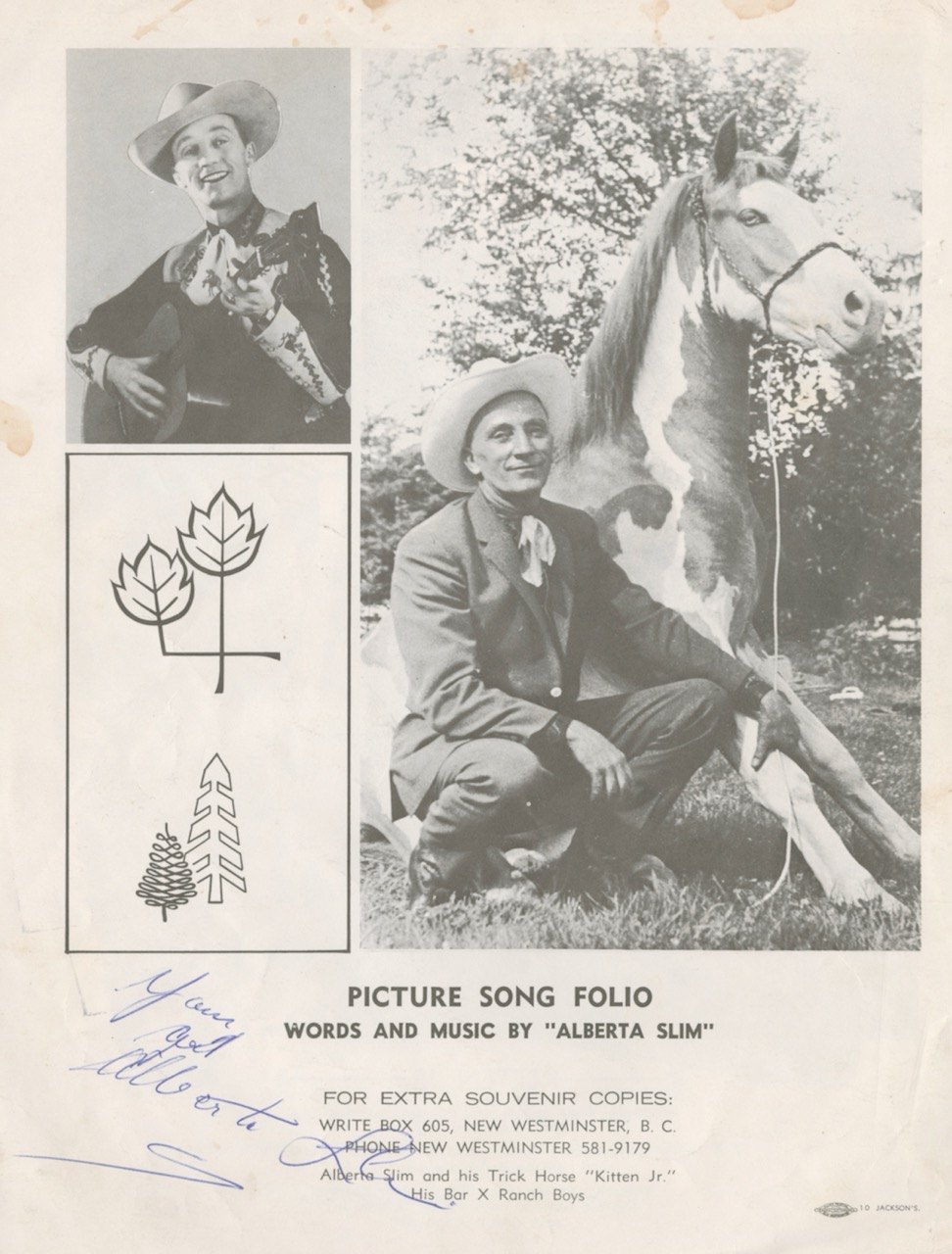
This story was developed from a file that was nearly lost when RCA cleaned house in Toronto. It included correspondence between Edwards and RCA, photographs and music folios. A fellow collector retrieved many of the files, including the one devoted to Alberta Slim.
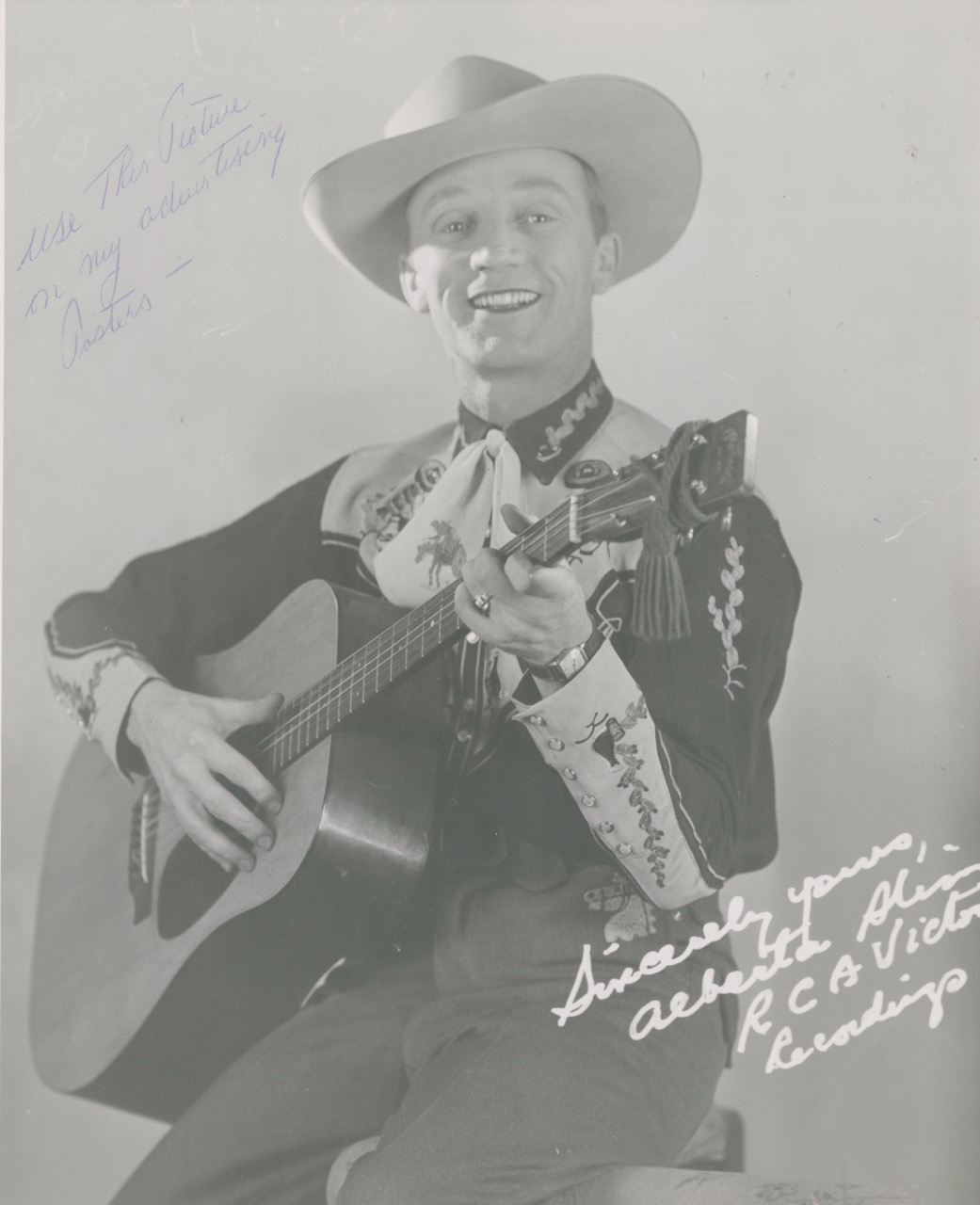
From Ranch Life To Radio
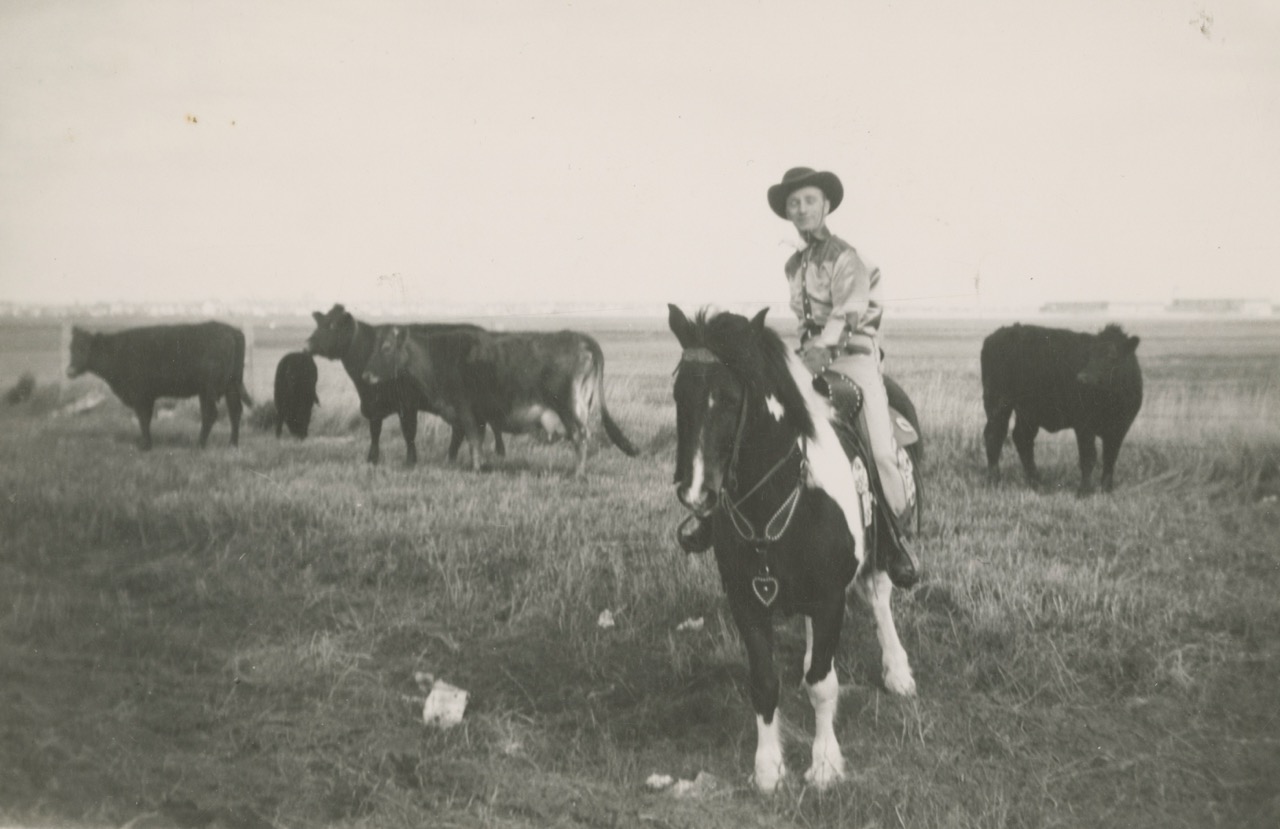
A Cowboy’s Apprenticeship
Alberta Slim was born Eric Charles Edwards in England in 1910. His family emigrated to Canada when he was about ten years old and settled on a ranch near Lloydminster. The family later moved to St. Walburg, Saskatchewan.
He grew up working alongside the cowboys on the ranch, learning to rope and wrangle and listening to their songs. At a young age he started singing himself. Eric Edwards wanted to write songs and sing, just like his idol Wilf Carter.
The Road To Radio
Times were tough on the ranch during the Depression, so Eric Edwards headed for the city to try his luck as a radio performer.
“Slim always had a hankering to sing on the radio, to make his own records, so he left the ranch and headed for the Big City where he took three lessons on the guitar, then hunted up a radio station—but no luck. They took his phone number, and Slim has been waiting to hear from them ever since.”
—Alberta Slim’s Circus Folio
In fact, Eric did get a radio engagement with CKCK in Regina in 1938. He had heard about a radio show sponsored by the owner of a local army-surplus store and made a point of meeting him. Eric clearly made an impression: the owner instructed his clerk to “dress this man” before sending him to meet the station manager.
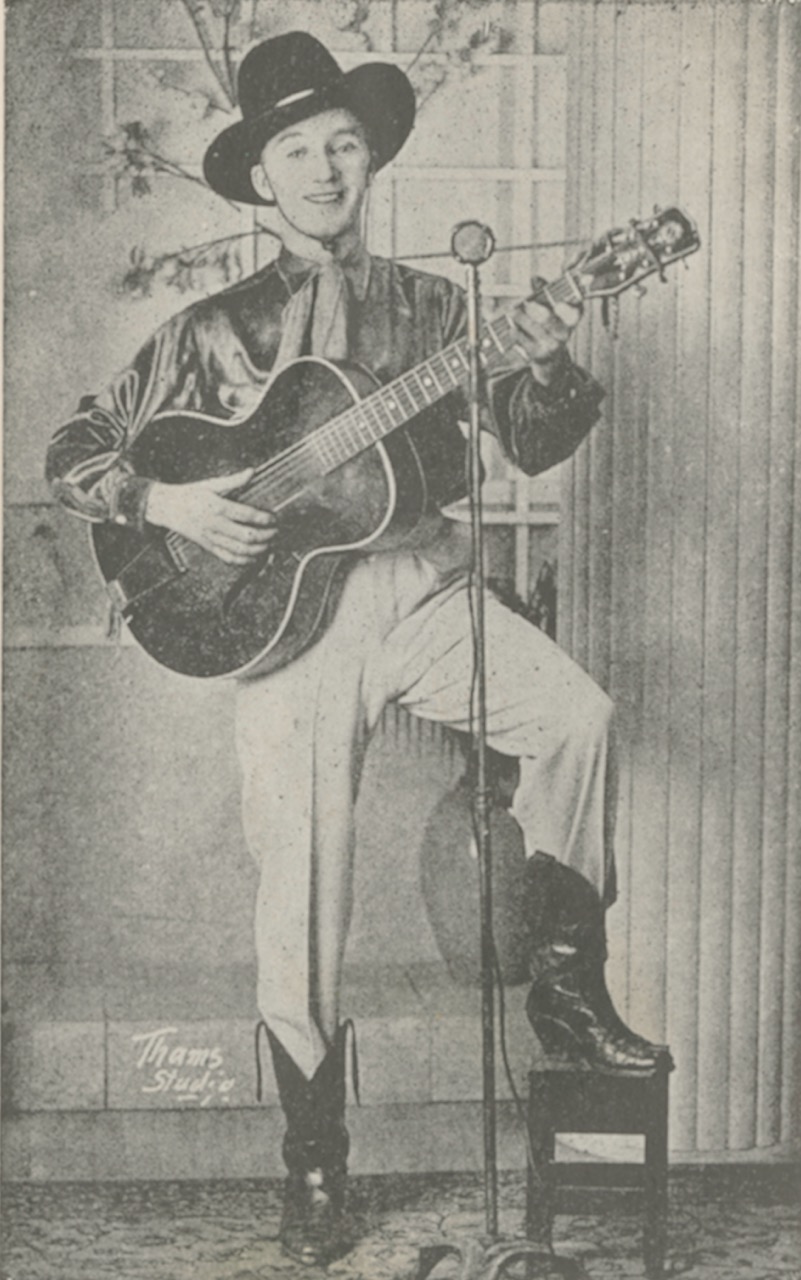
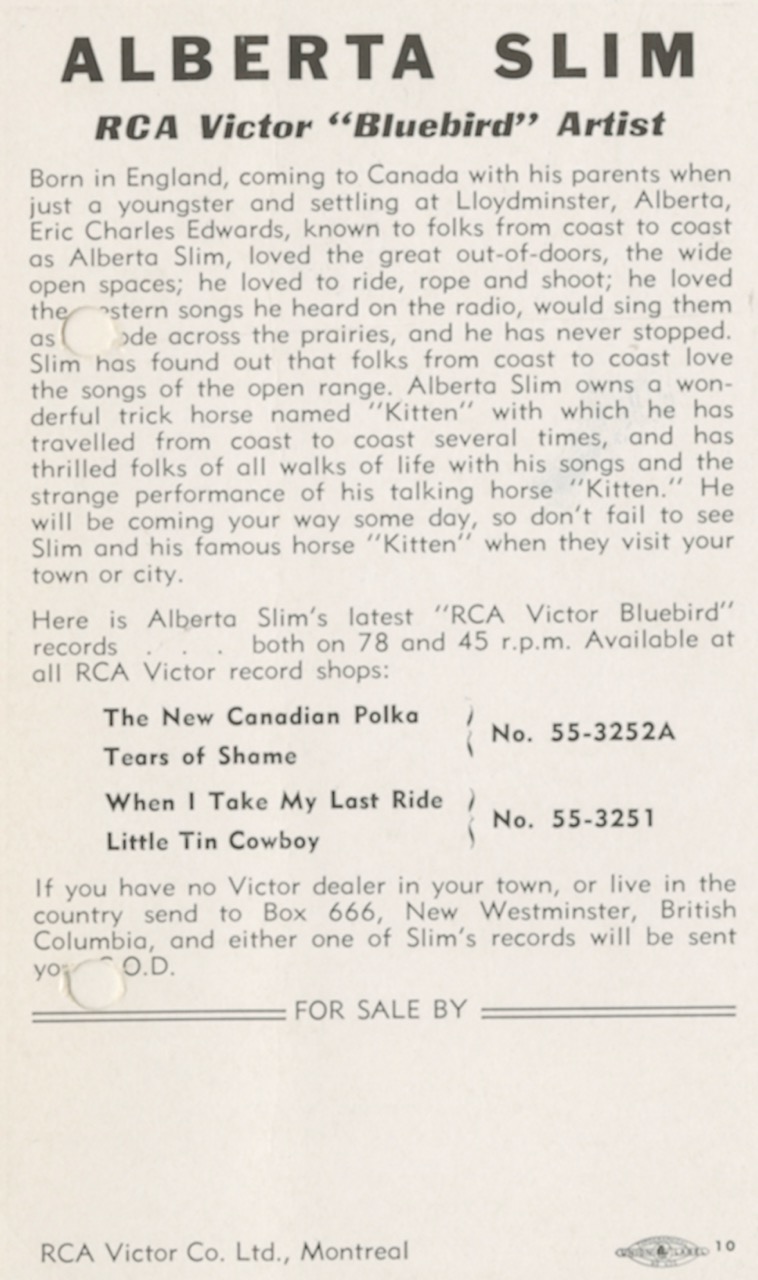
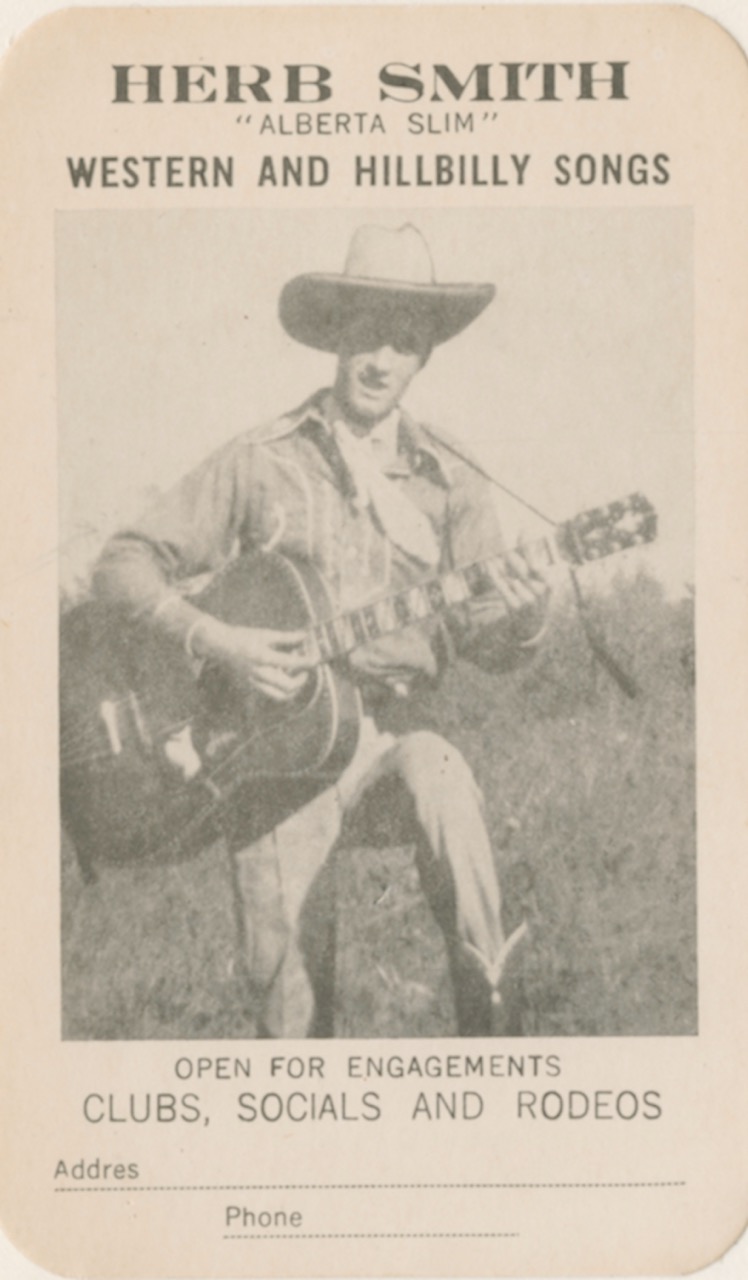
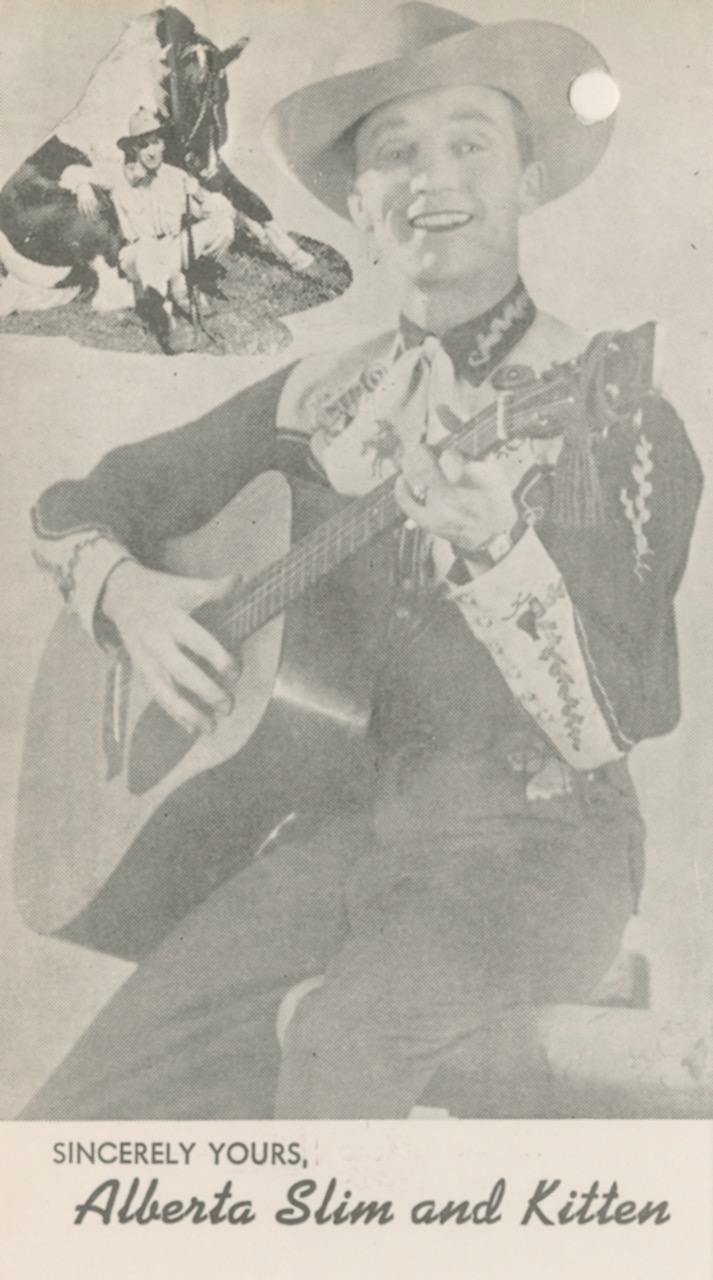
Radio programs were live performances, and performers were paid either very little or nothing at all. Payment came in the form of exposure and the opportunity to advertise personal appearances. Self-printed postcards such as these often brought in more income than the radio shows.
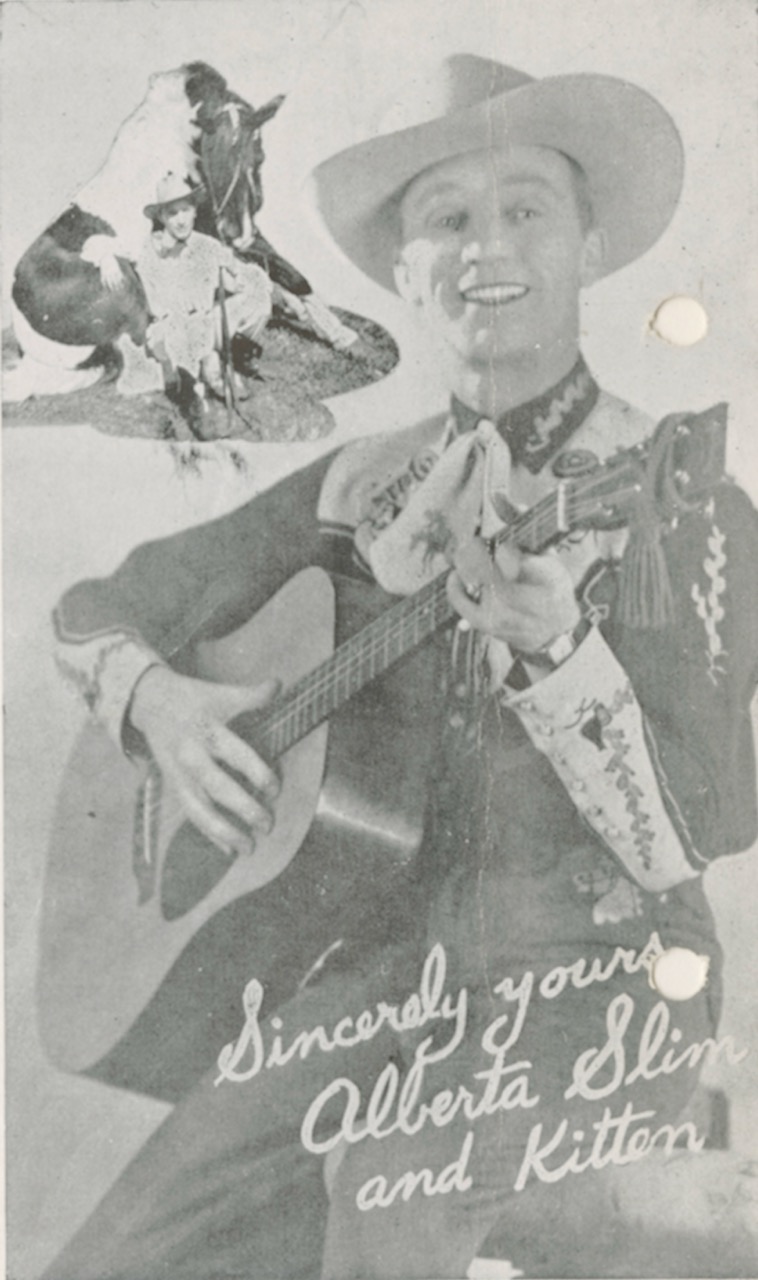
How Alberta Slim Got His Name
The inclusion of this postcard in the file has led to a puzzle. The name on the card does not match Eric Edwards, but the performer advertises as “Alberta Slim.” Edwards related the story of how he became known as Alberta Slim: a friend was enlisting and gave the very poor Eric Edwards his civilian clothes. Among the clothing was a shirt embroidered with the name Alberta Slim. Edwards wore the shirt when performing and became Alberta Slim, the yodelling cowboy. Was Herb Smith that friend—and the original Alberta Slim?
Across Western Canadian Radio
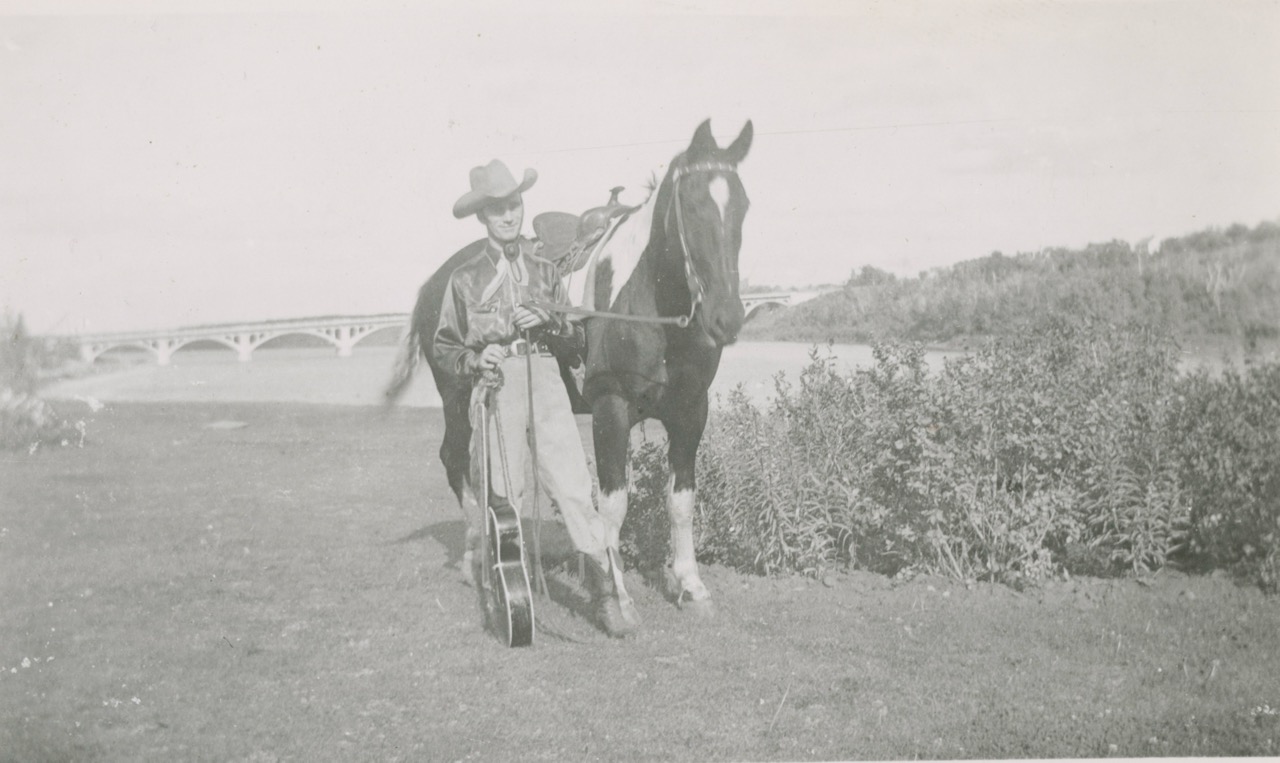
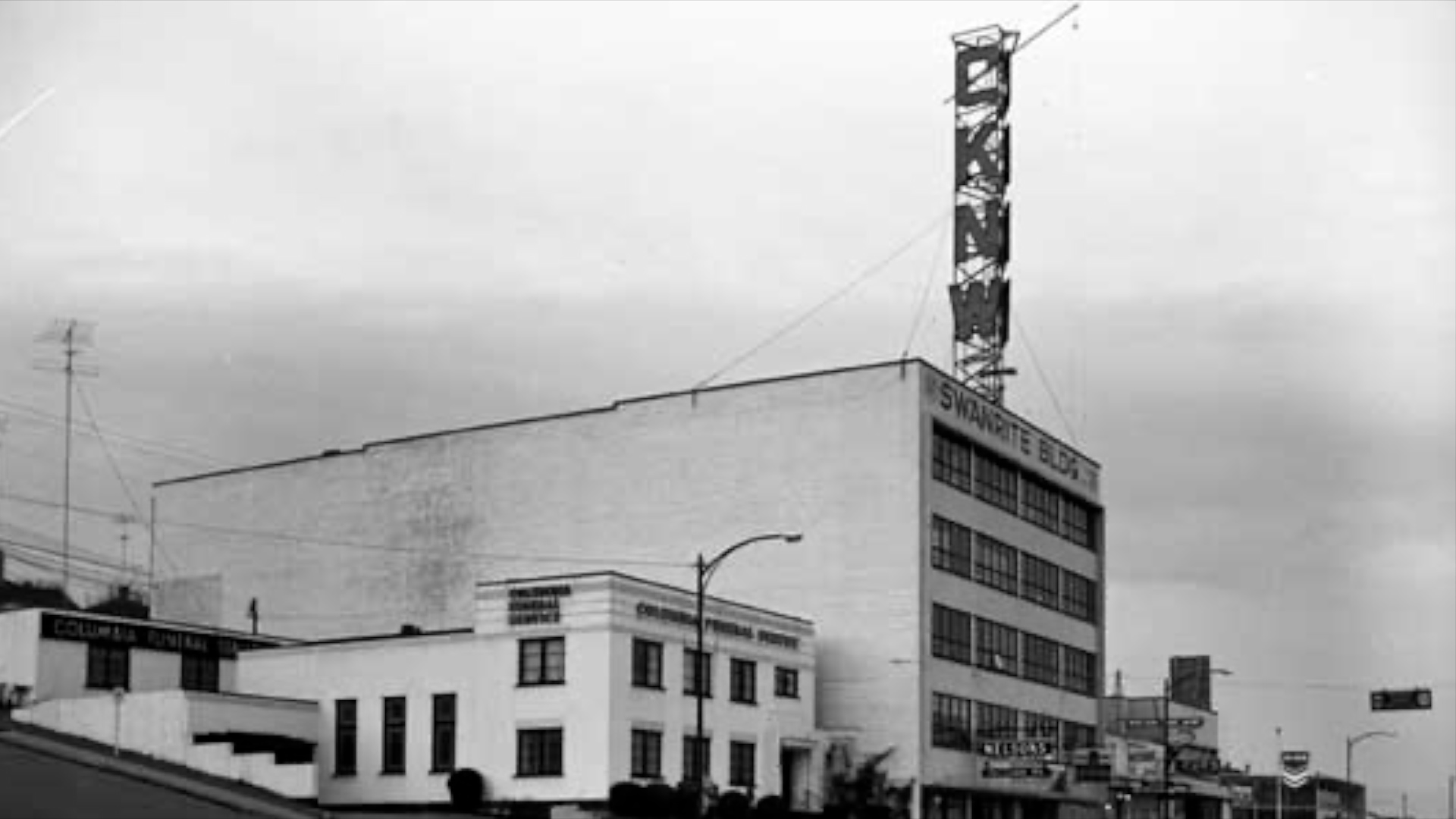
Between 1940 and 1947, Edwards worked at similar jobs with radio stations CFQC Saskatoon and CKRM Regina. His final move was to CKNW in New Westminster. Once settled in British Columbia, Alberta Slim continued to perform at jamborees and rodeos.
The Travelling Circus
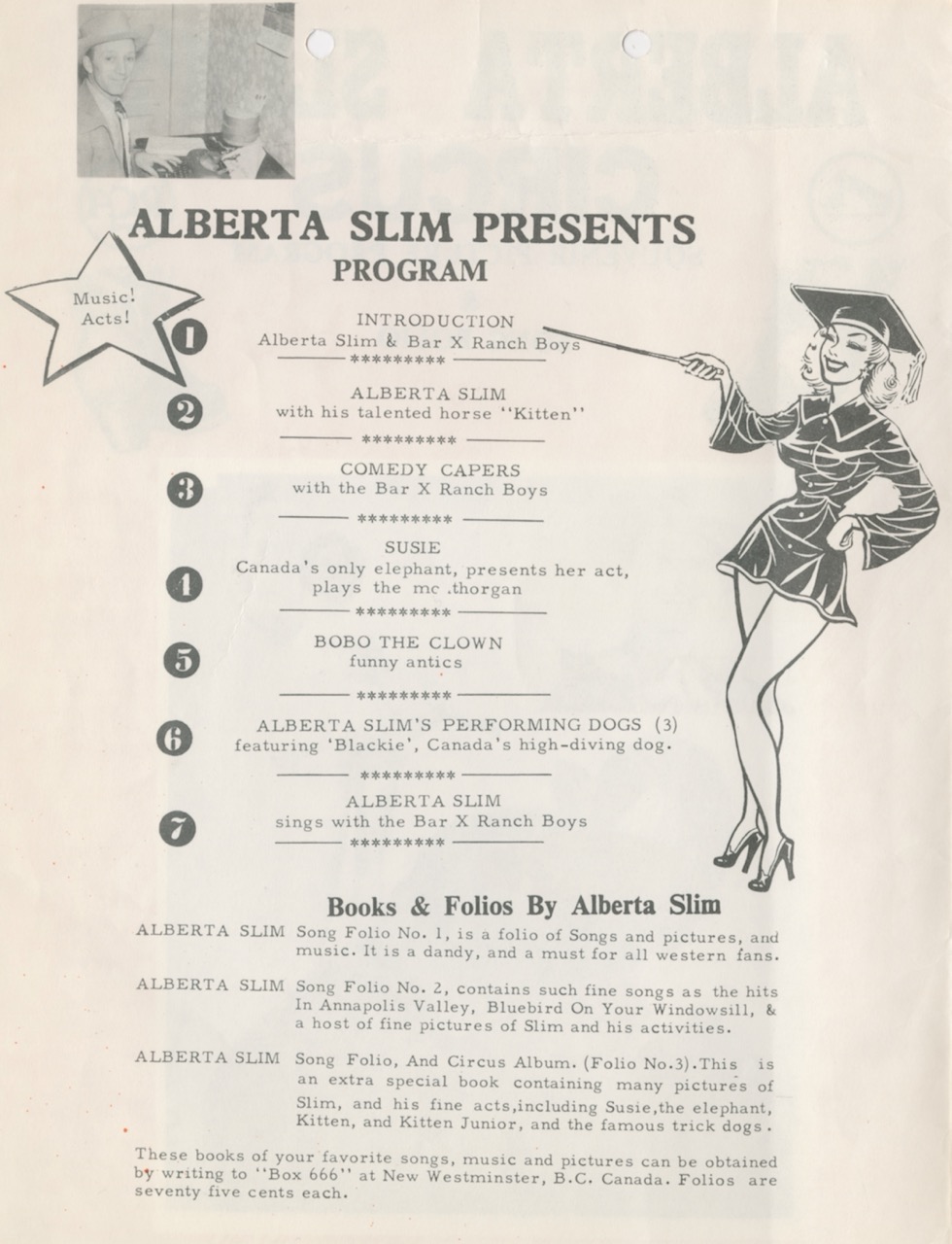
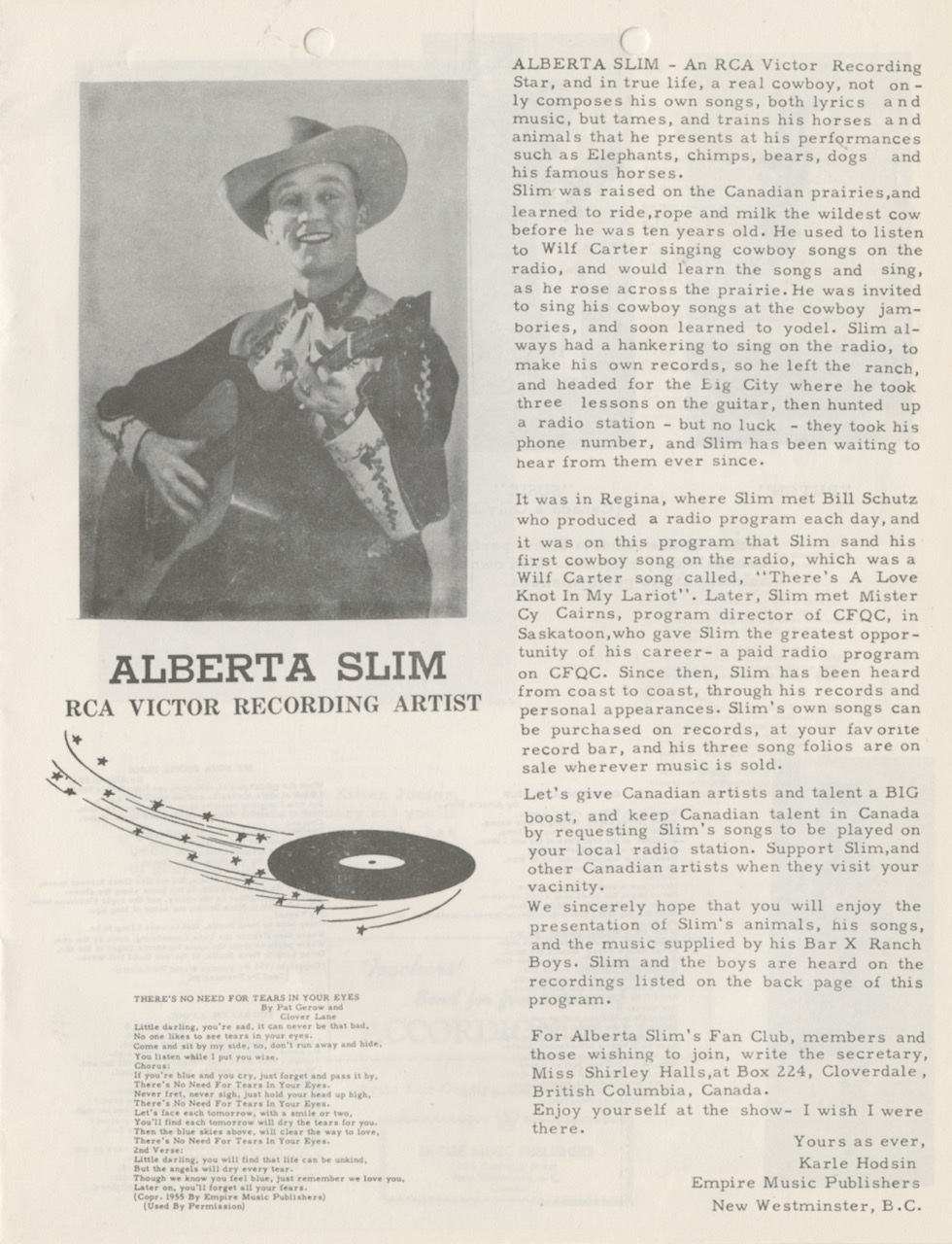
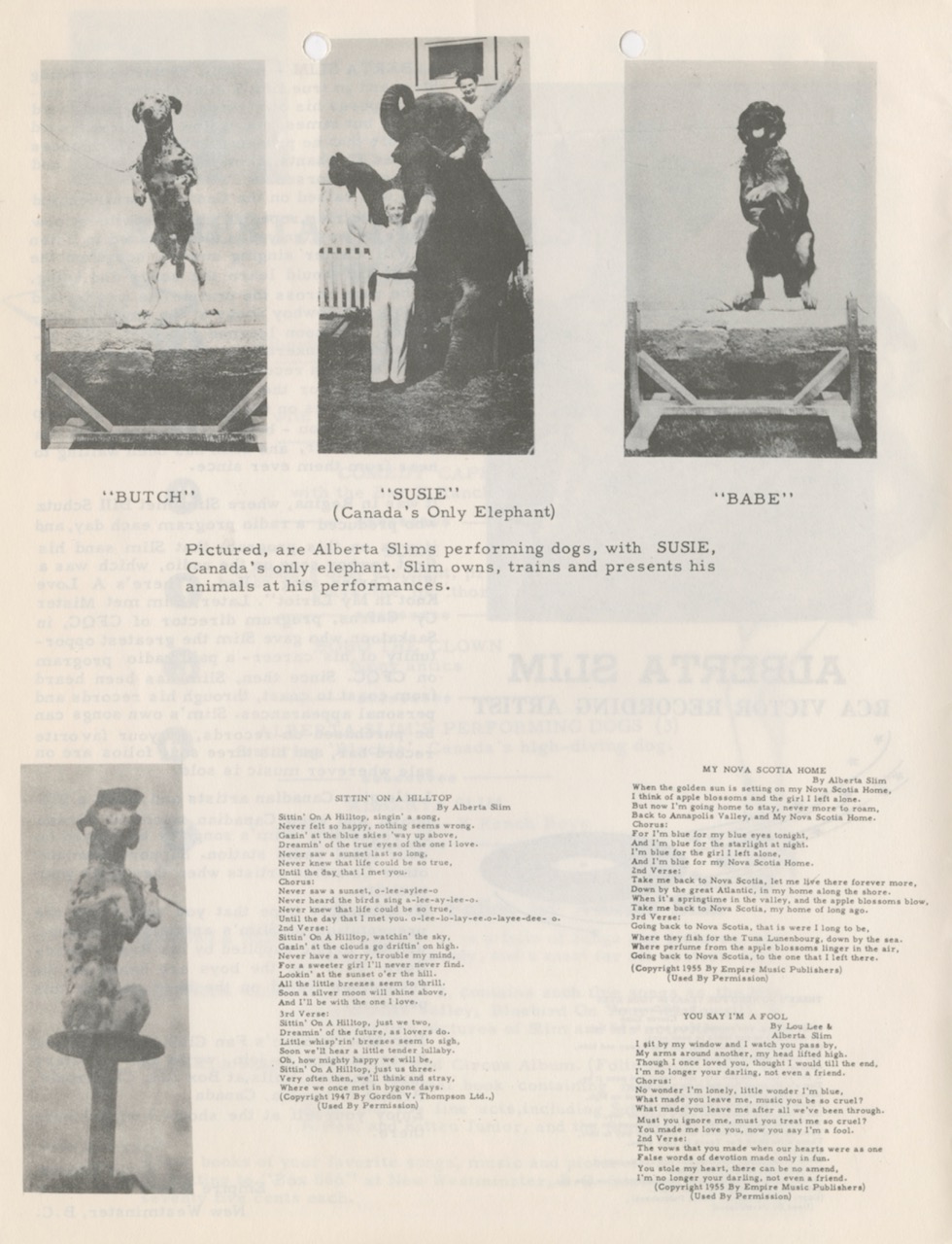
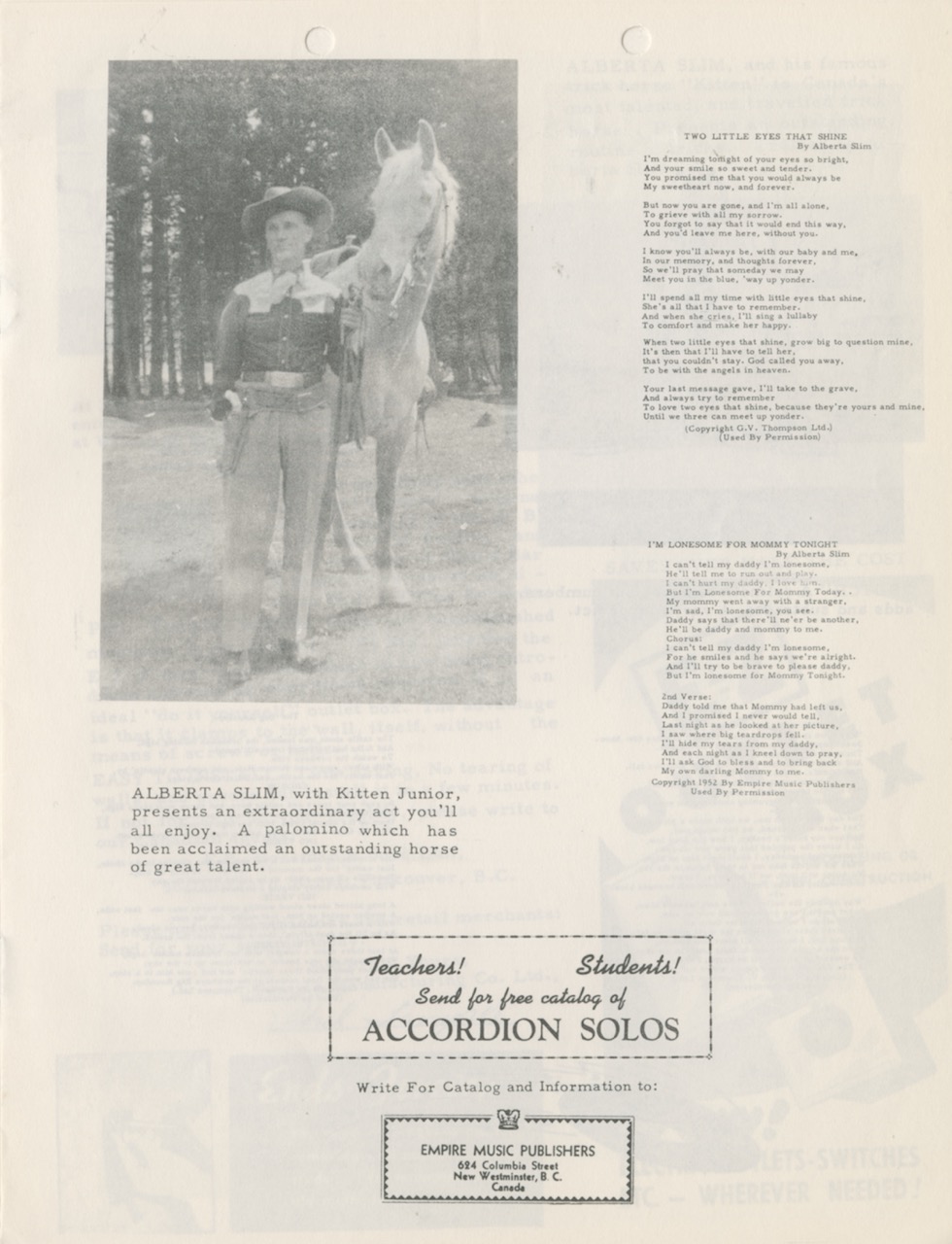
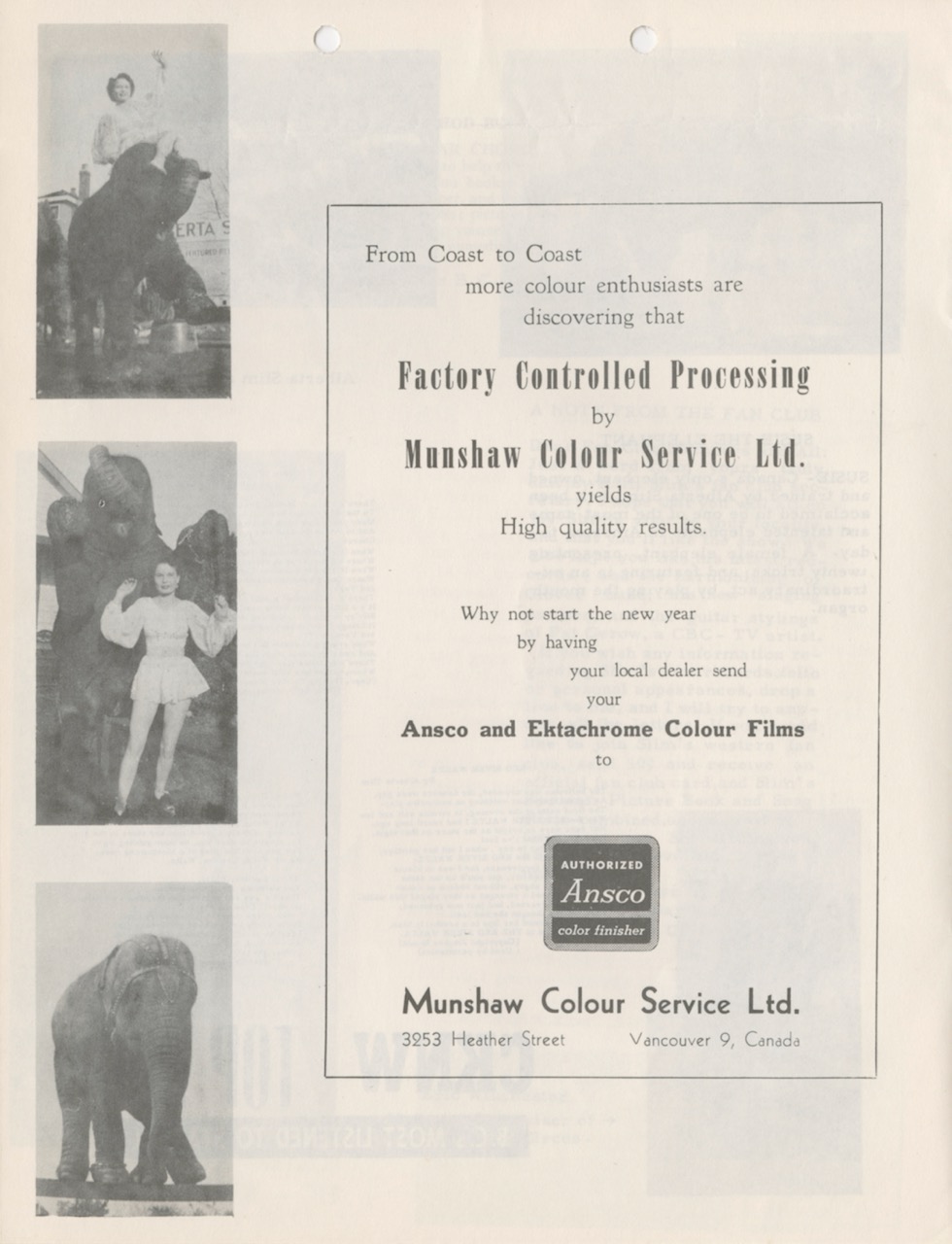
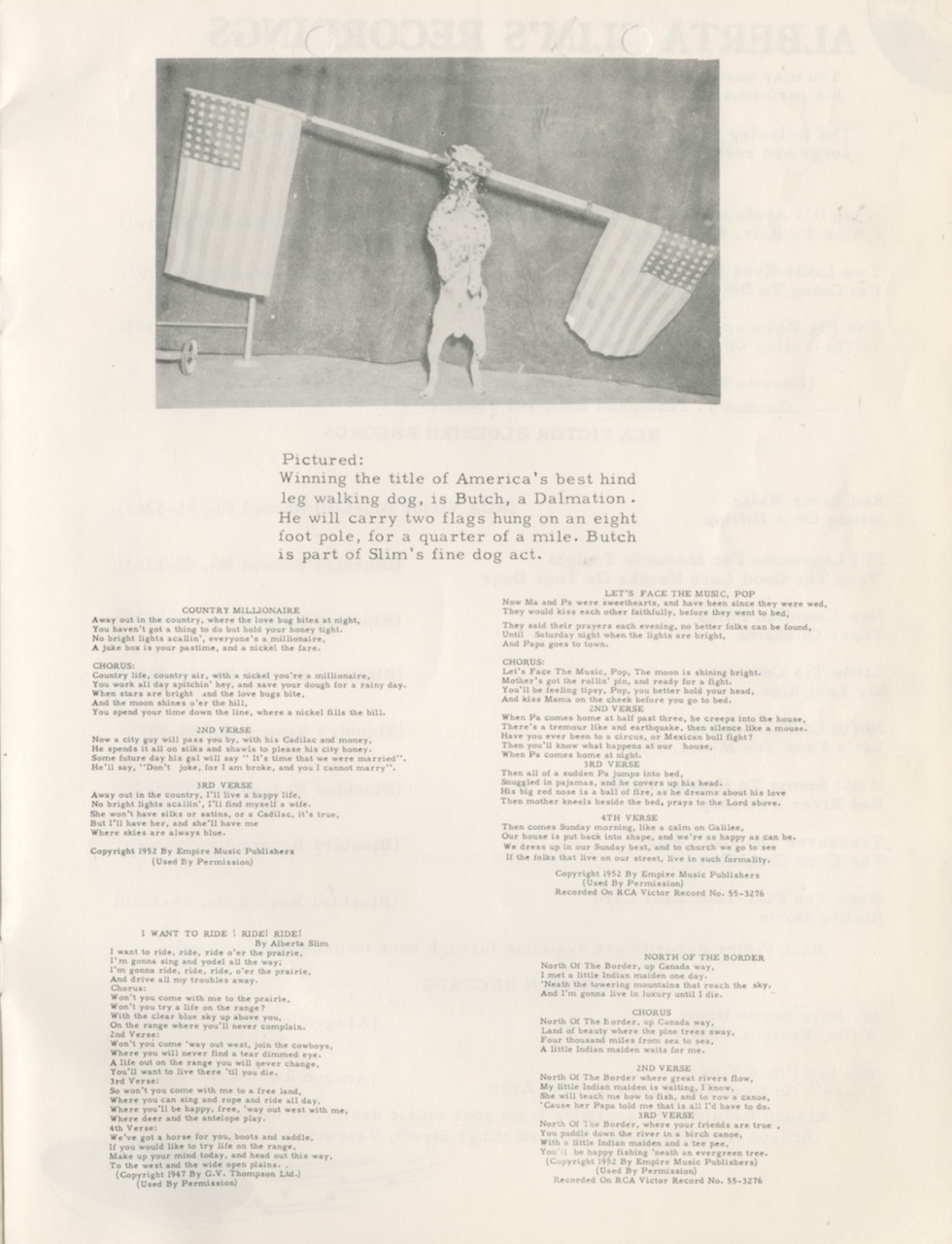
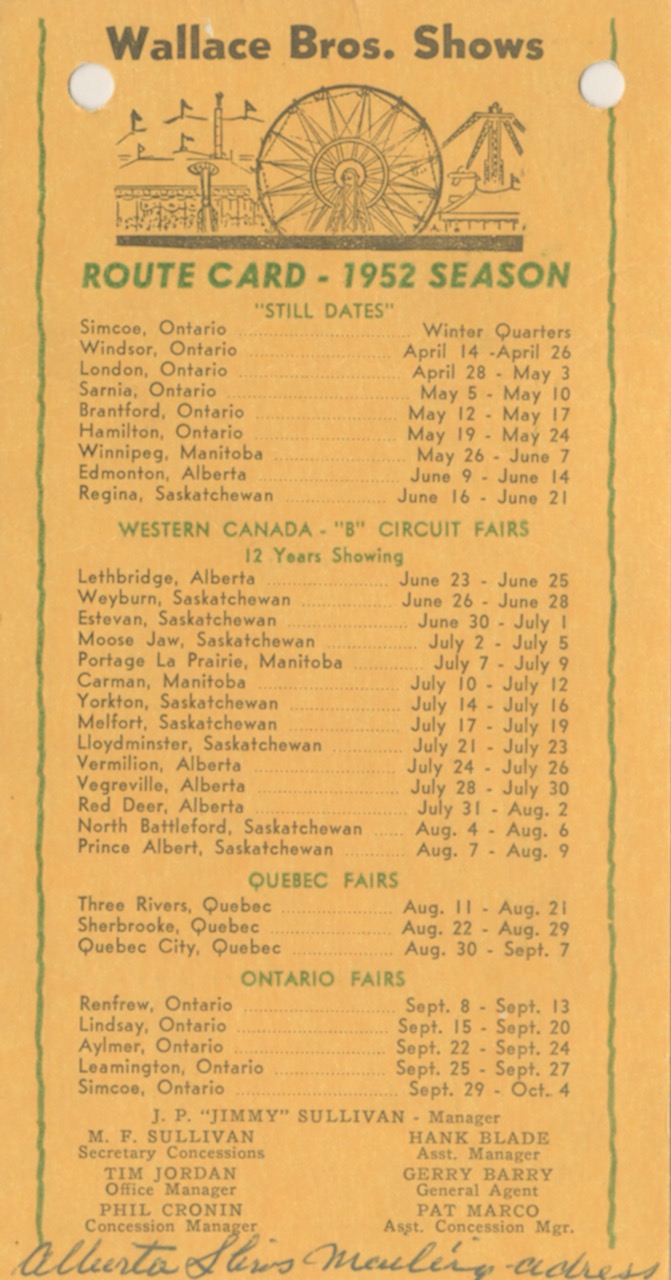
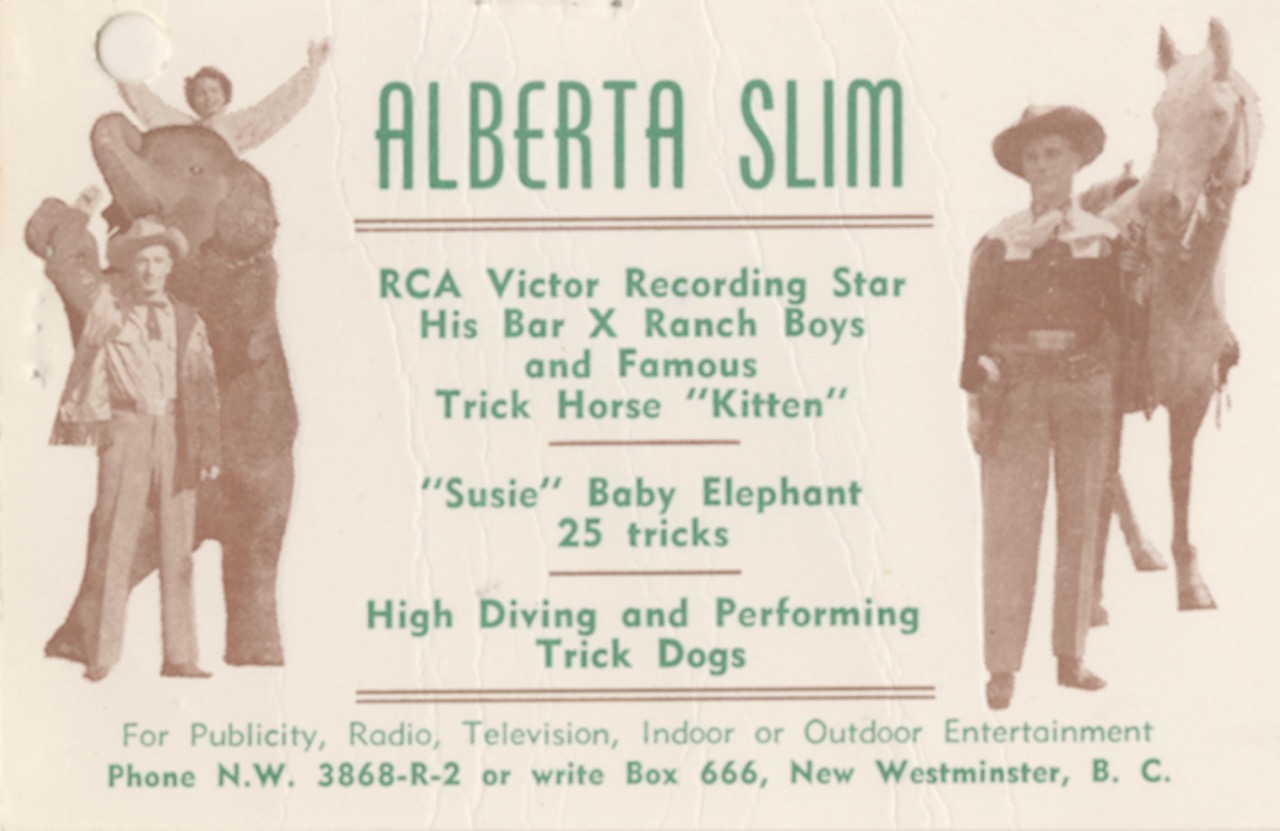
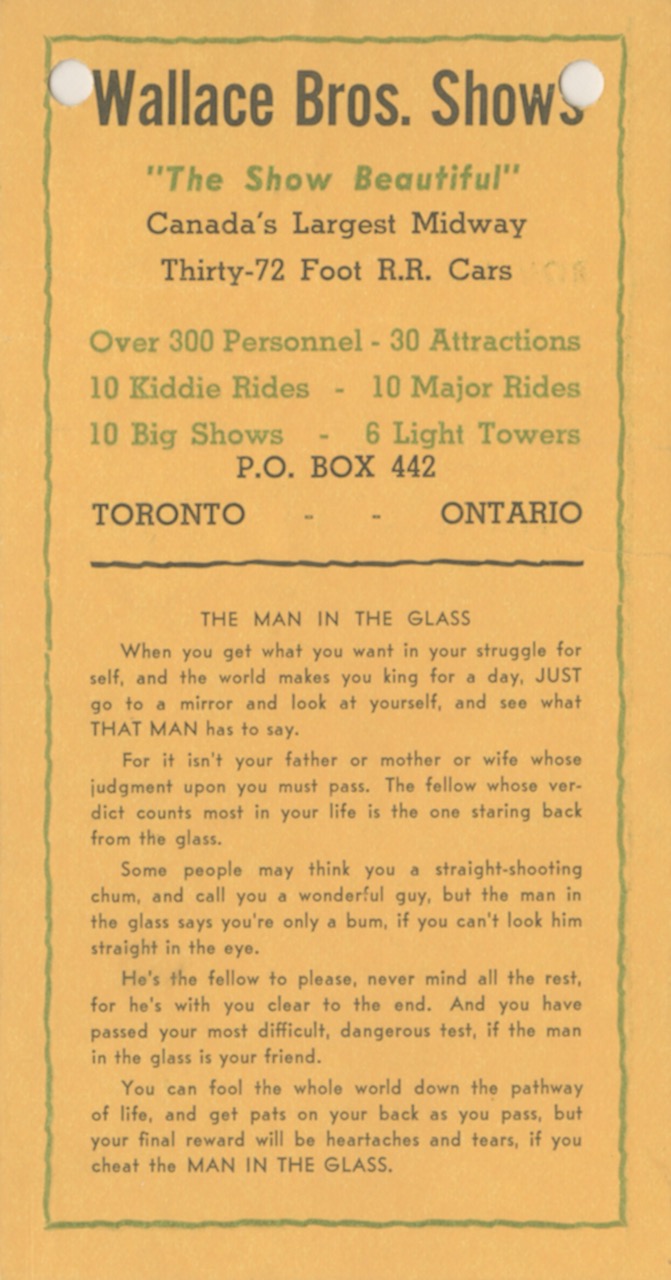
Alberta Slim’s Circus
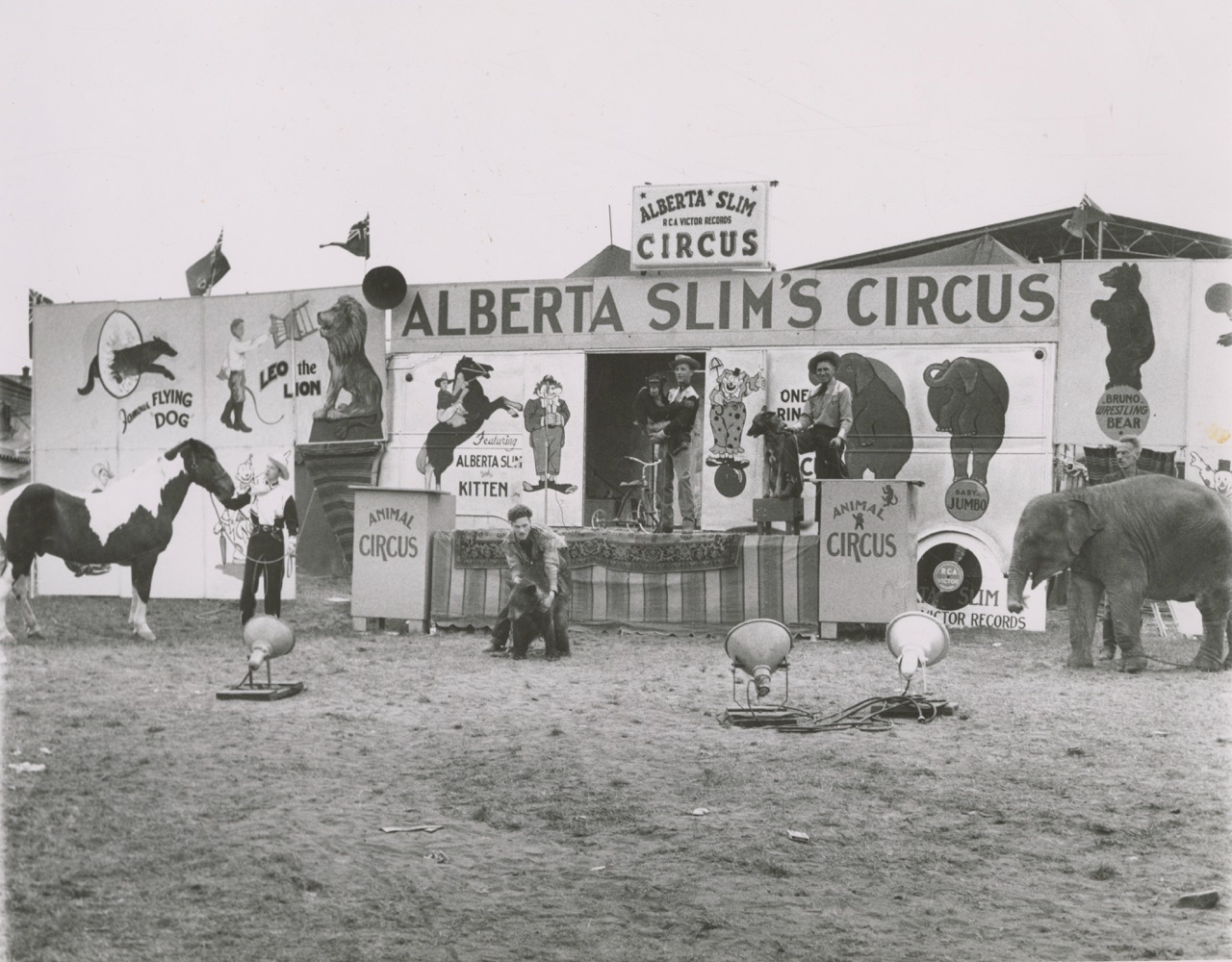
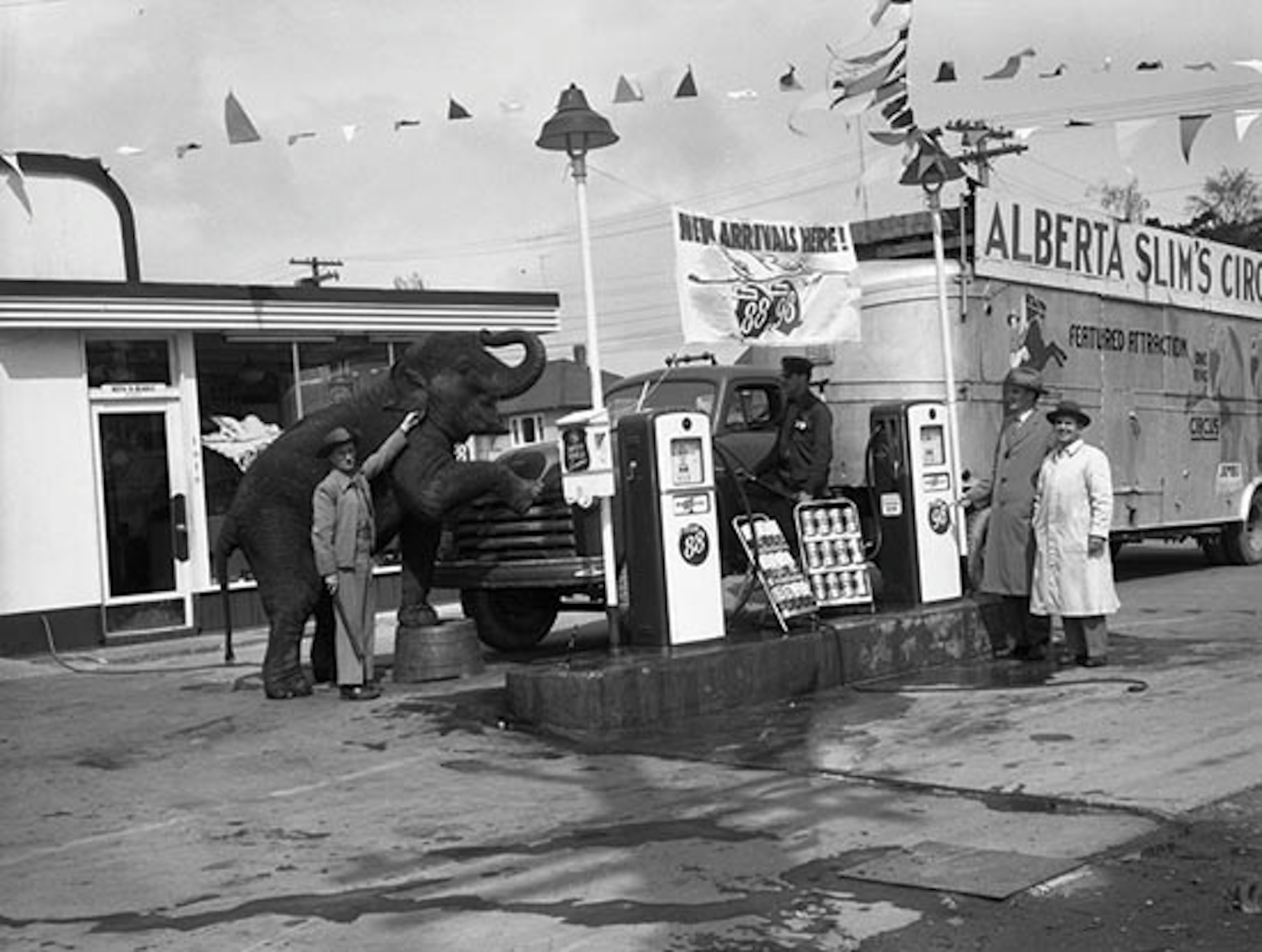
Around 1947, Alberta Slim began travelling with a circus. It included a variety of animals, all of whom he trained himself.
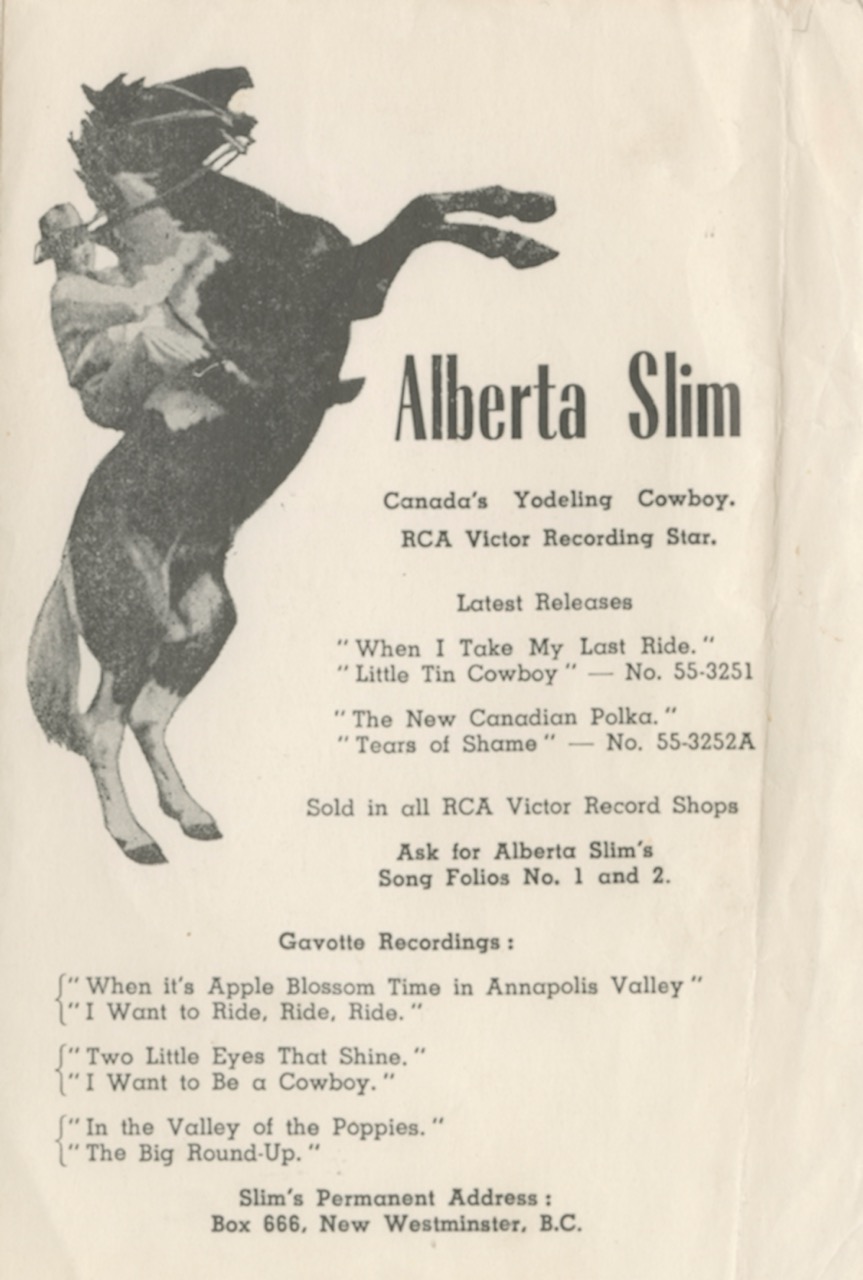
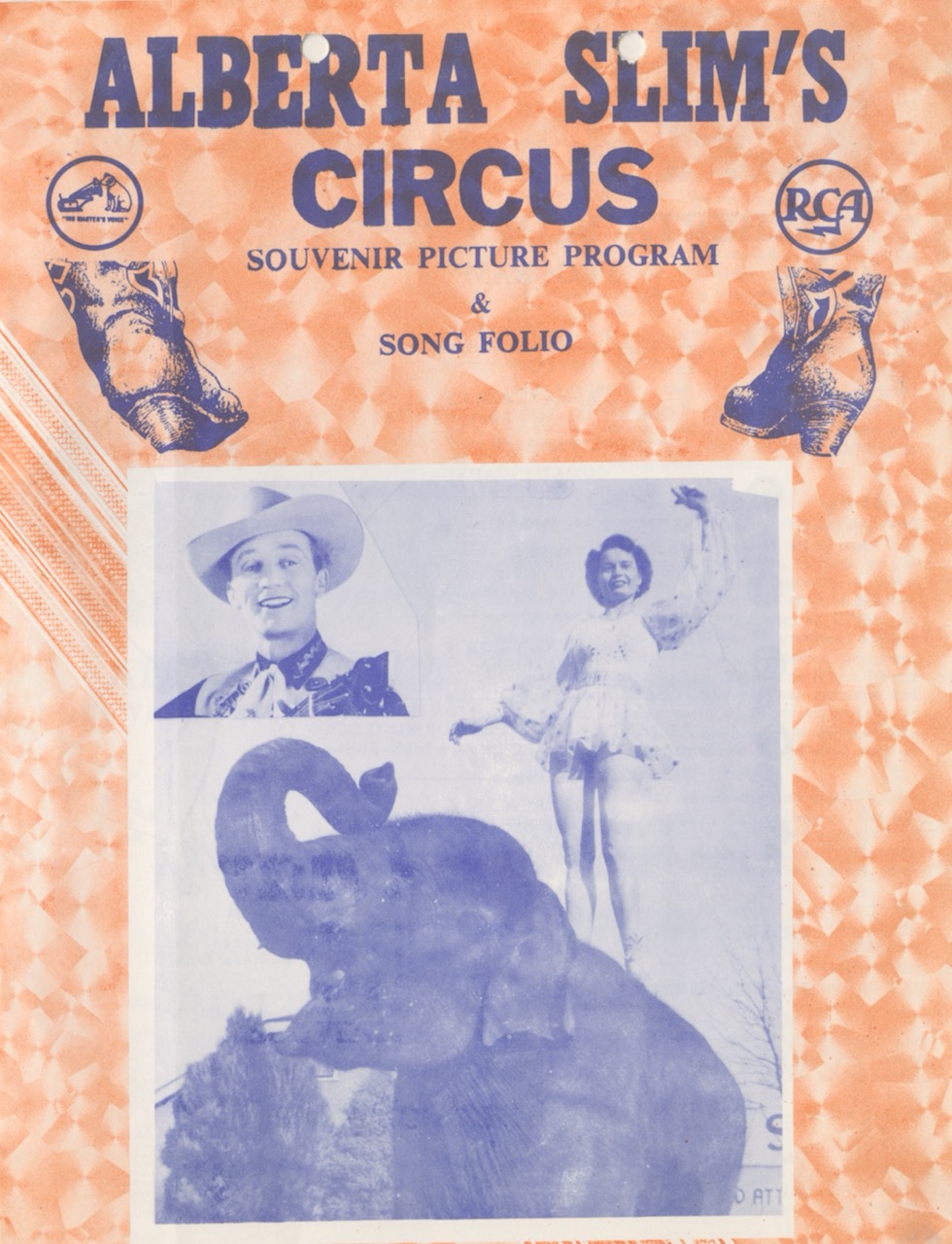
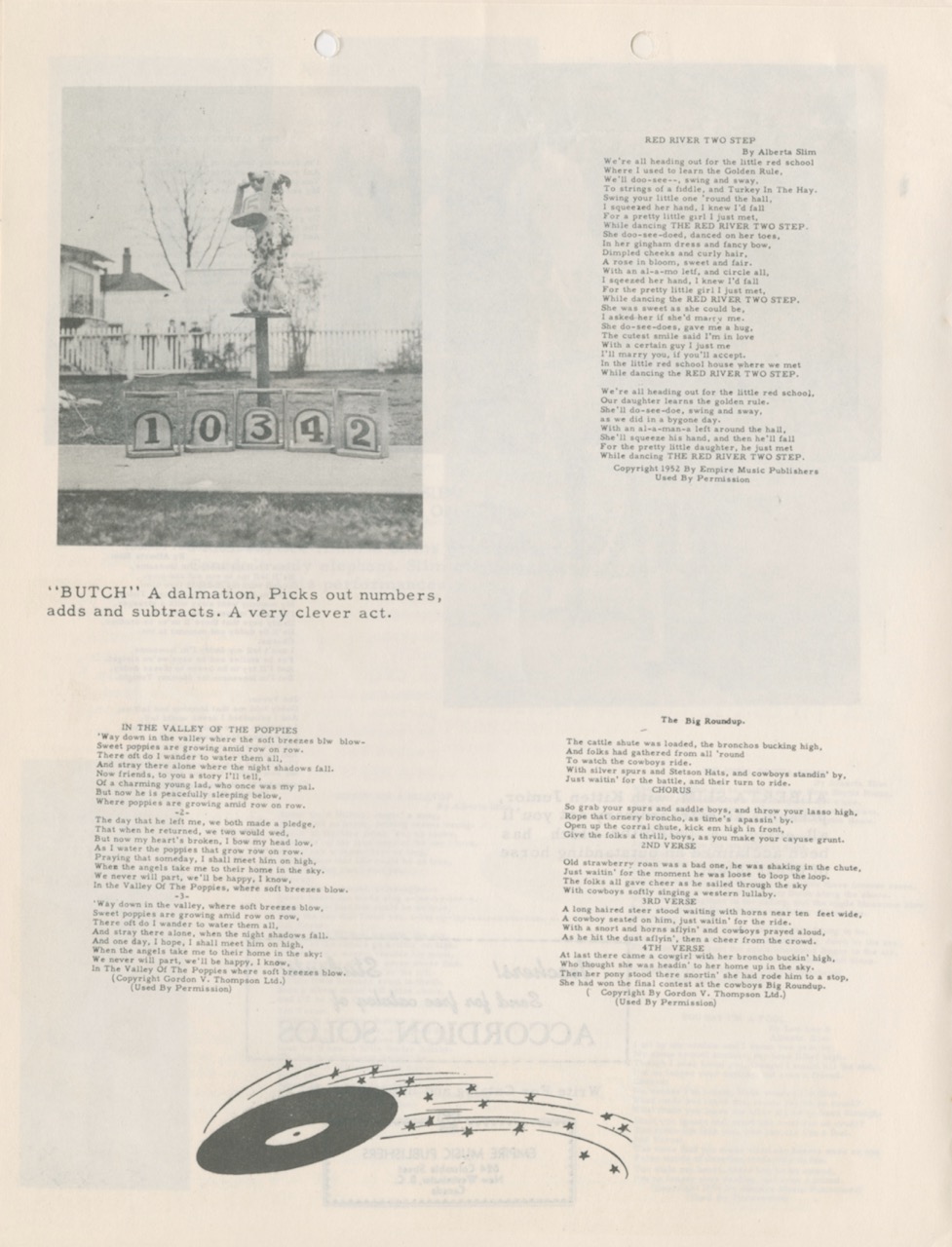
The surviving folios, programs and schedules provide a vivid record of the travelling show and the acts audiences encountered.
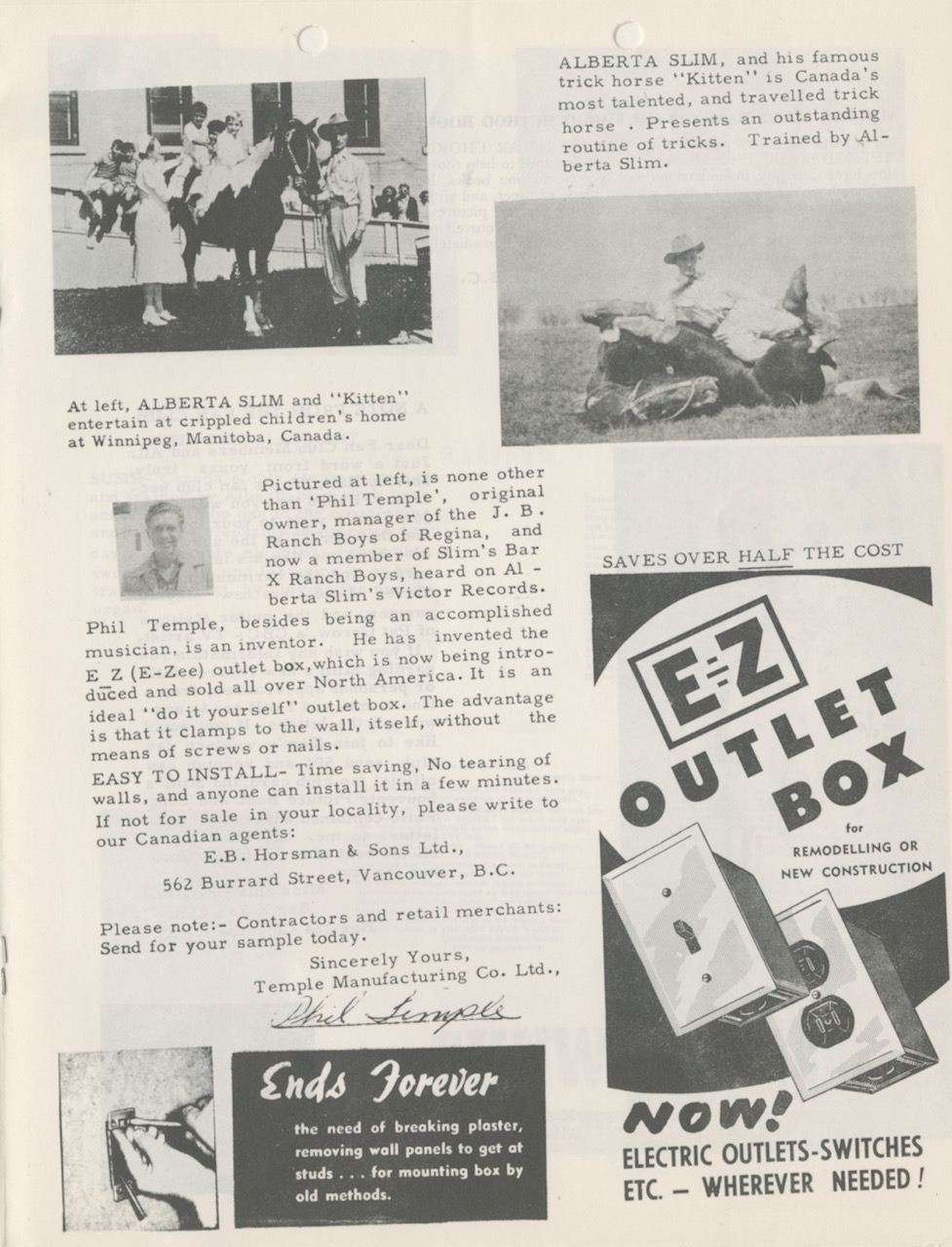
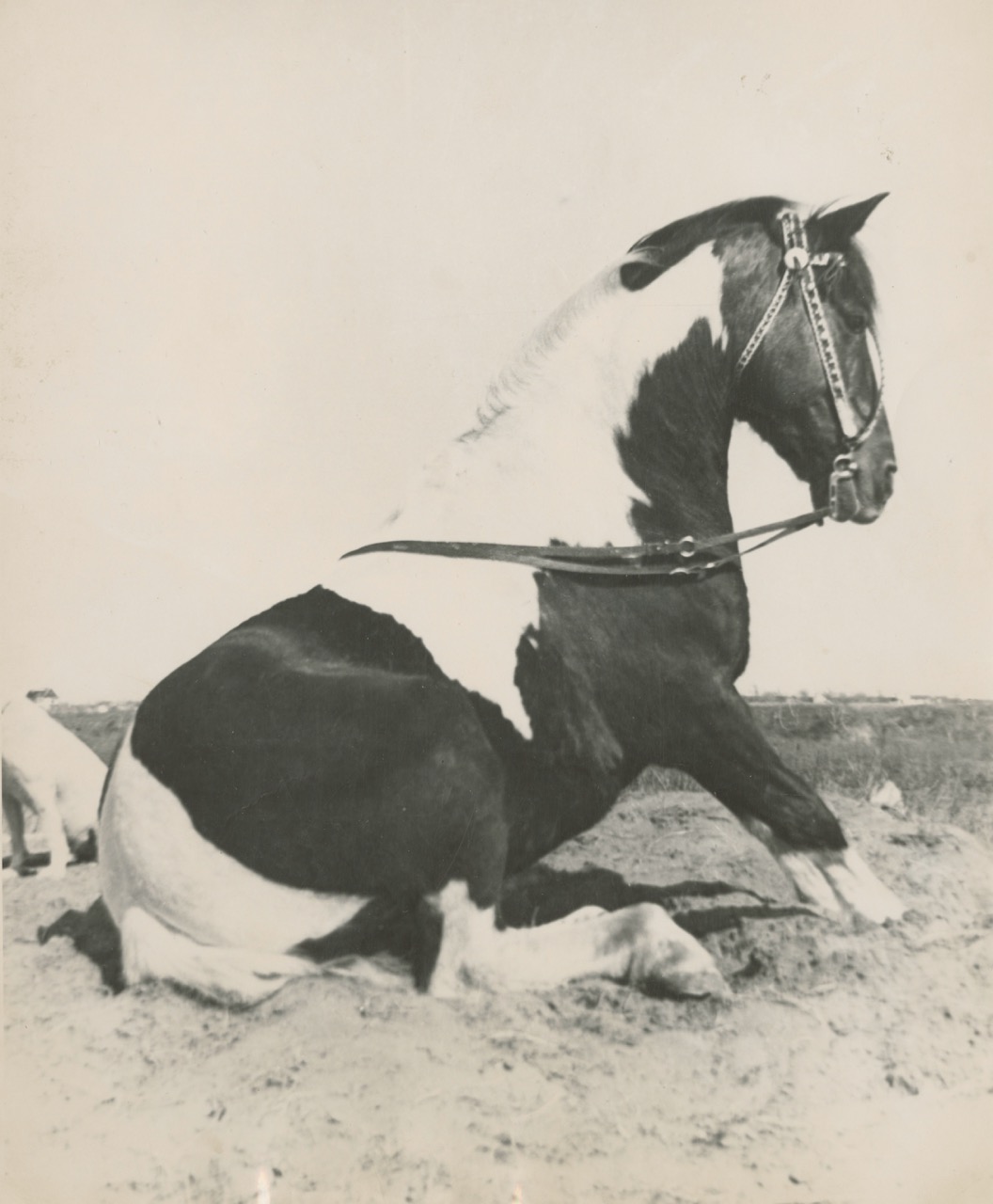
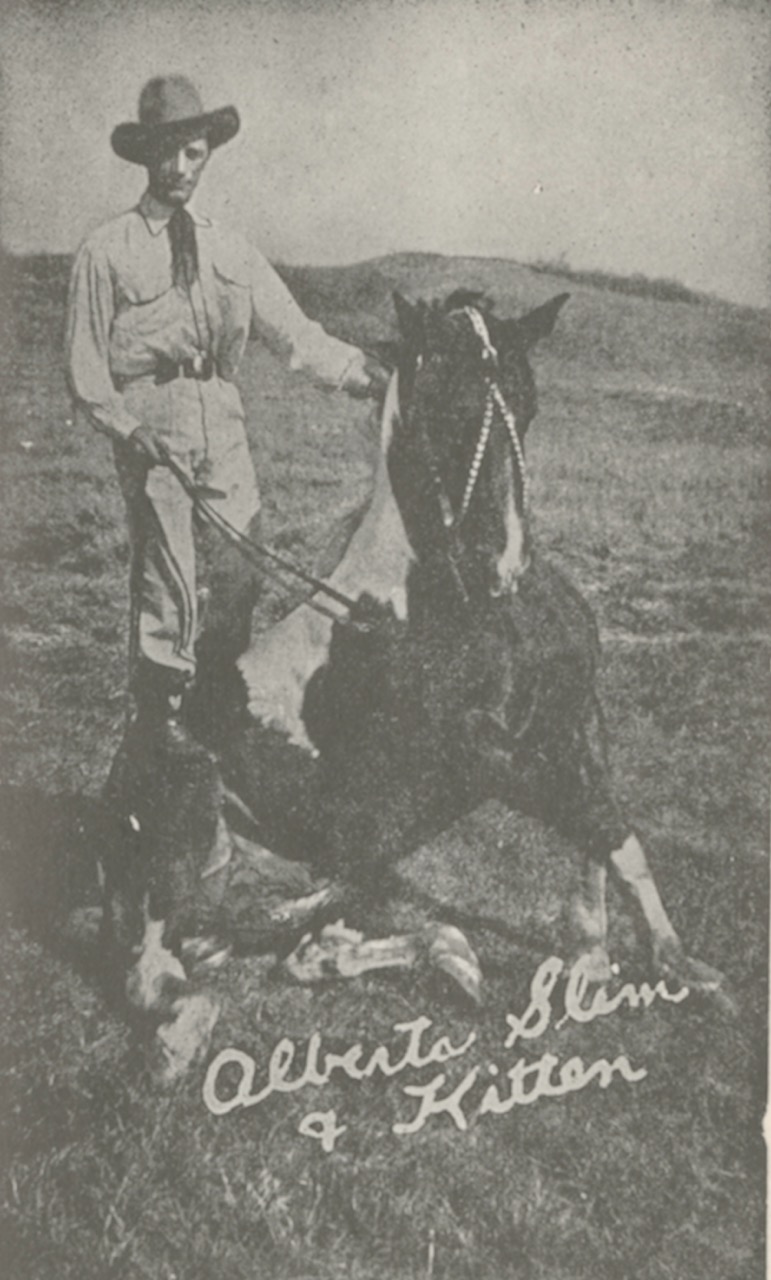
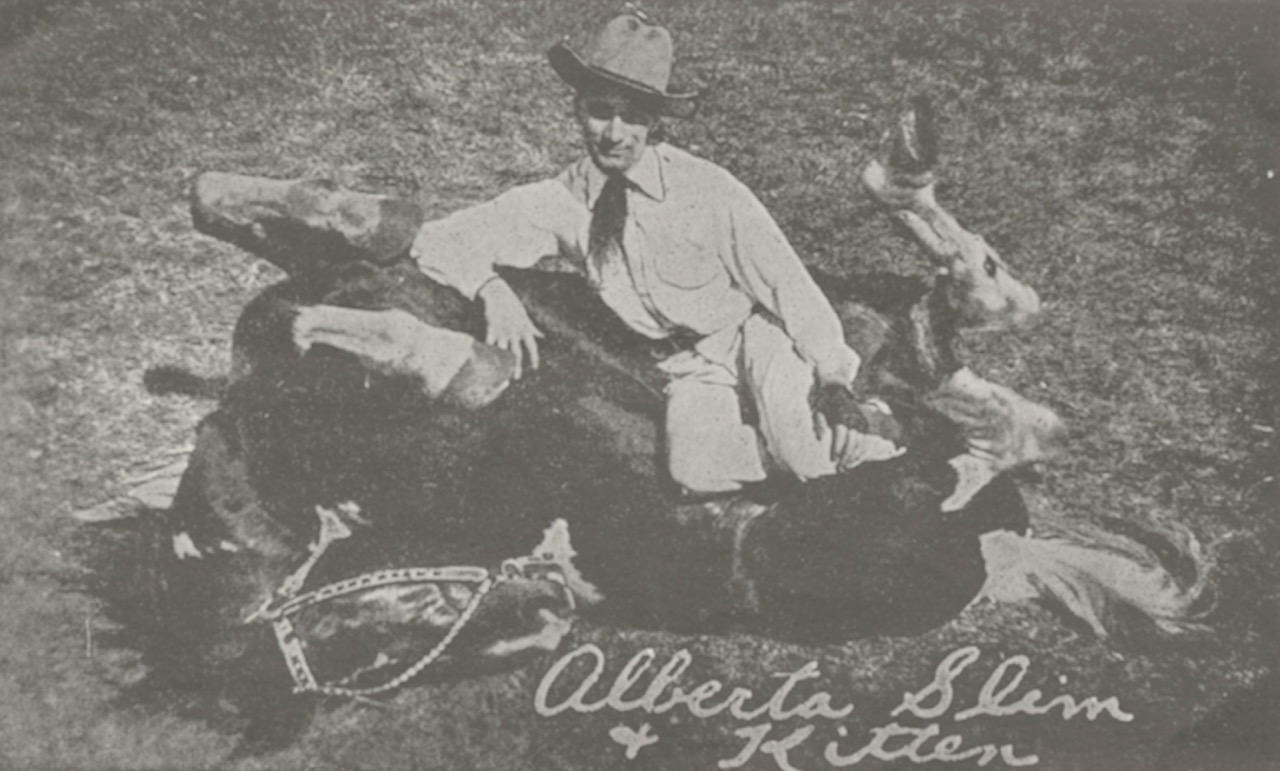
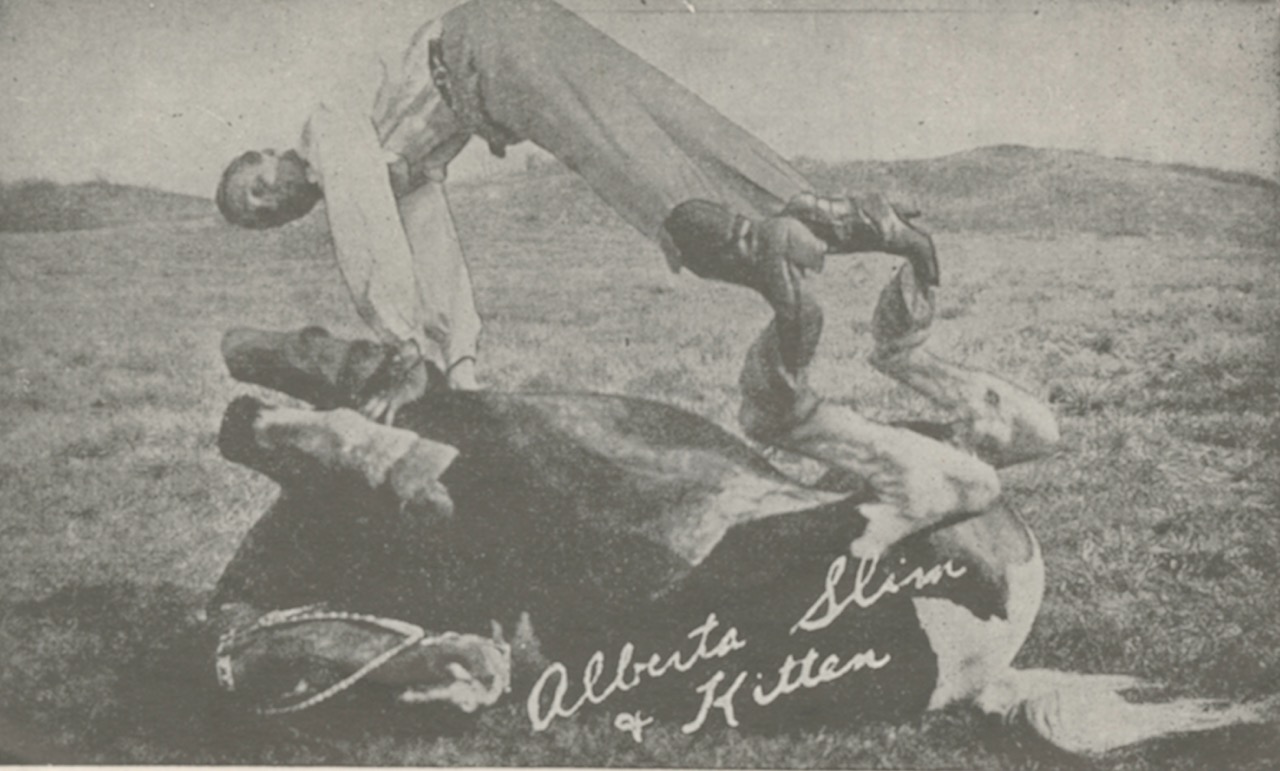
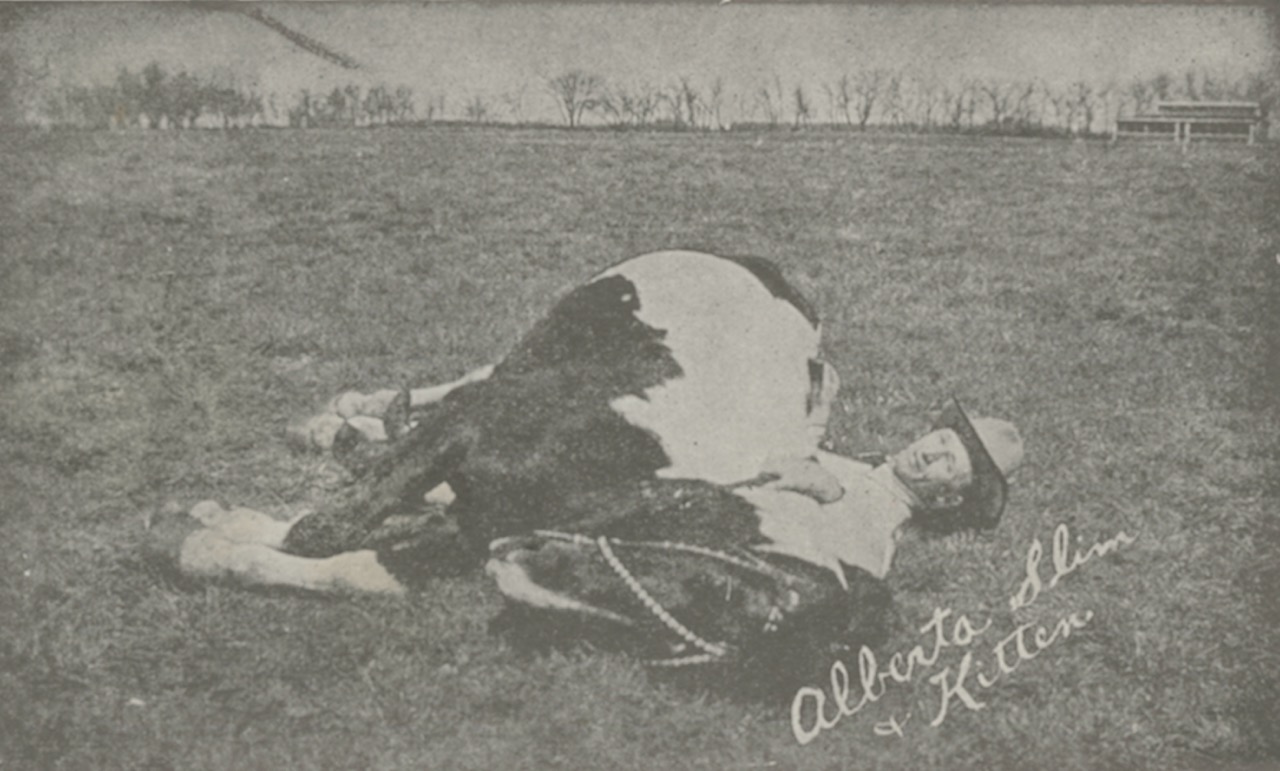
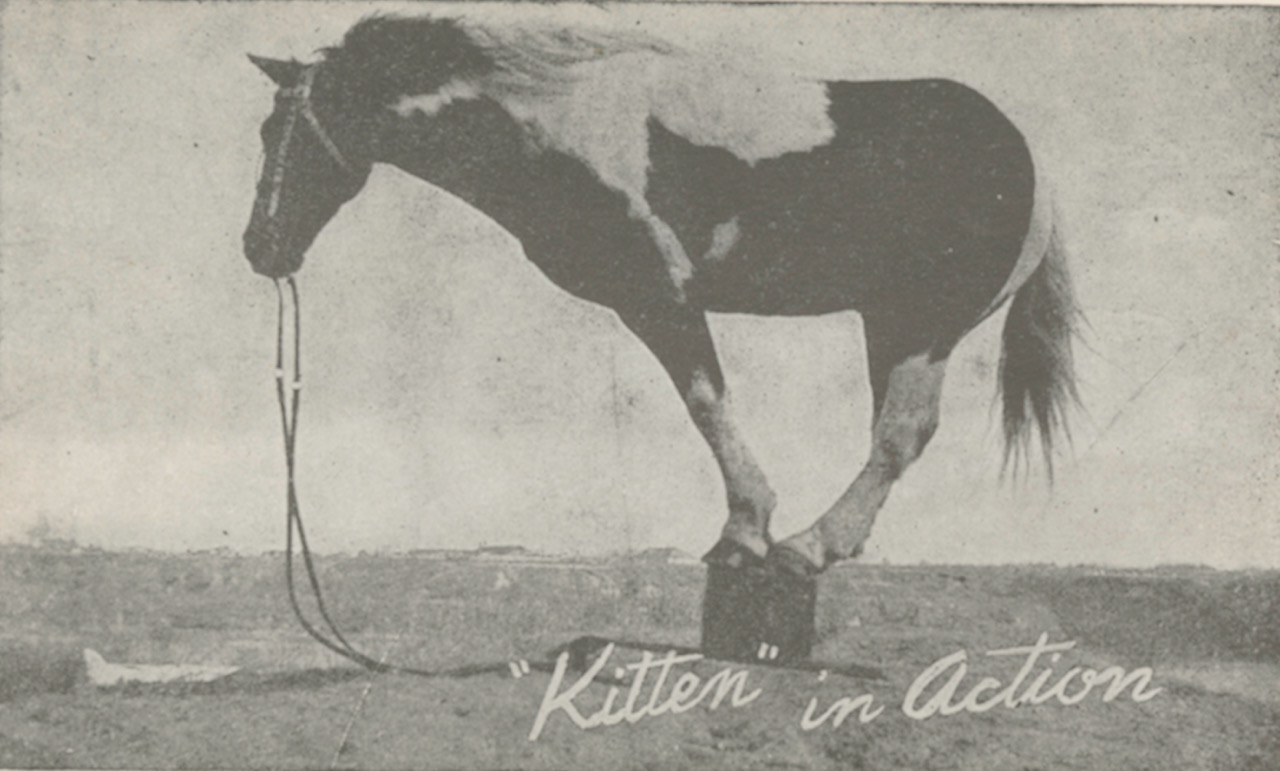
Kitten—The Trick-Performing Horse
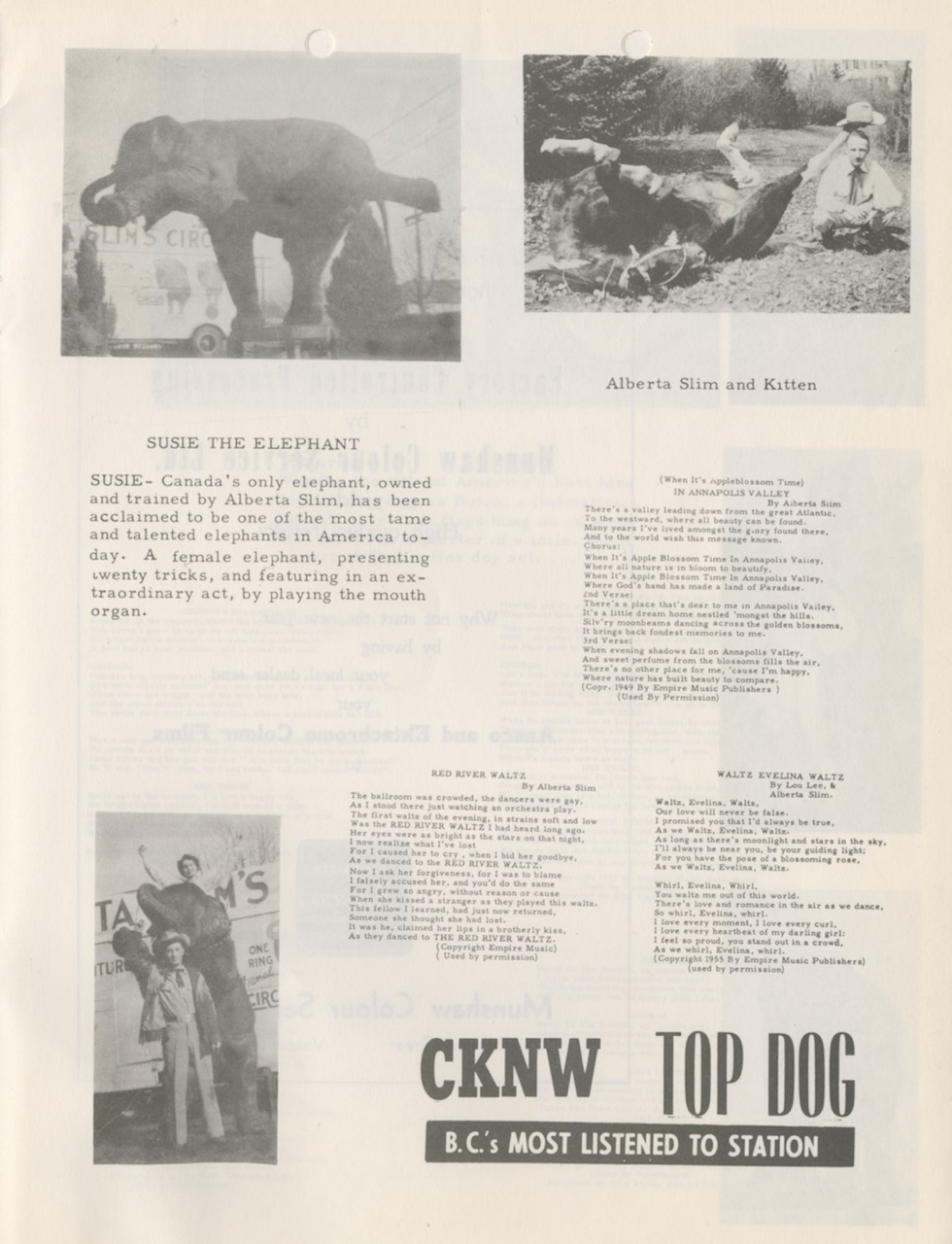
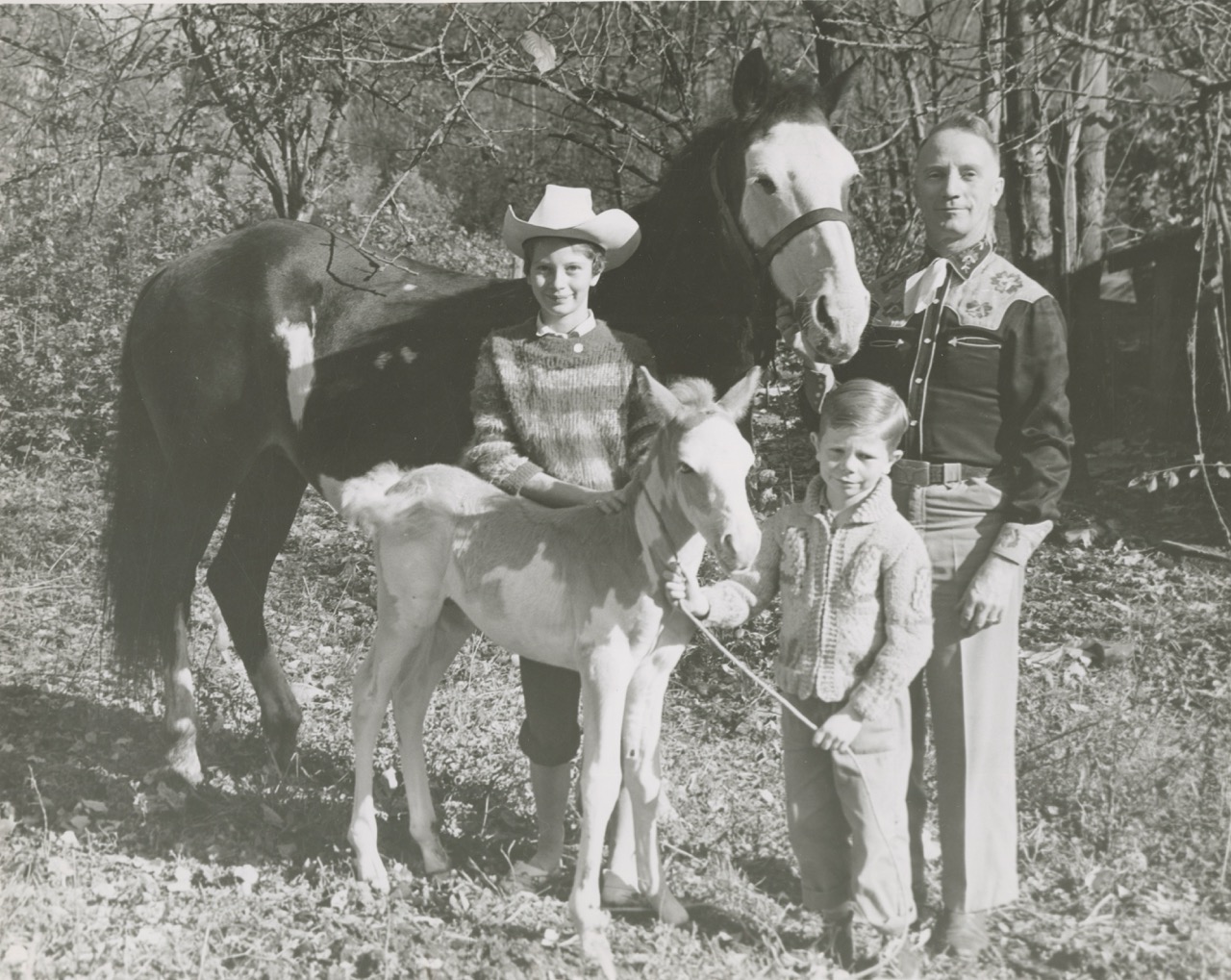
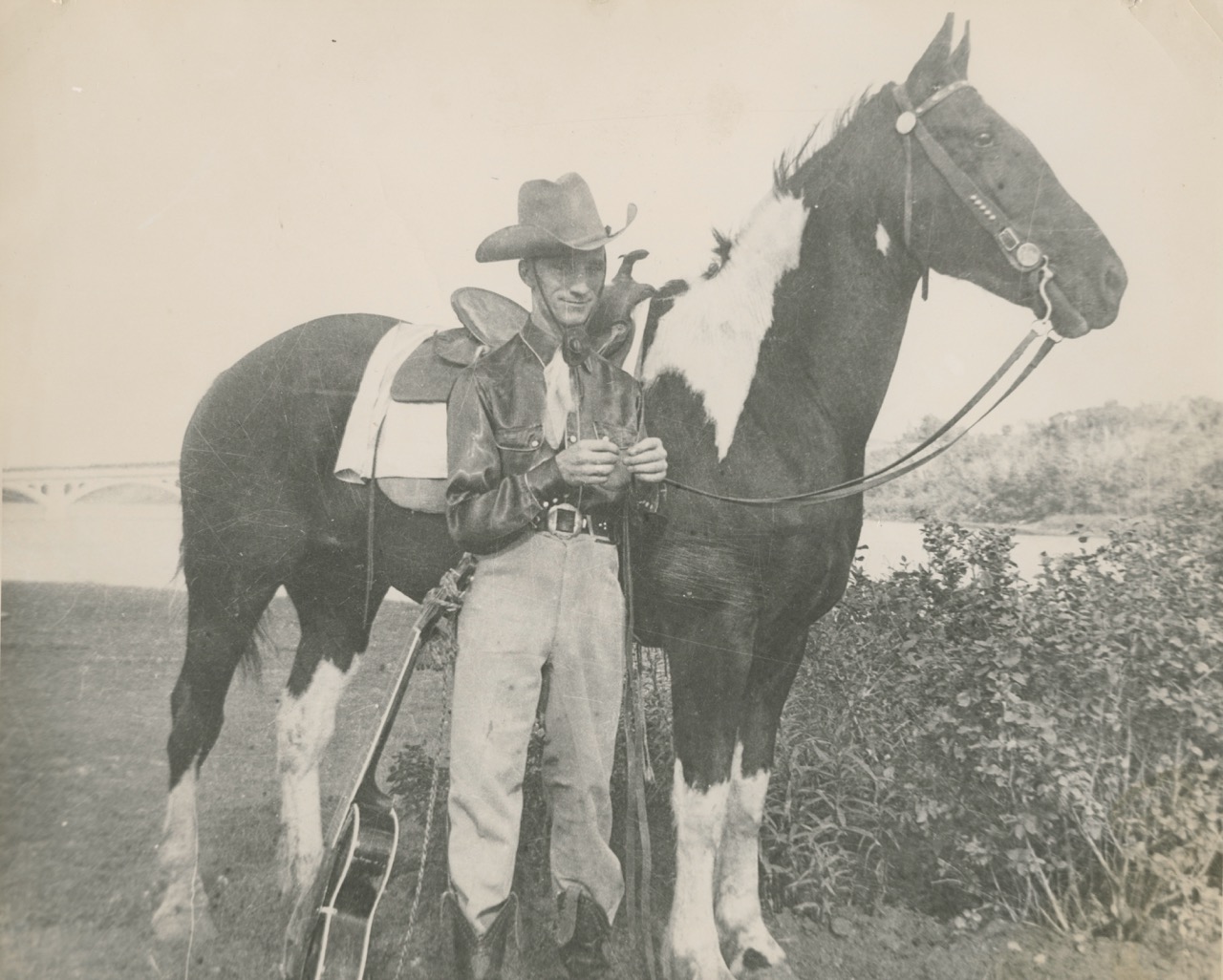
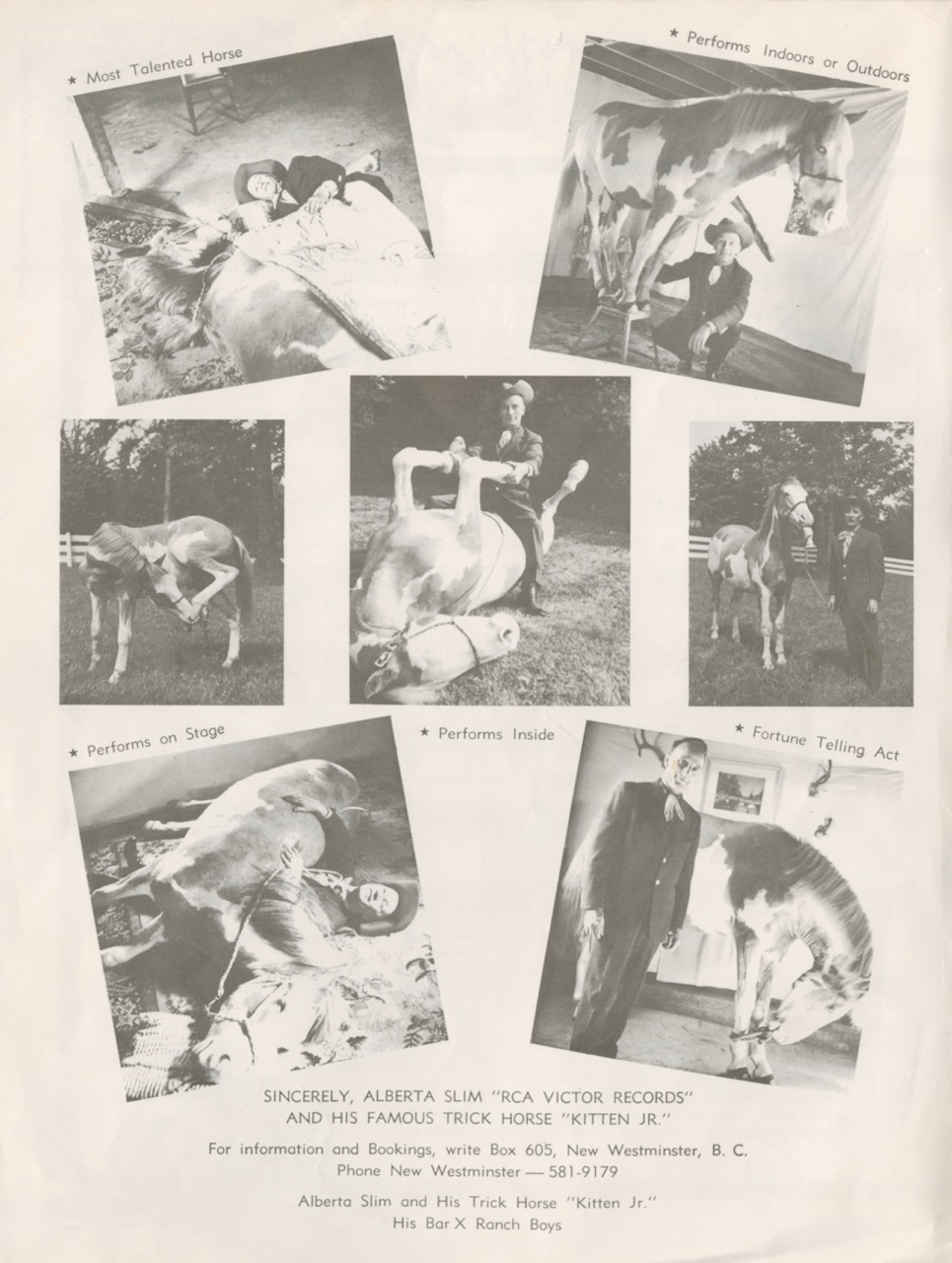
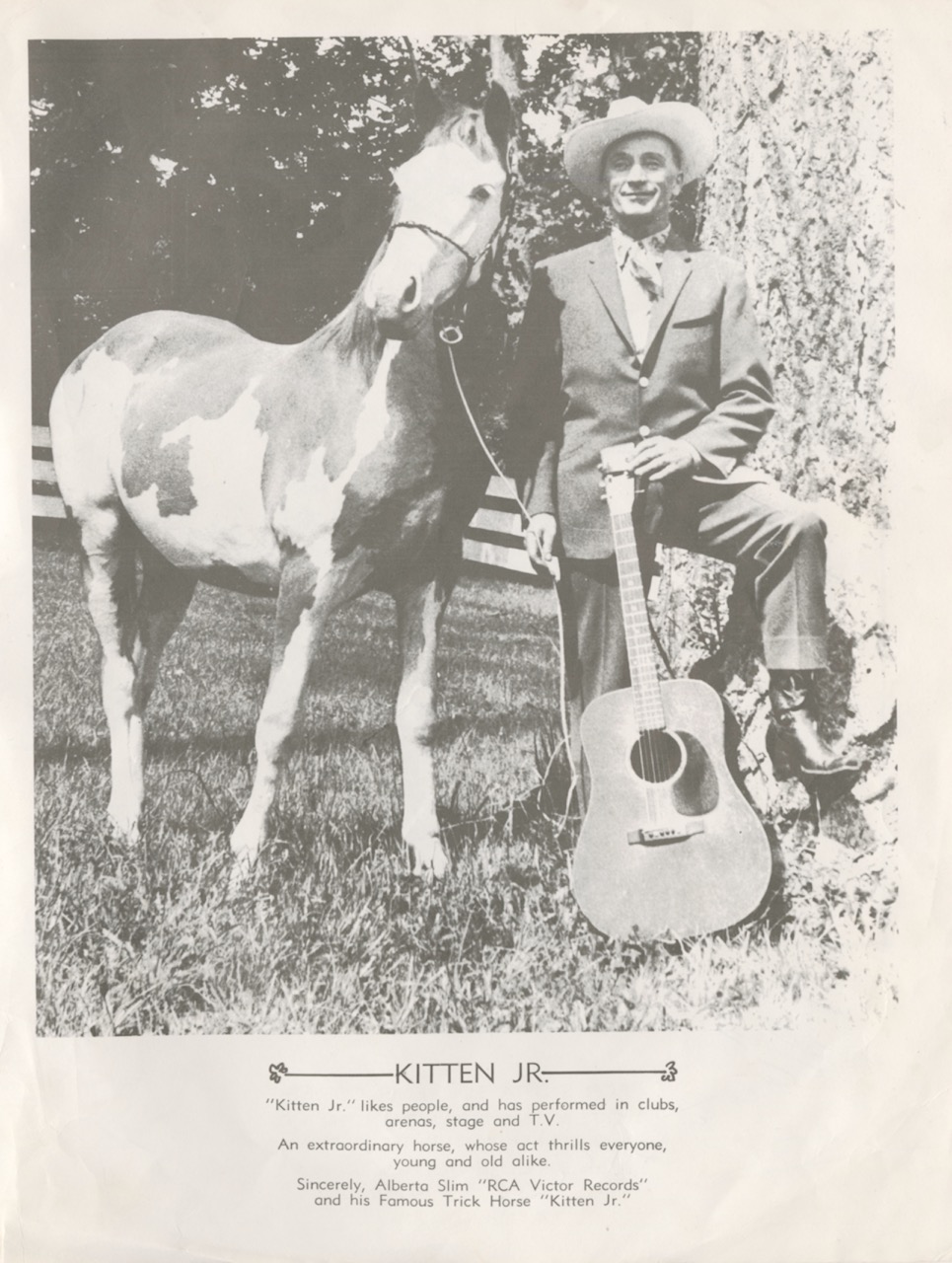
Kitten was a trick-performing horse. There were three Kittens over the years. The first was apparently sold for the lordly sum of $25 to launch Edwards’s career. Then came Kitten and Kitten Jr., who performed in the circus. Kitten Jr. remained with Alberta Slim even after he stopped touring with his circus in the mid-1960s.
Susie
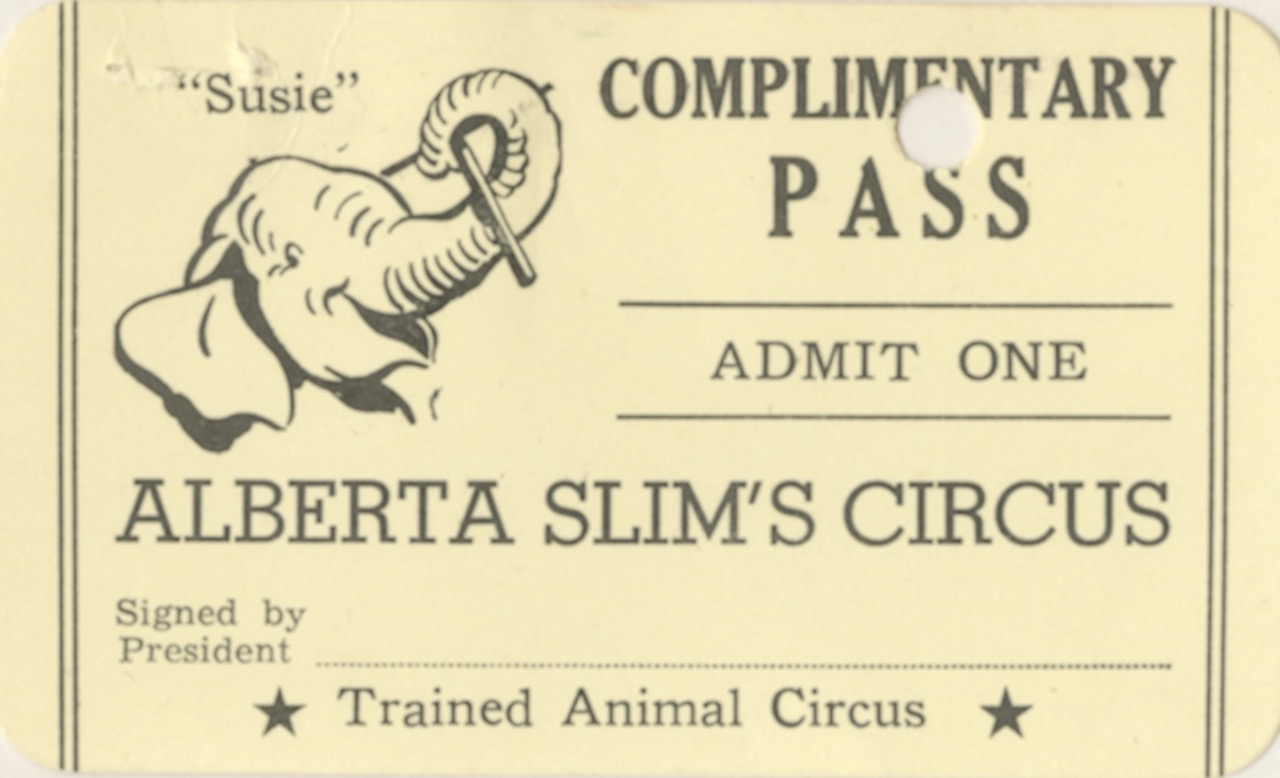
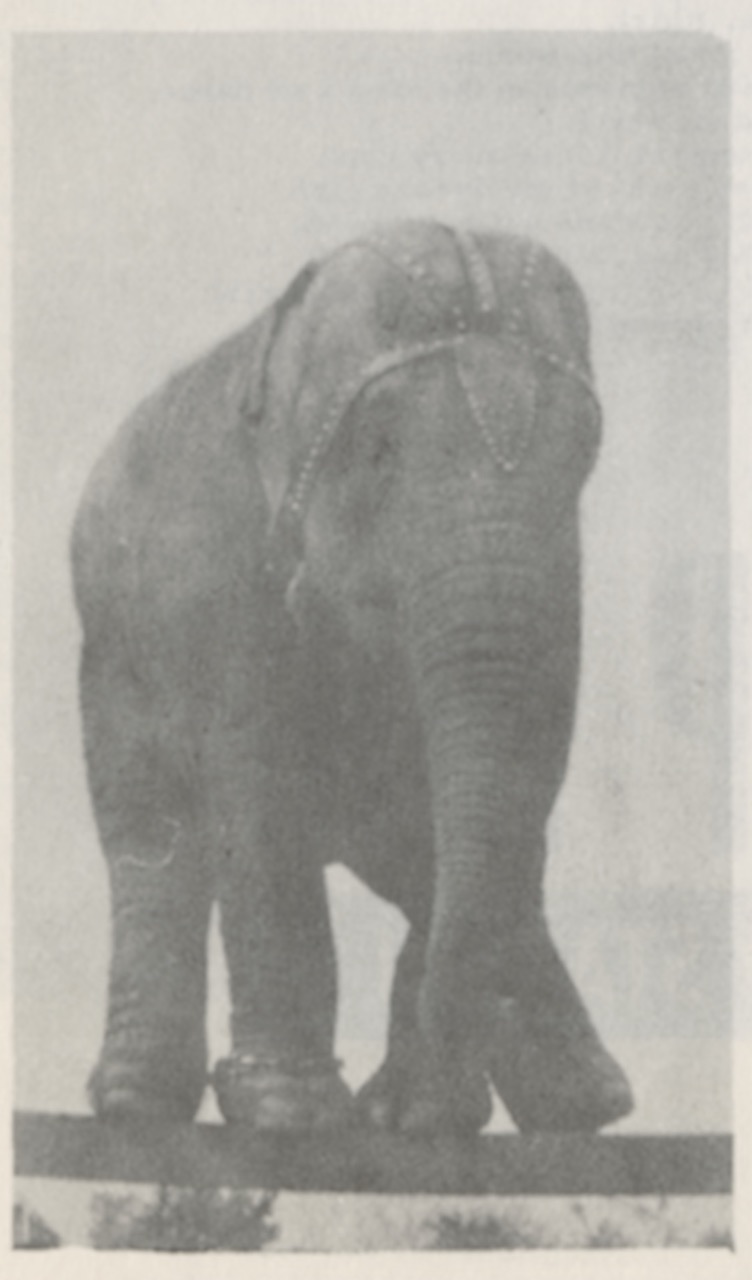
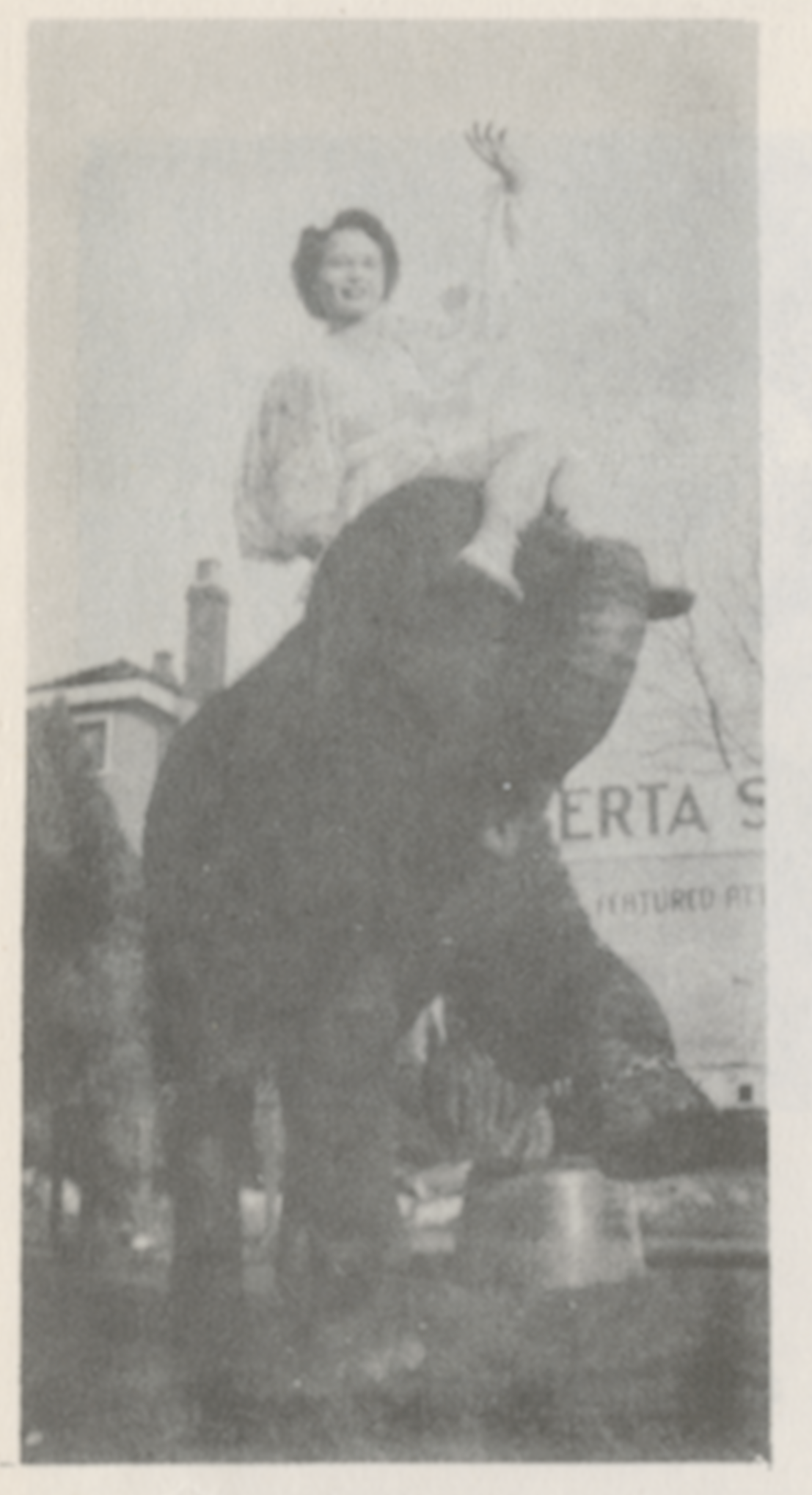
Susie was a harmonica-playing elephant. She apparently was, at the time, the only elephant in Canada. Susie was also the mascot for radio station CKNW.
Butch, Babe—And A Troublesome Chimpanzee
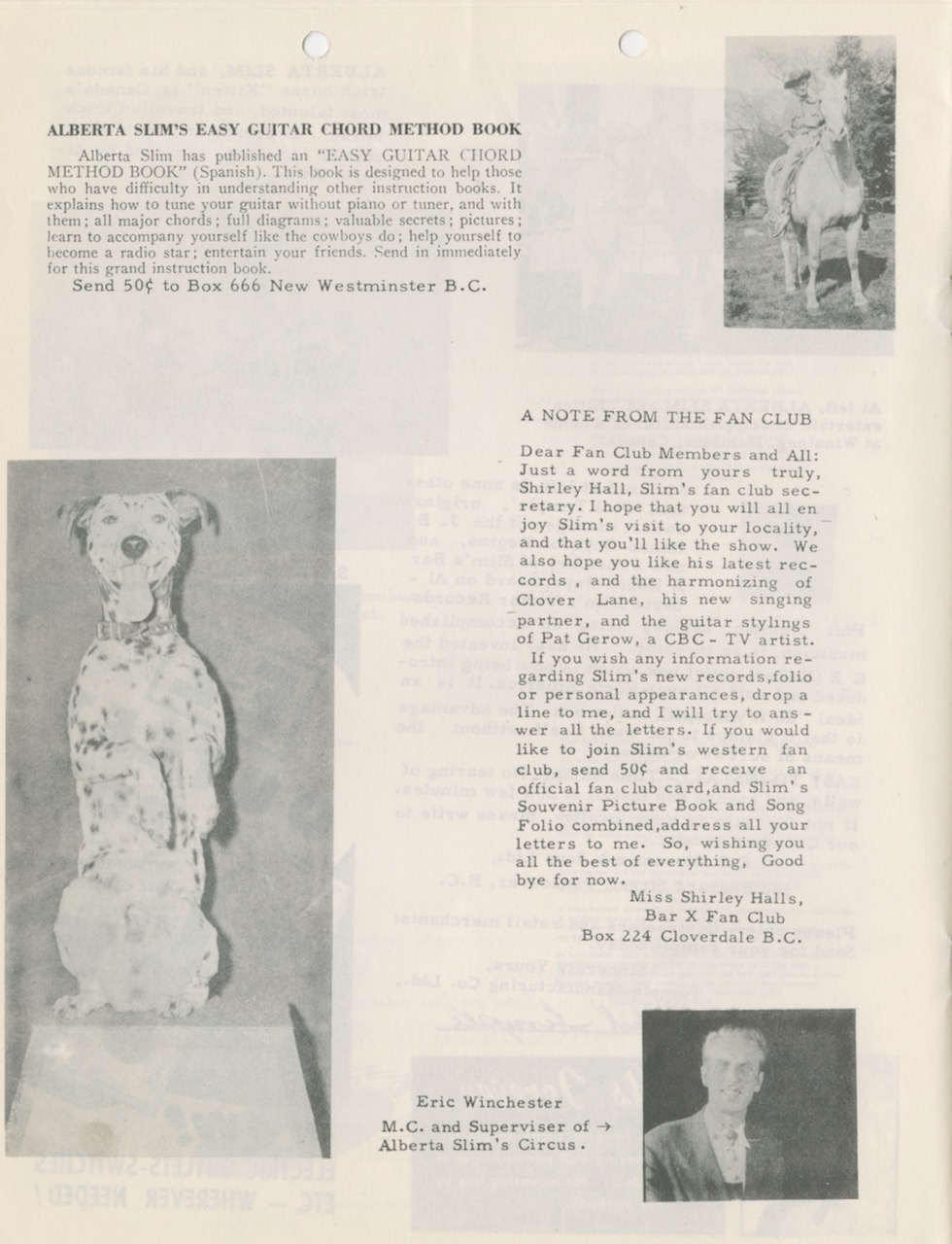
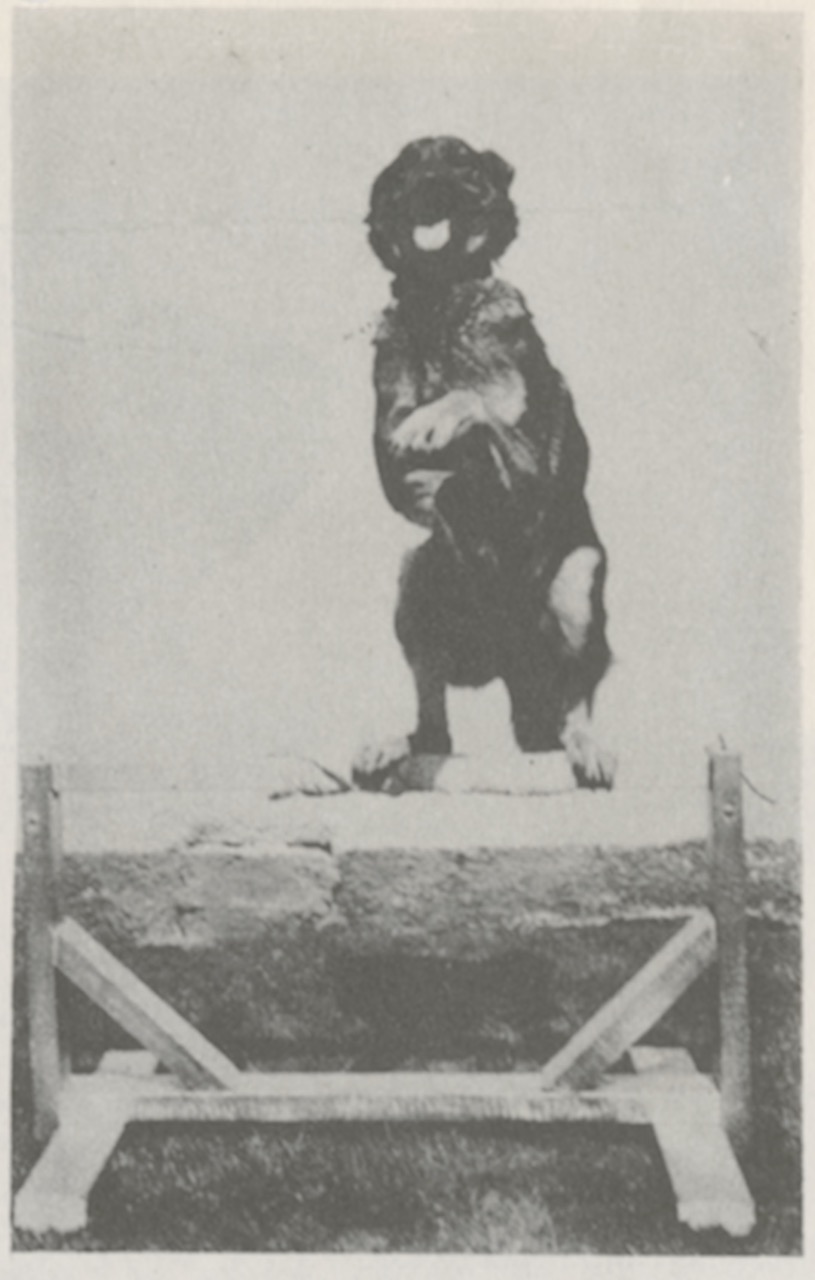
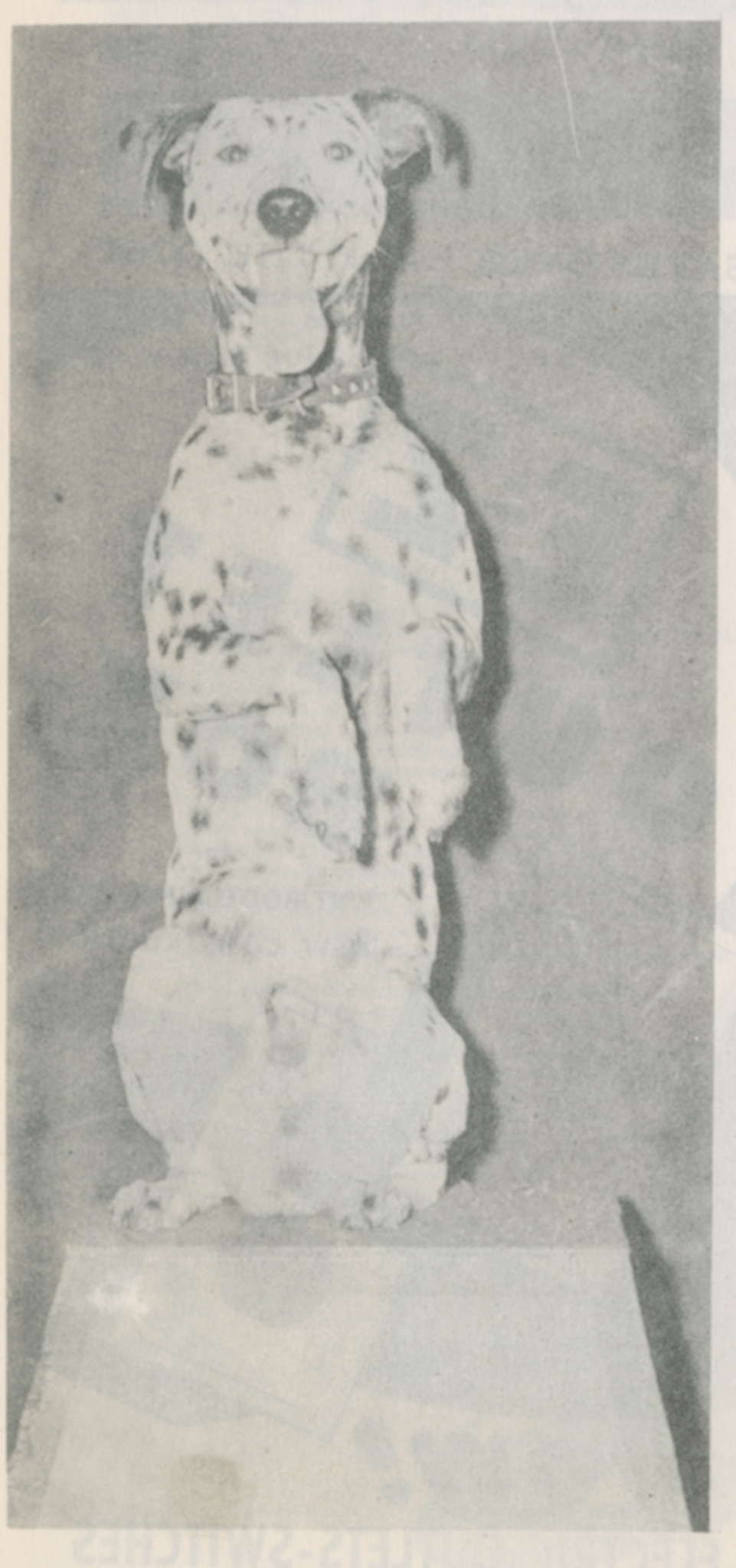
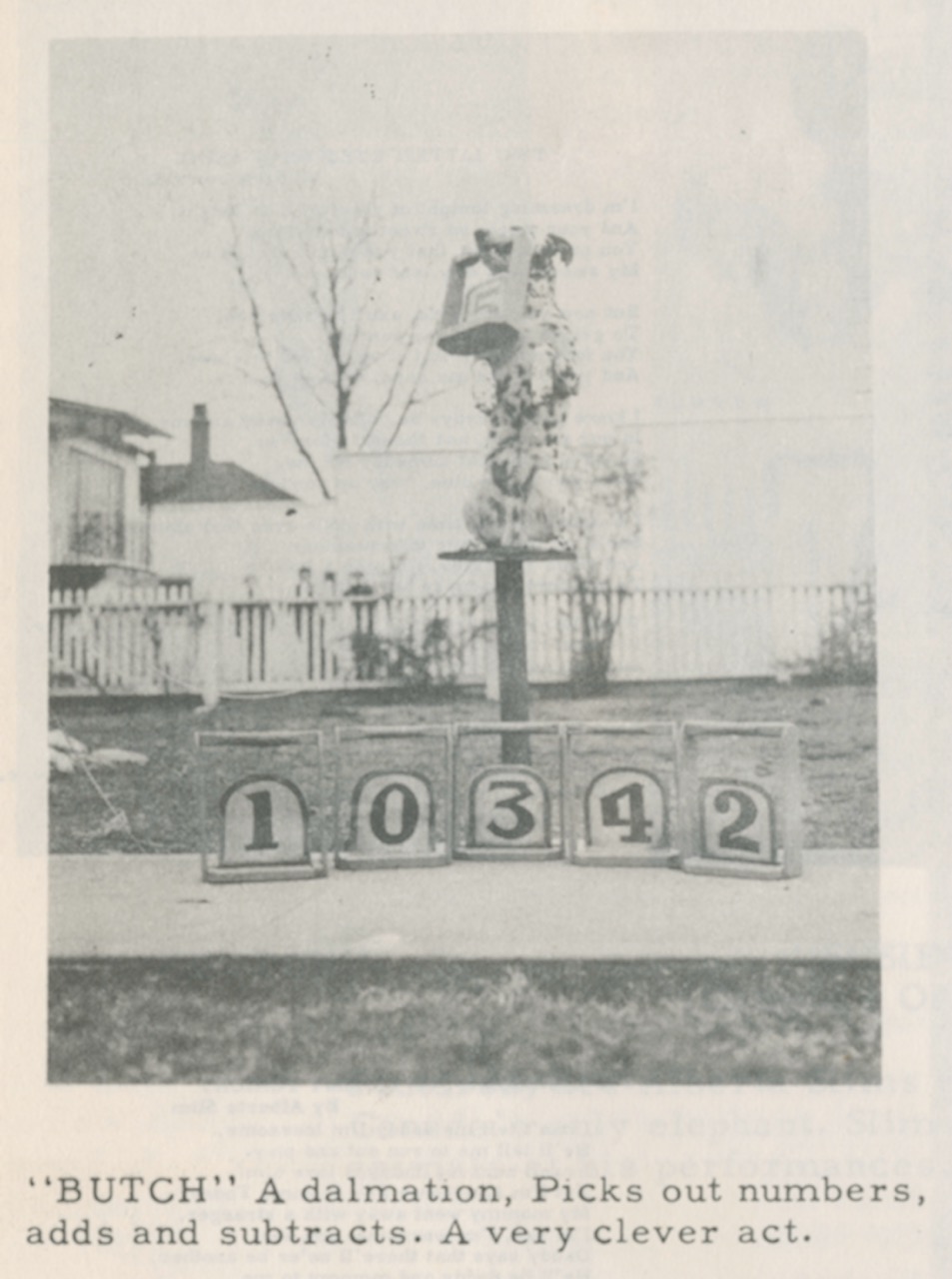
Butch and Babe were among several performing dogs. Butch was adept at mathematical computation.
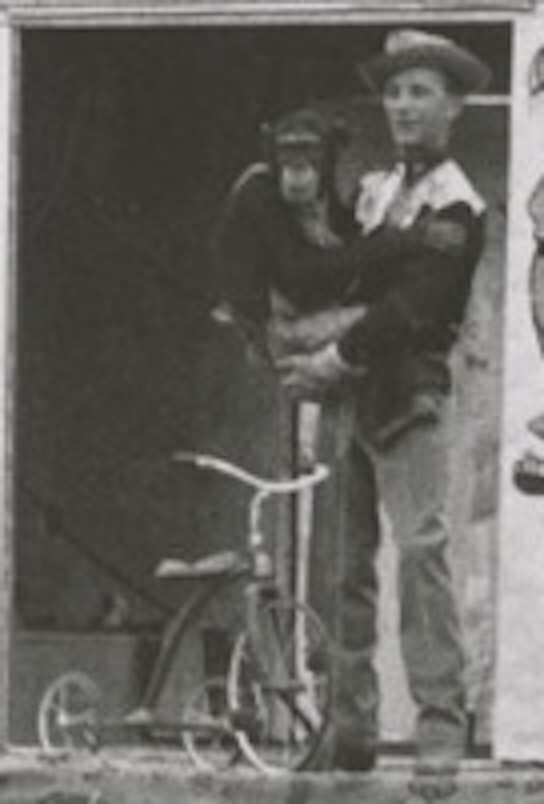
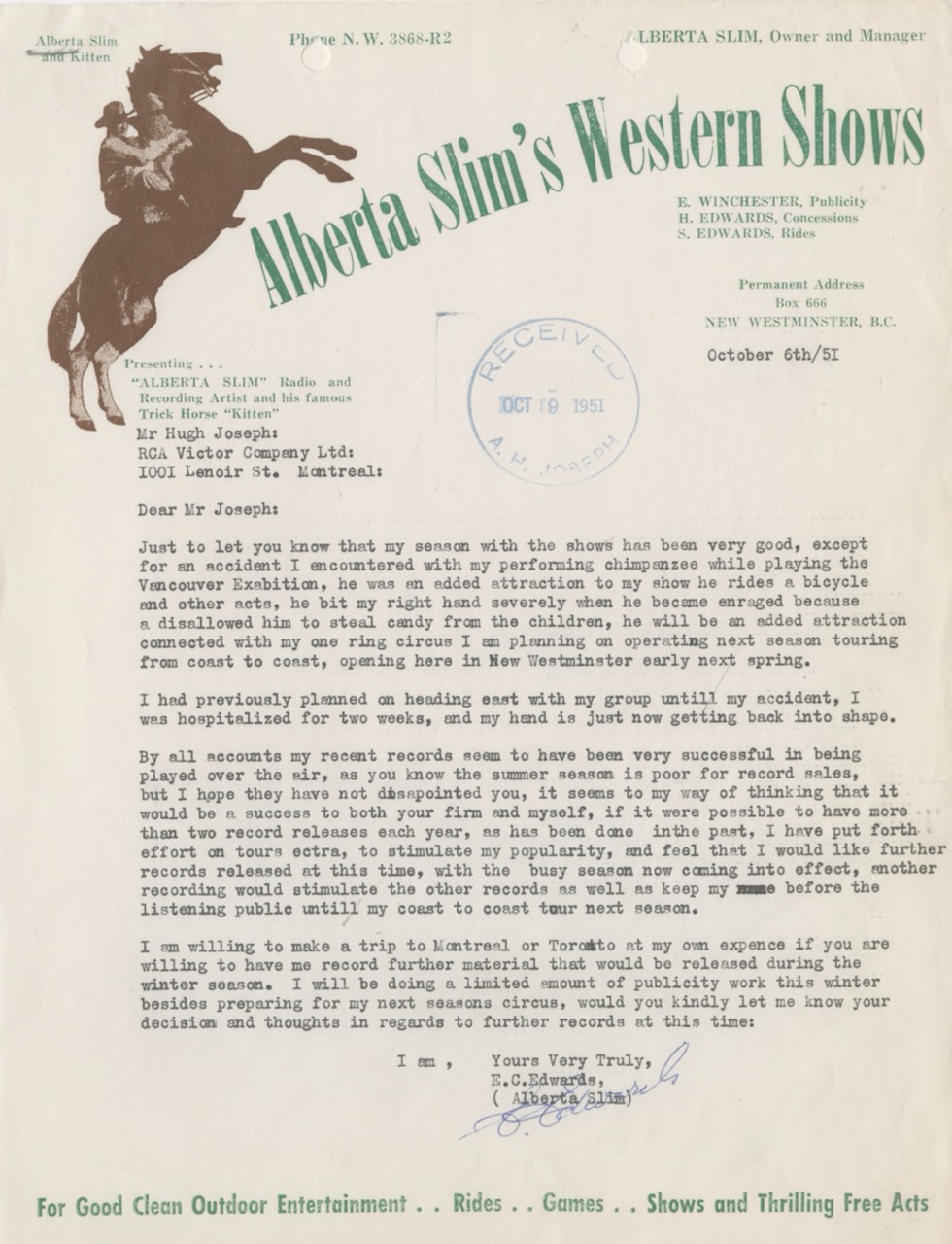
A letter dated October 1951 also refers to a bicycle-riding chimpanzee: “…my performing chimpanzee…he bit my right hand severely when I disallowed him to steal candy from the children…”
The Bar-X Ranch Boys
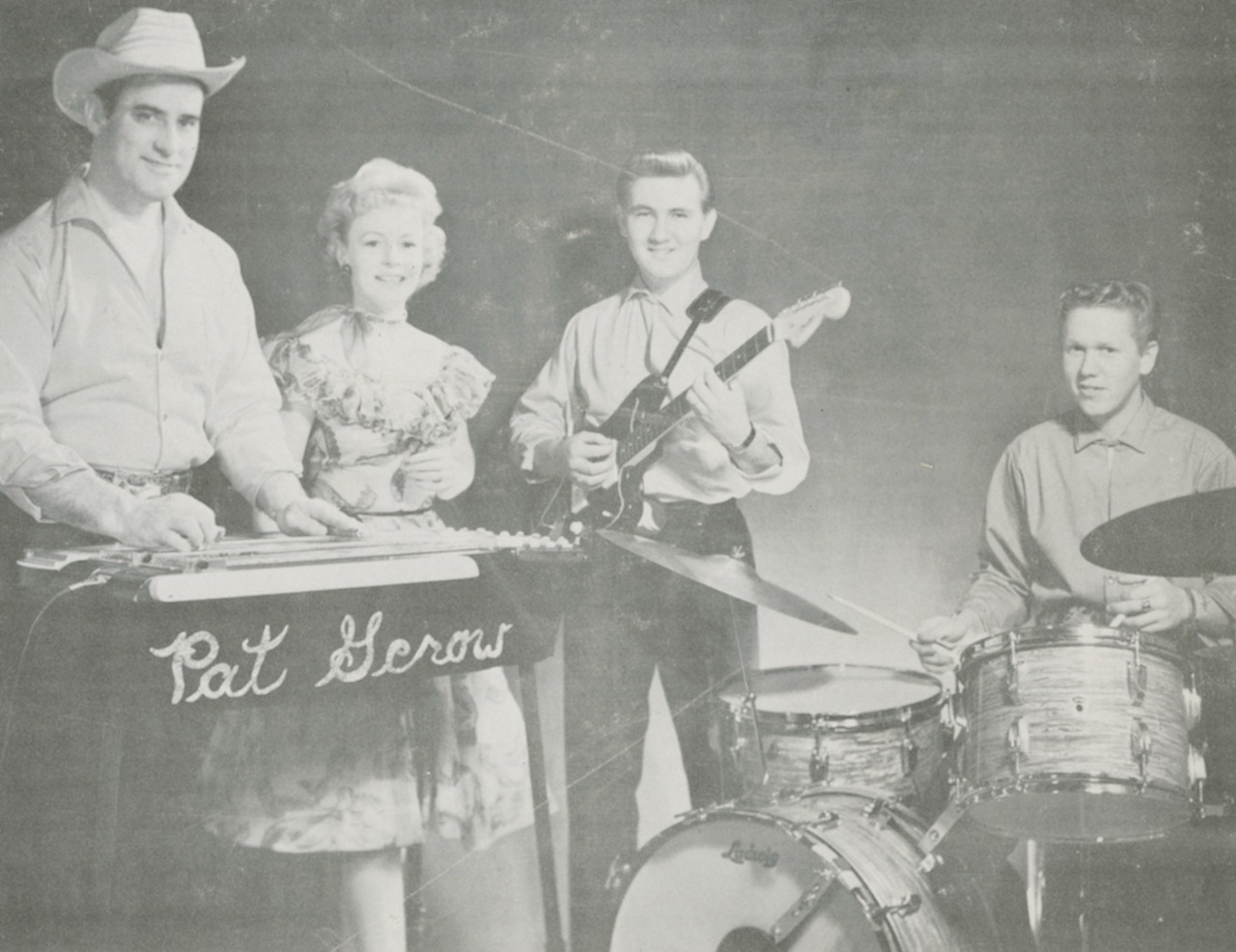
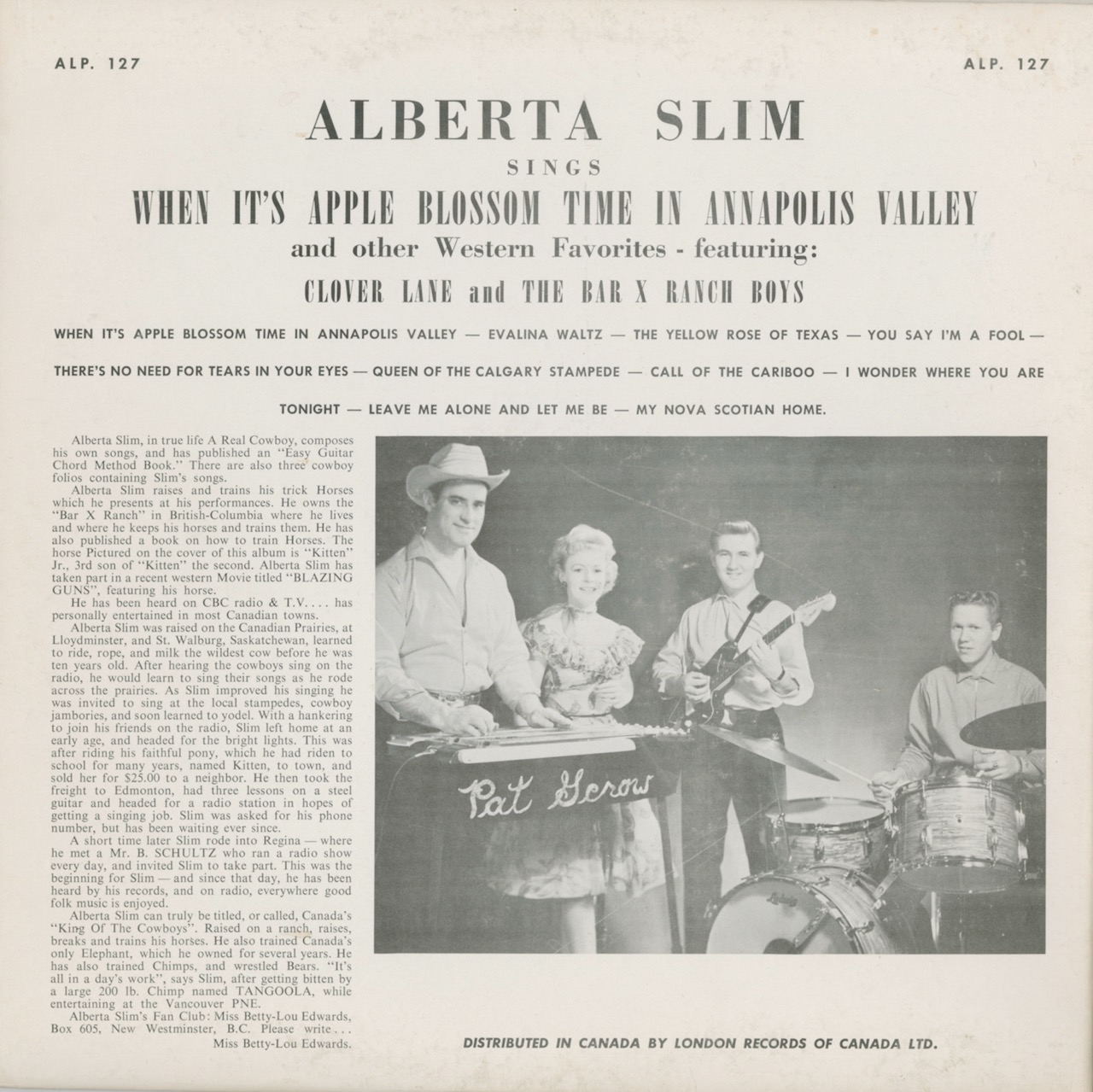
The Bar-X Ranch Boys backed Alberta Slim. Their names are not listed on any of the albums, but we know members included Phil Temple, Pat Gerow and singer Clover Lane.
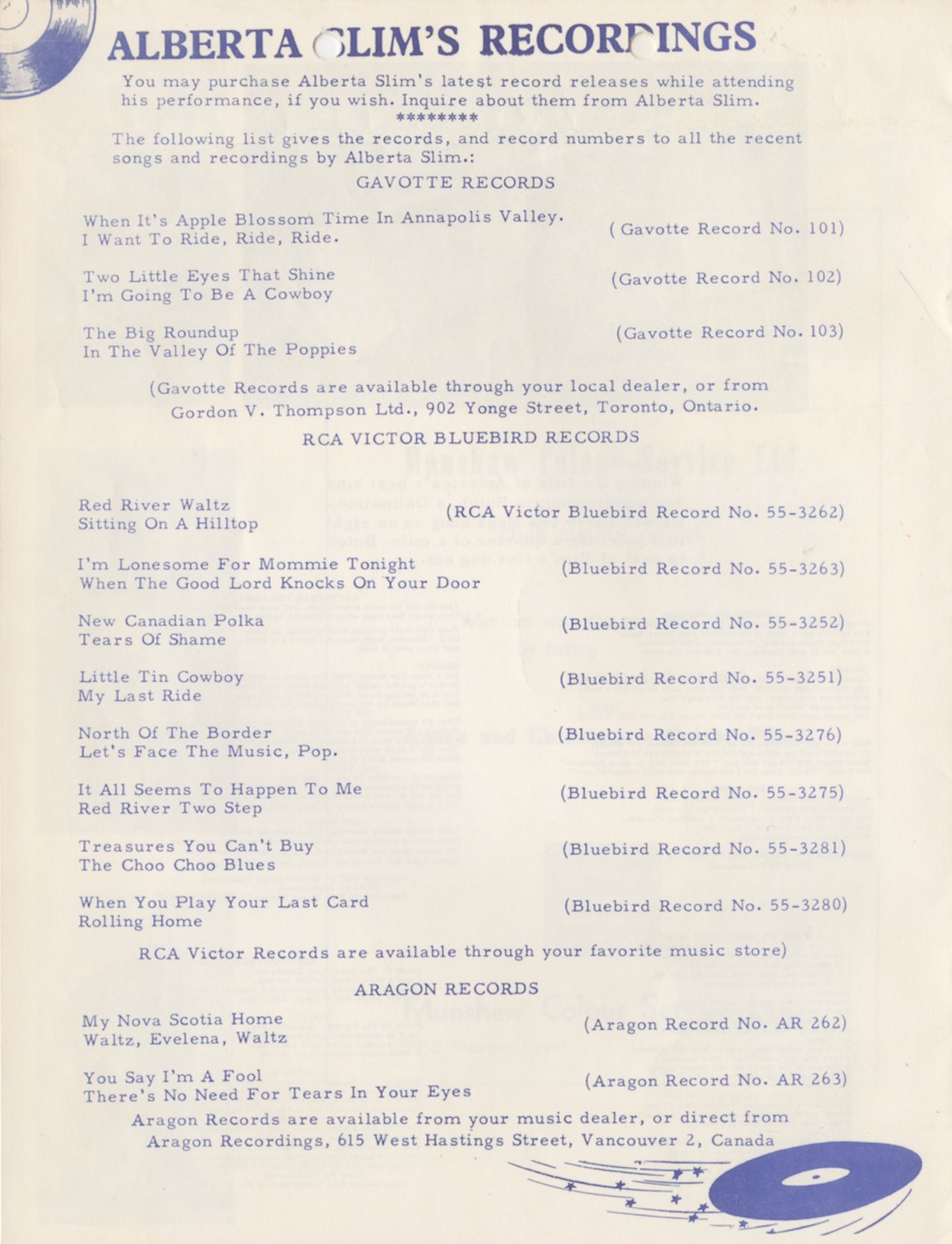
Alberta Slim began his recording career with two singles on the private Records label in 1940: “Song of Smokey Smith” backed with “Want to Ride, Ride, Ride,” and “Give Me My Pony on the Range” backed with “She Taught Me to Yodel.”
A Recording Career
His First Hit
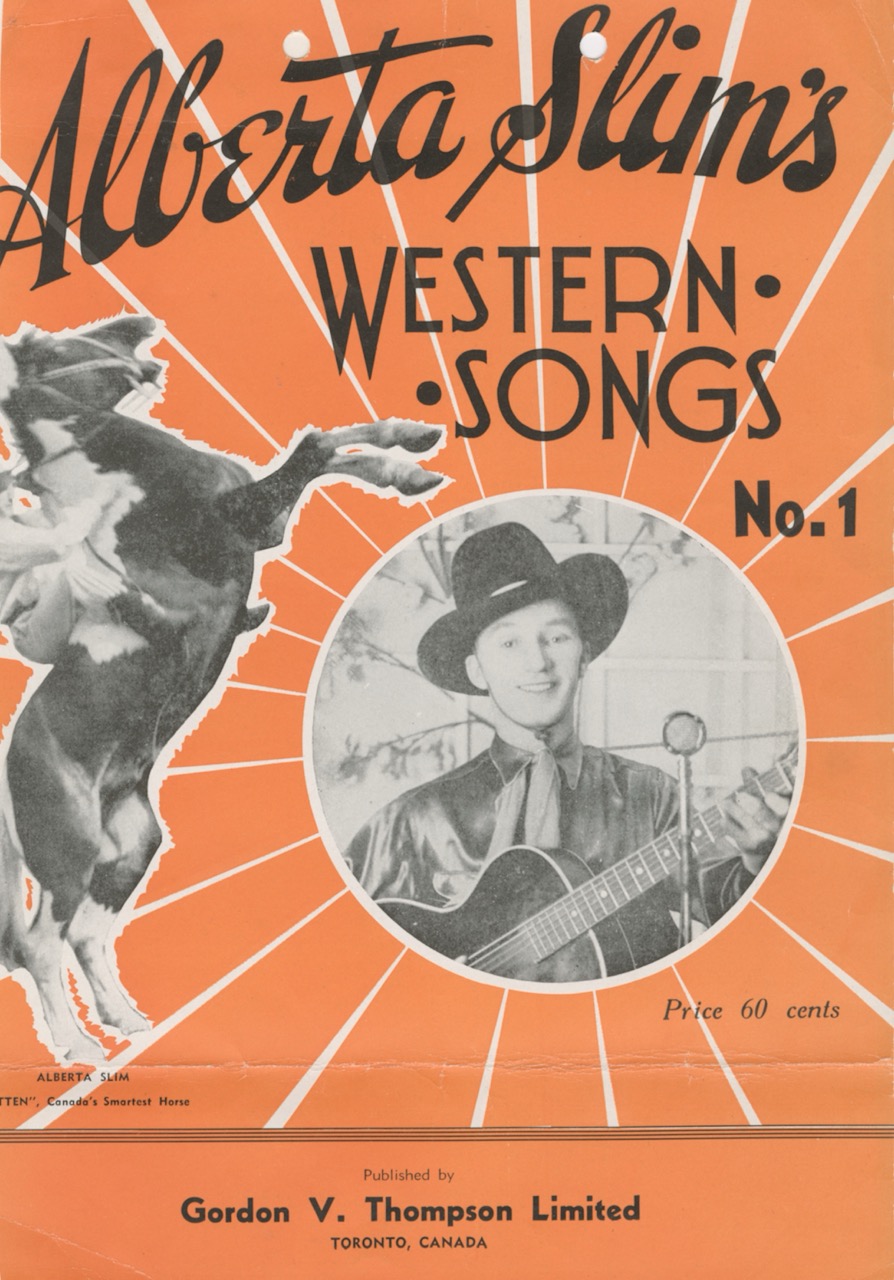
His first hit recording was a 1949 78 rpm record titled “When It’s Apple Blossom Time in the Annapolis Valley,” released on Gavotte Records. Gavotte was a Canadian label founded by Gordon V. Thompson after the Second World War. It was designed to showcase Canadian talent, especially country and western artists.
RCA, Bluebird, Spartan And Aragon
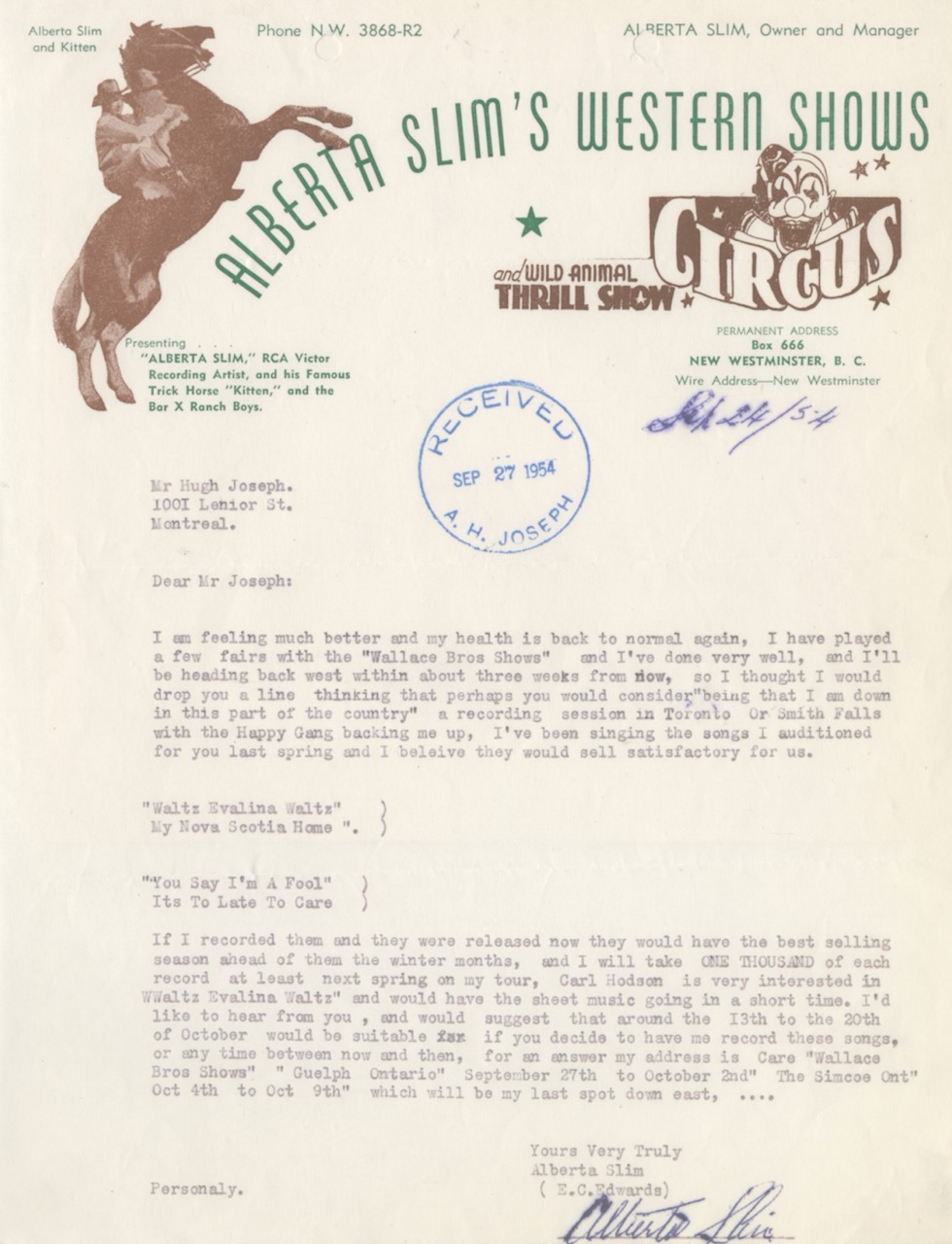
Alberta Slim signed with RCA in 1951 and recorded several 78 rpm singles on its Bluebird label through 1953. Slim often took records with him on tour to sell at jamborees and rodeos.
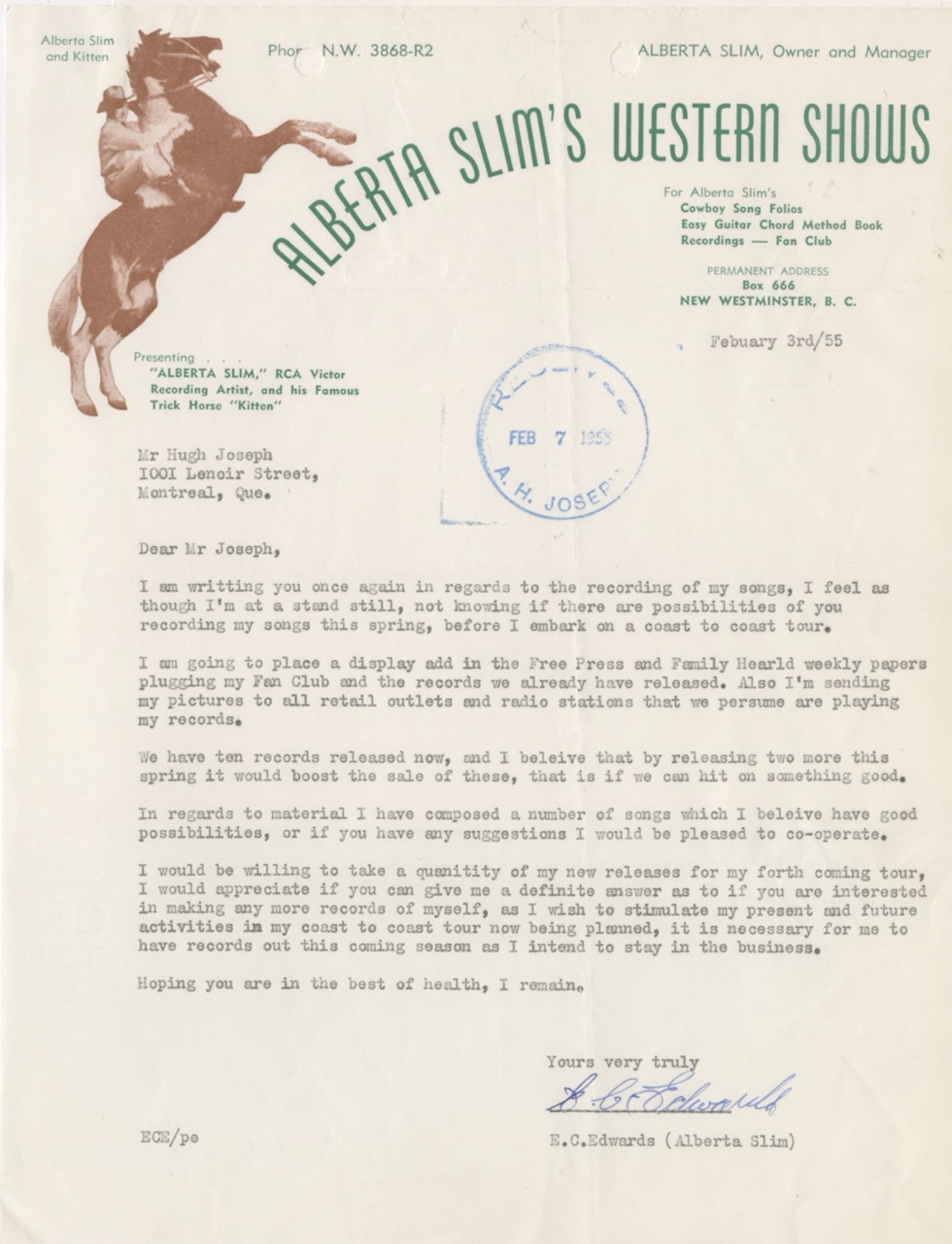
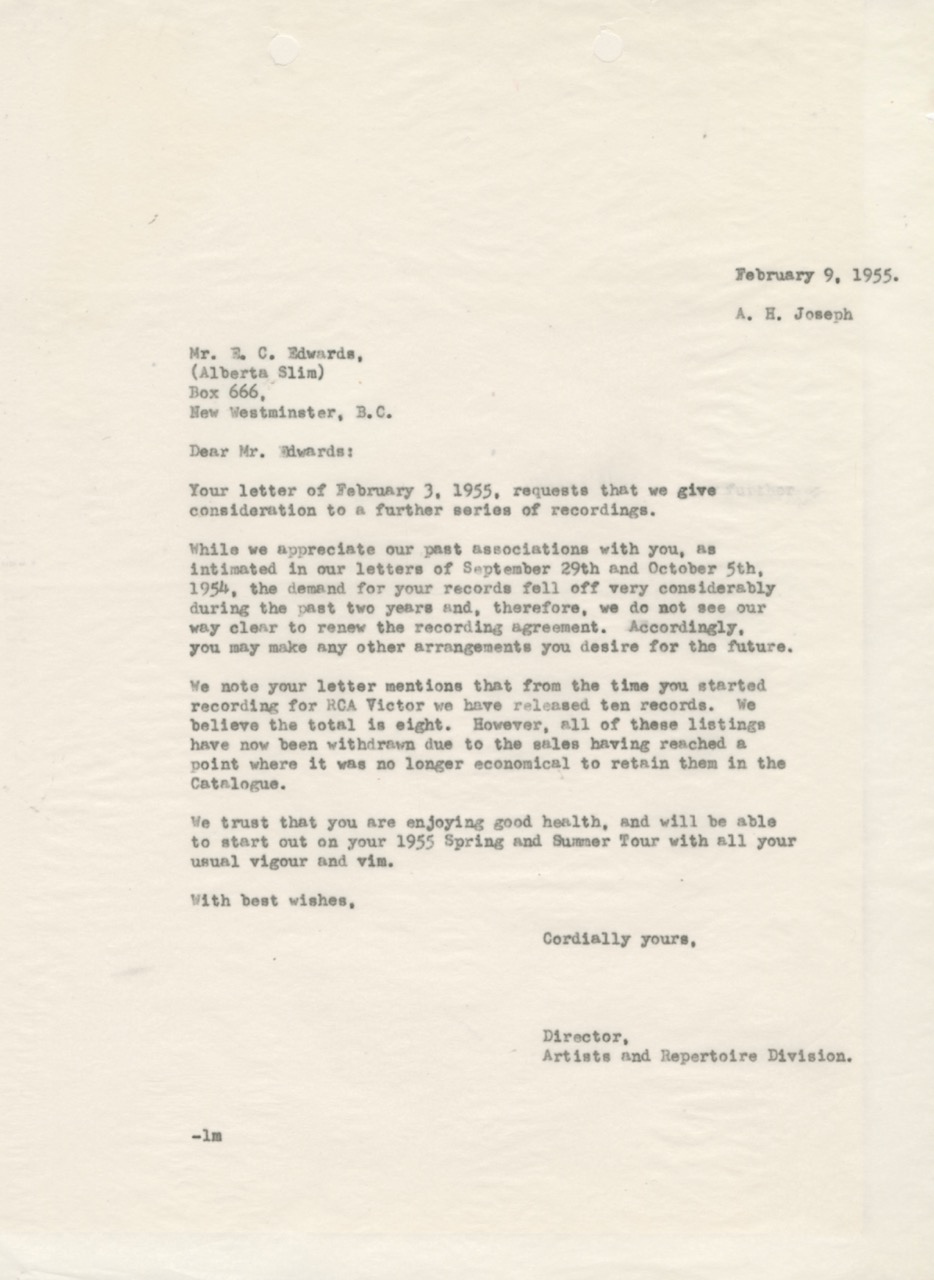
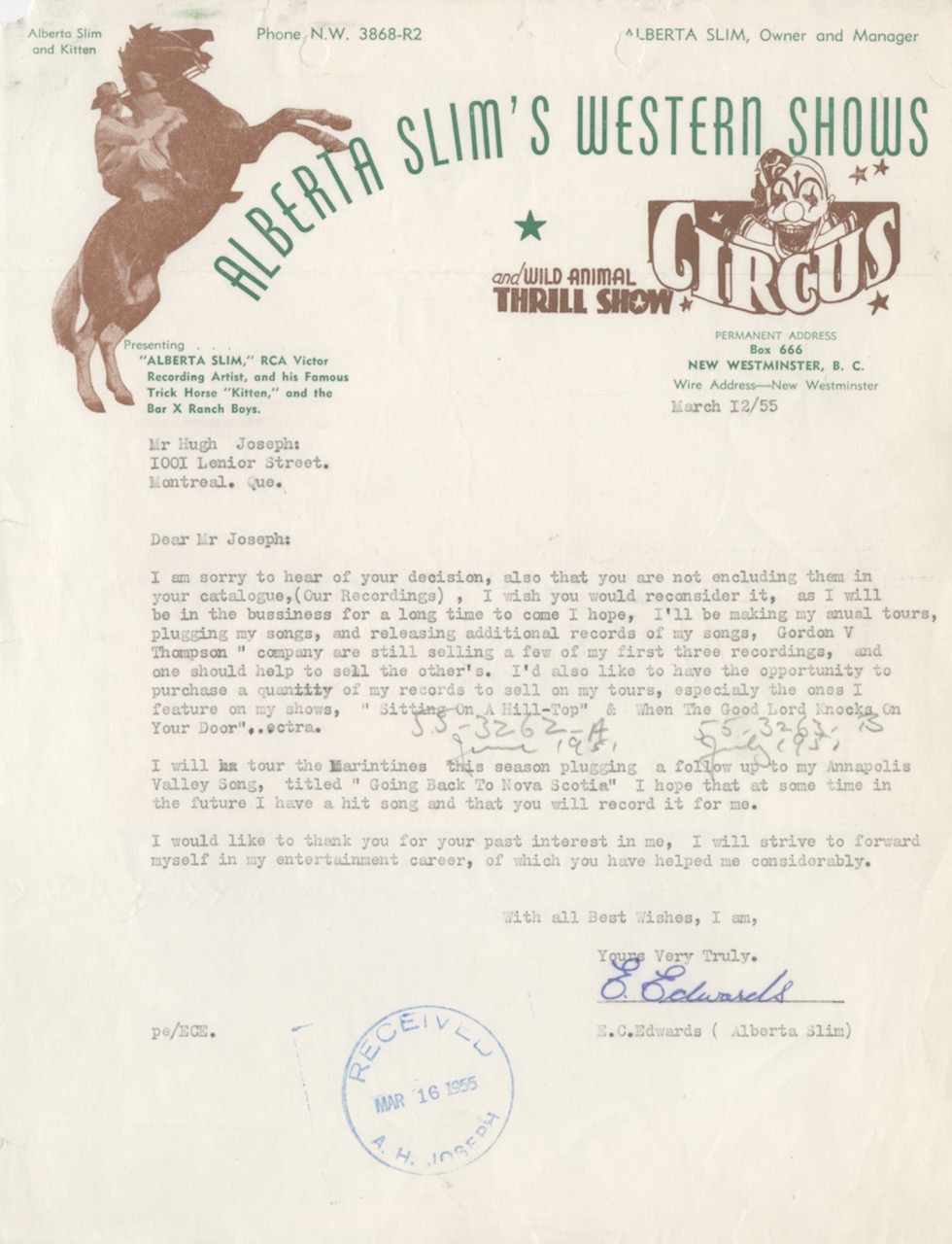
Bluebird Records was discontinued in the mid-1950s at about the same time RCA opted not to renew its contract with Alberta Slim. Edwards’s reaction to RCA’s decision was huffy.
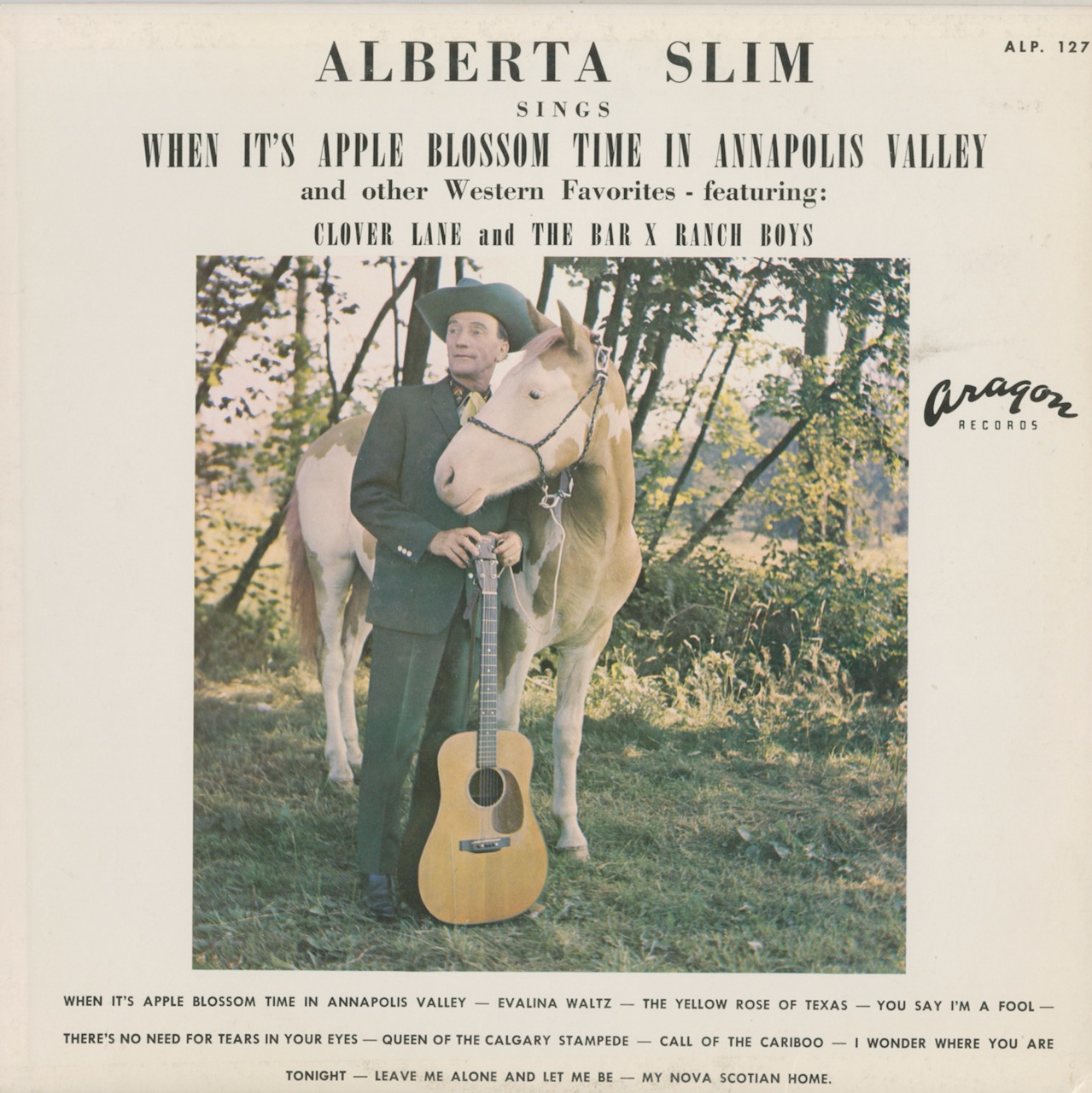
After his departure from RCA, Alberta Slim recorded singles for Spartan and Aragon Records in the later 1950s. Some of these singles would also have been released in the new 45 rpm vinyl format.
Albums—And Another Break With RCA
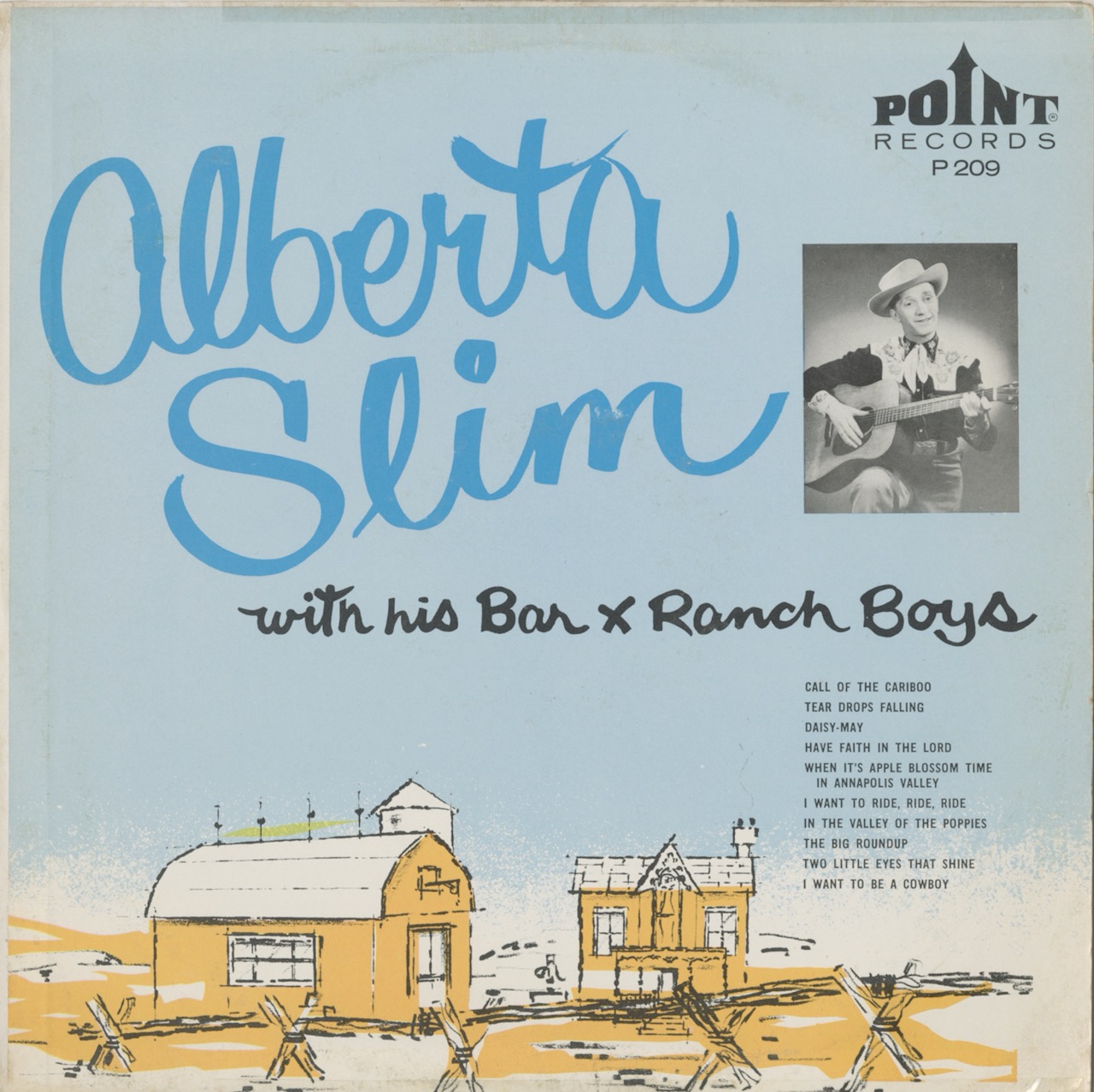
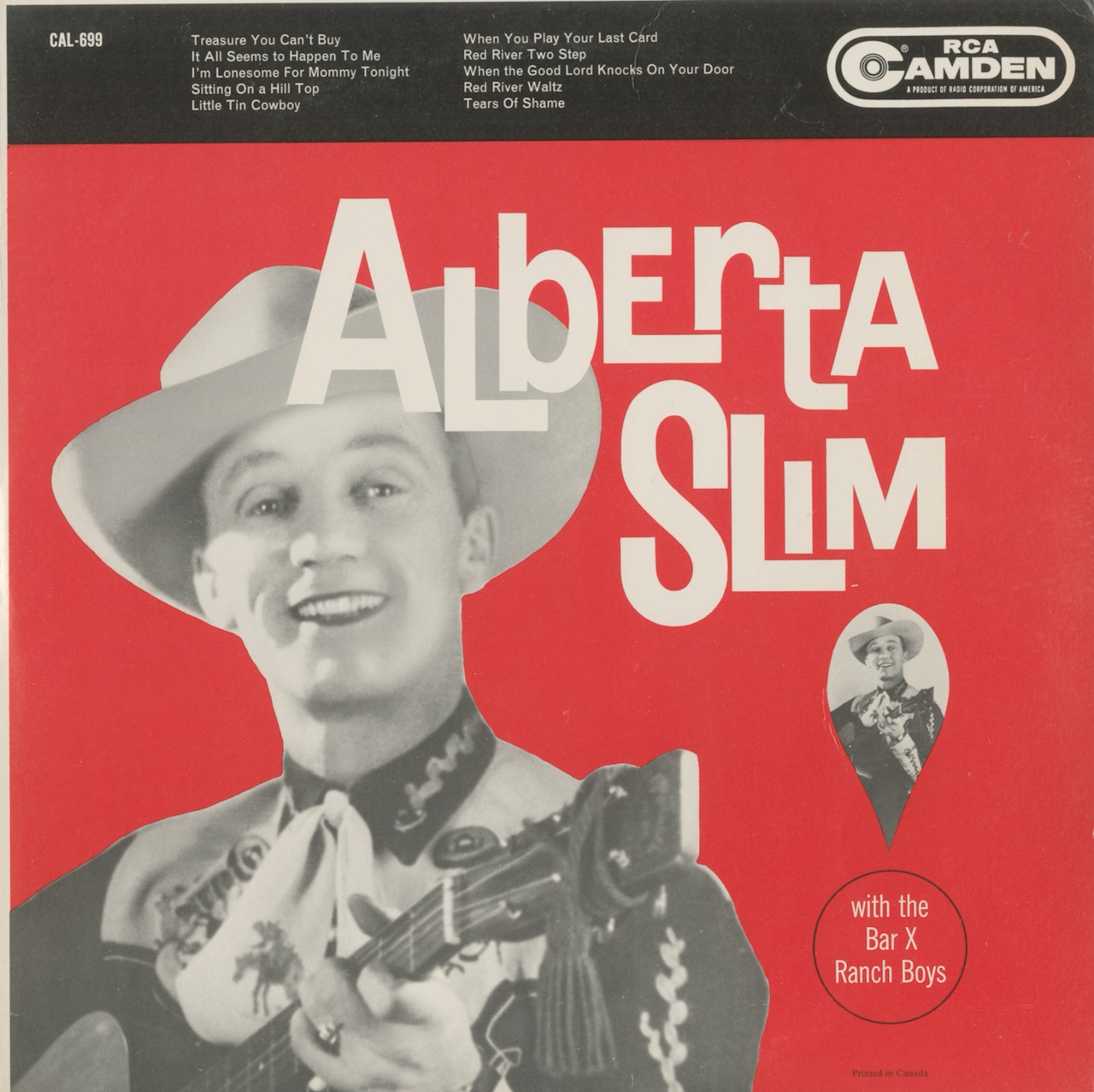
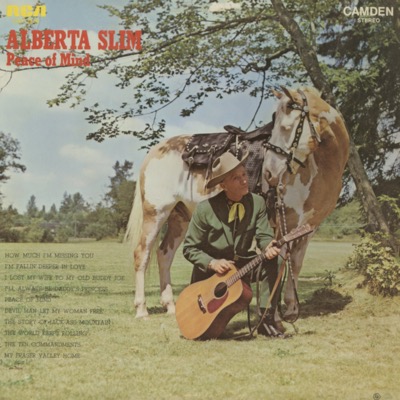
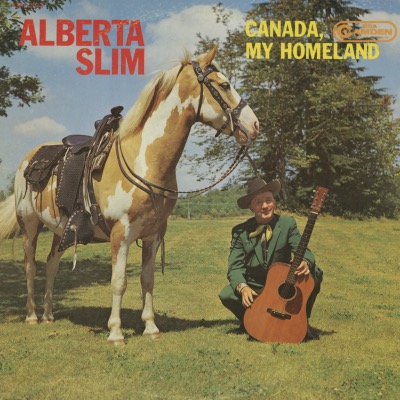
Before rejoining the RCA Camden label in the early 1960s, Alberta Slim recorded albums for Point and Aragon. After three albums, the relationship with RCA foundered again and the business relationship was severed in 1970.
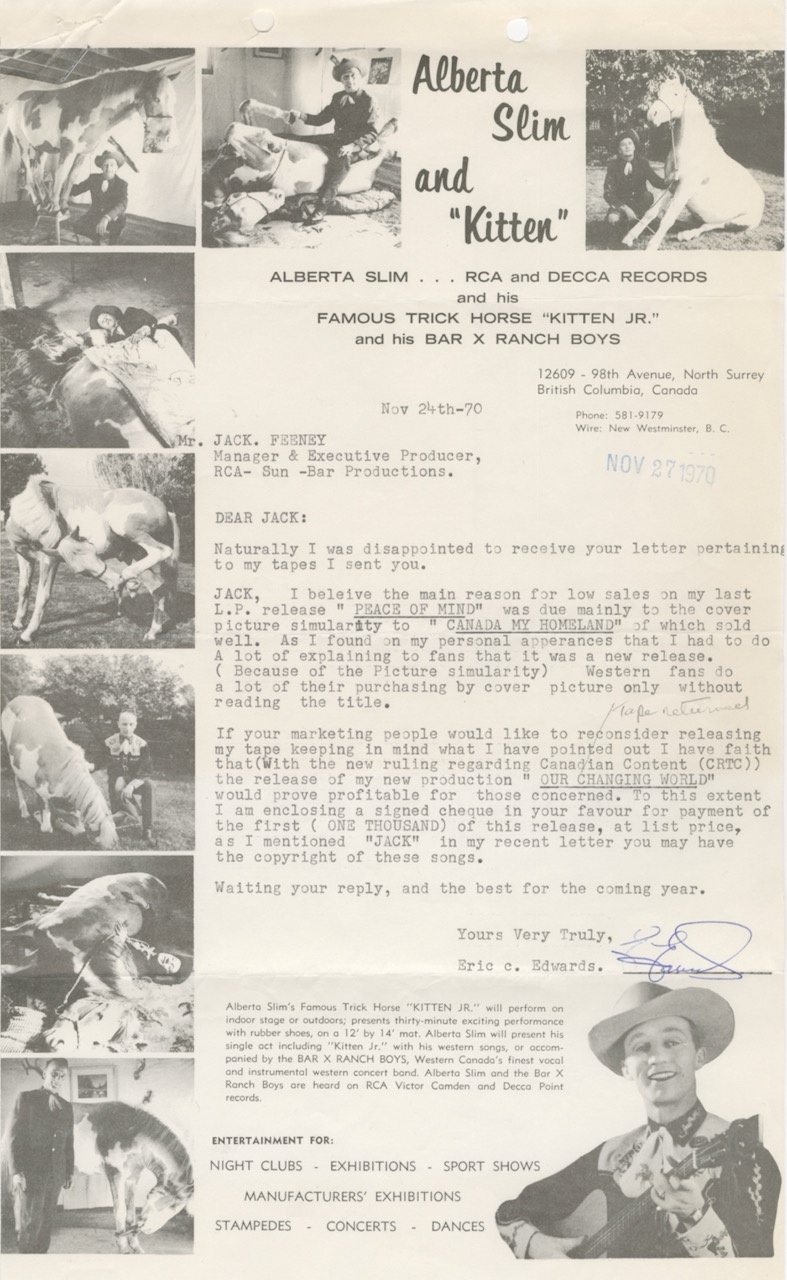
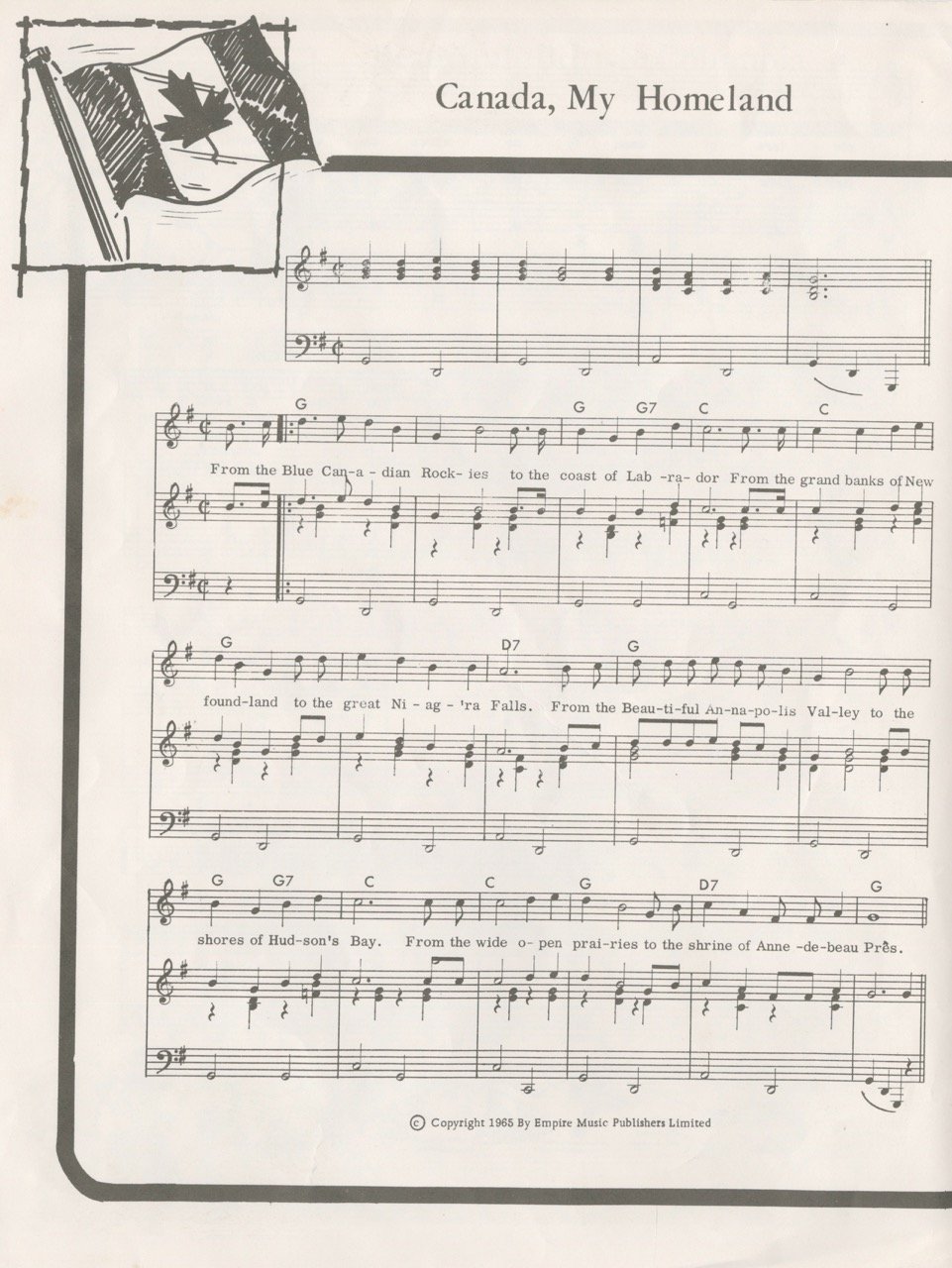
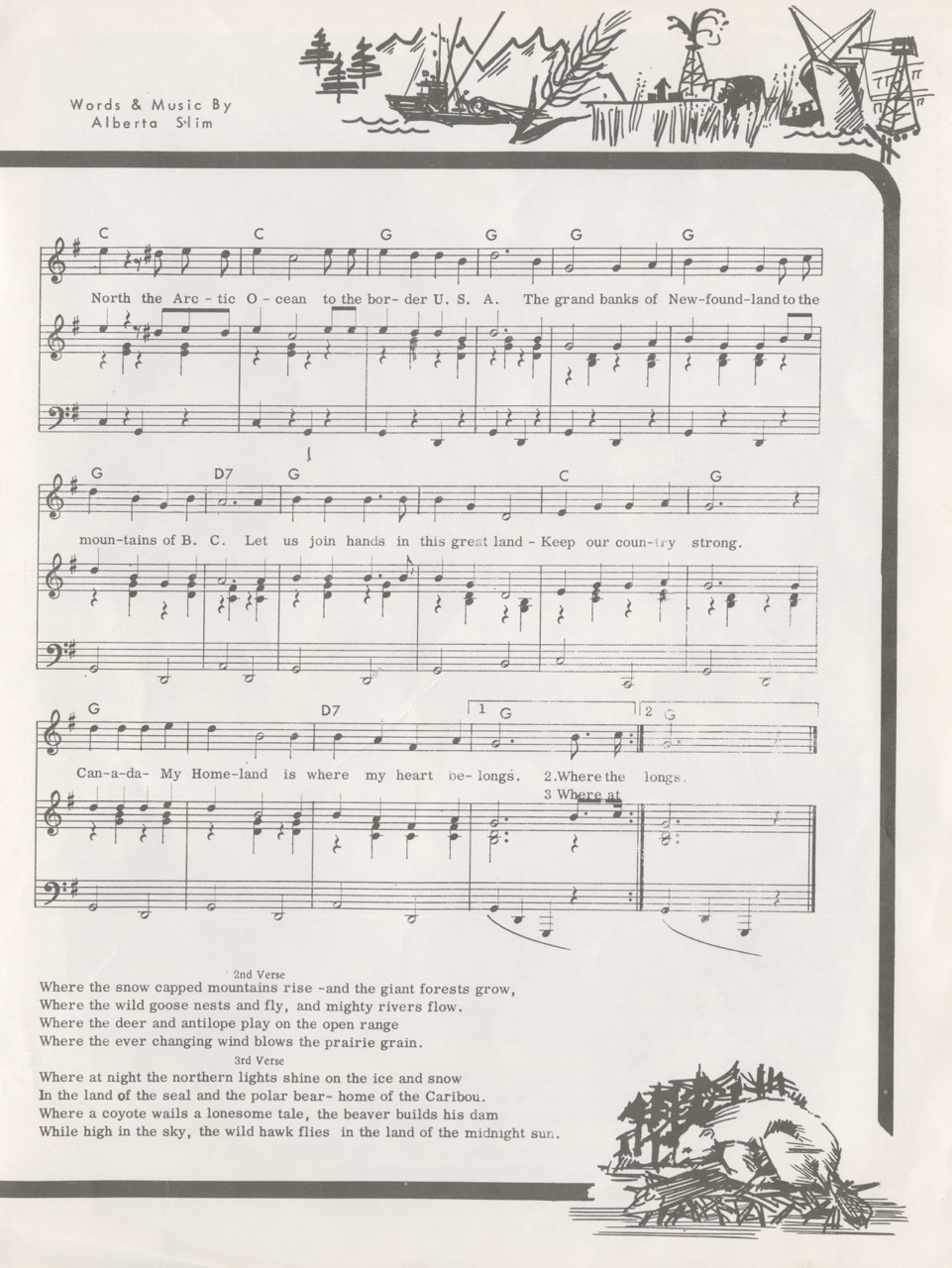
RCA cited poor sales. Edwards pointed out that the two albums Canada, My Homeland (1967) and Peace of Mind (1969) had almost identical cover art, which confused his followers.
A Correspondence Trail
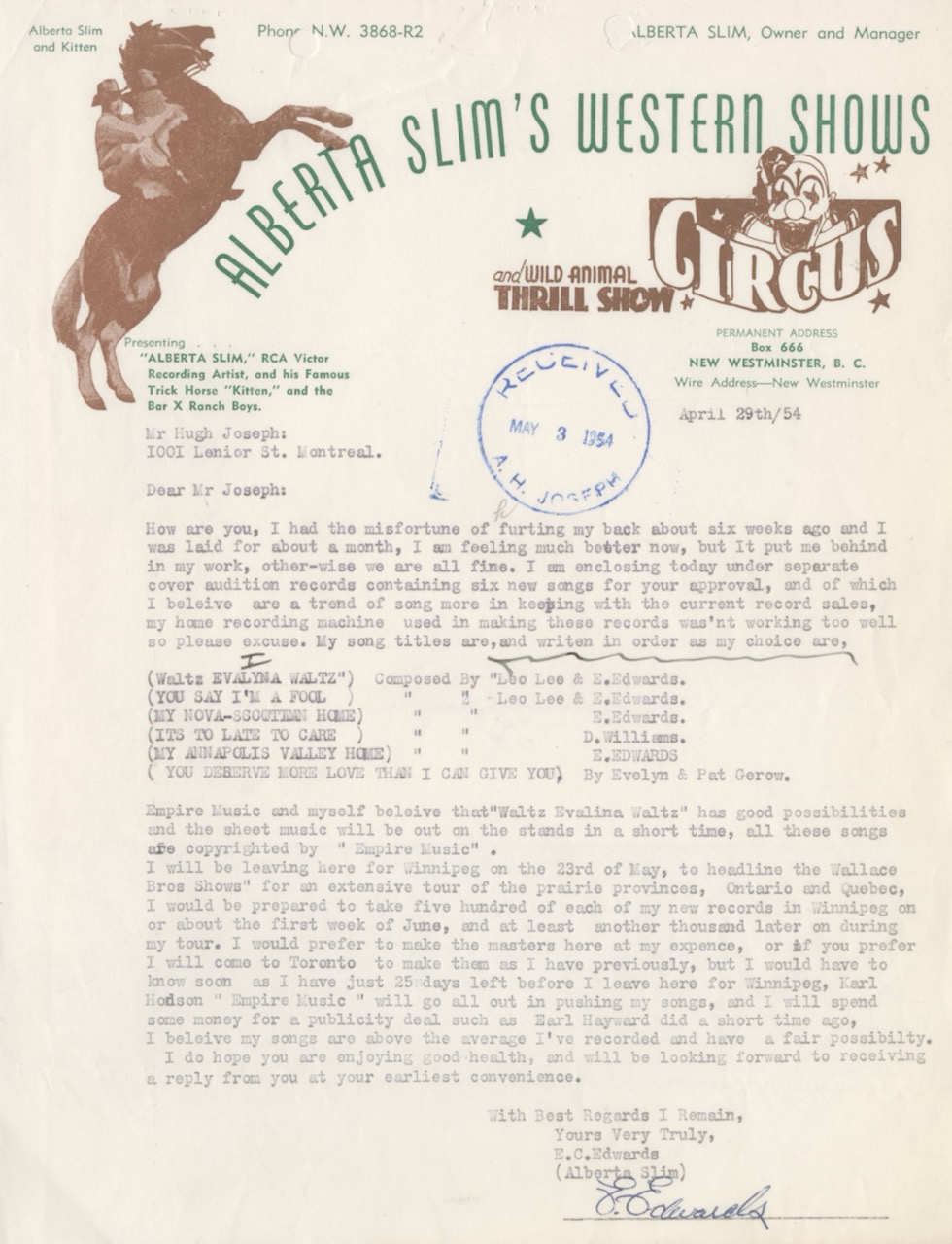
The surviving RCA file preserves part of Alberta Slim’s business relationship with the record company—including contracts, royalty discussions and his own strongly expressed views about the handling of his recordings.
Centennials, Business And A Late-Career Revival
A Long Life In Canadian Music
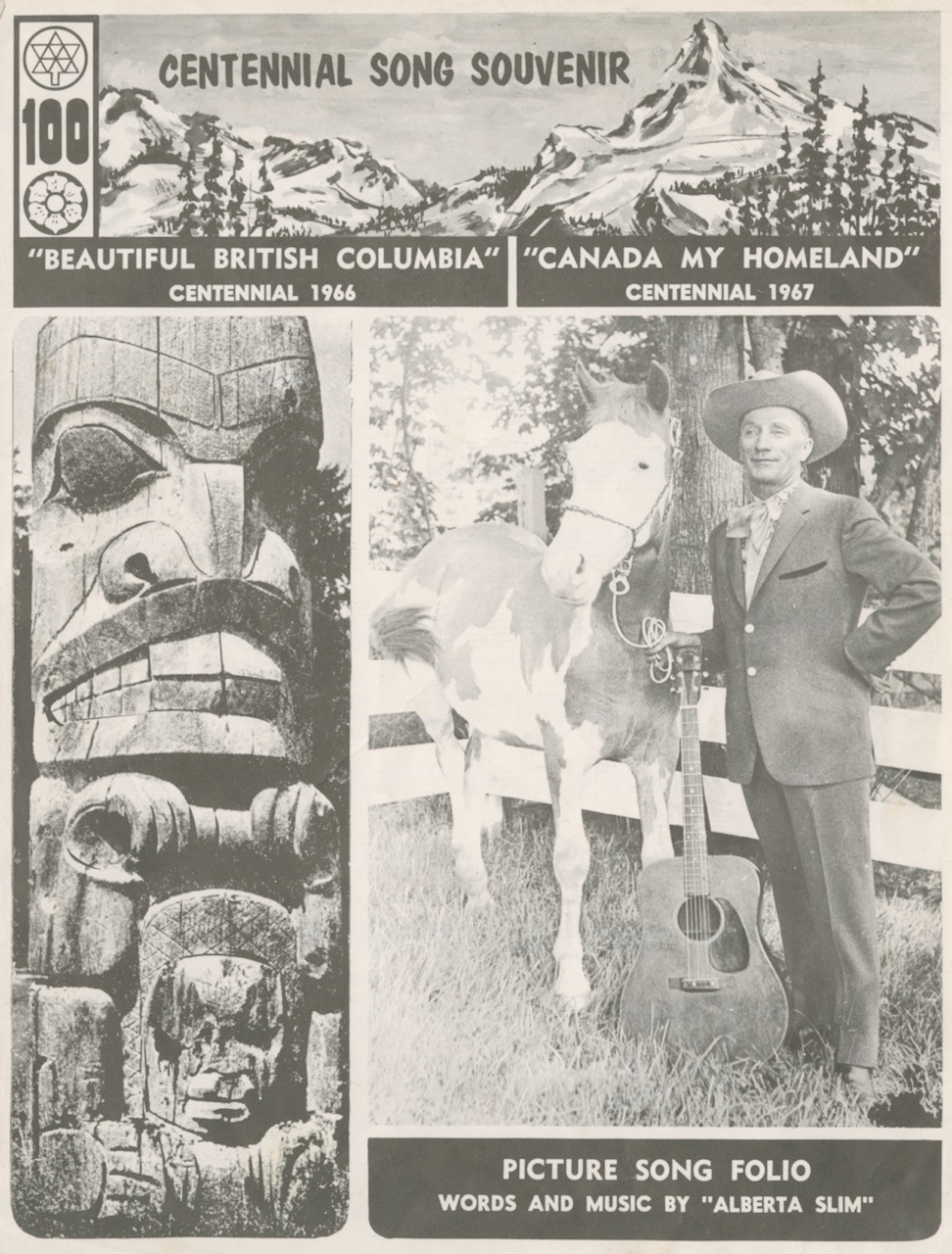
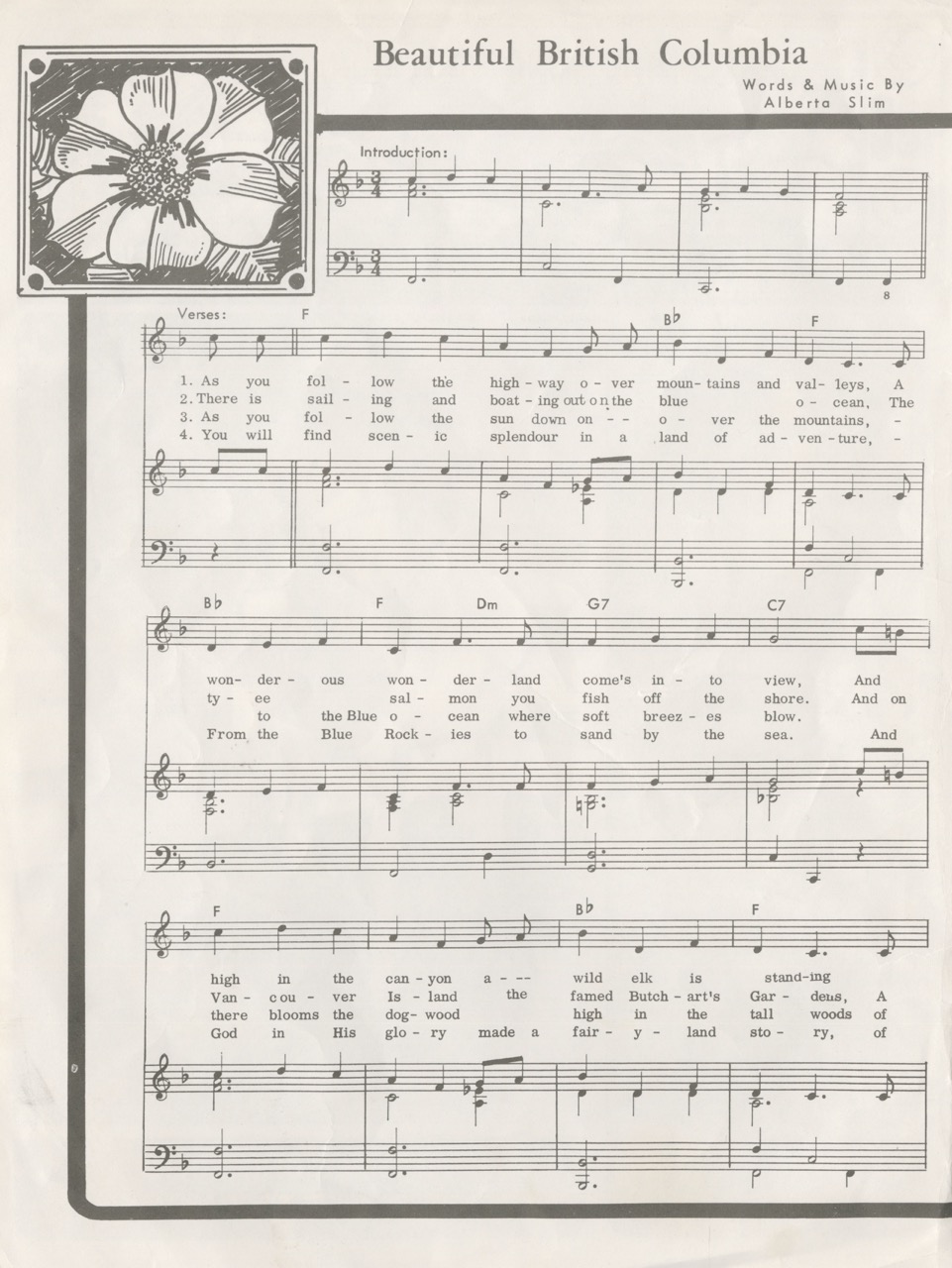
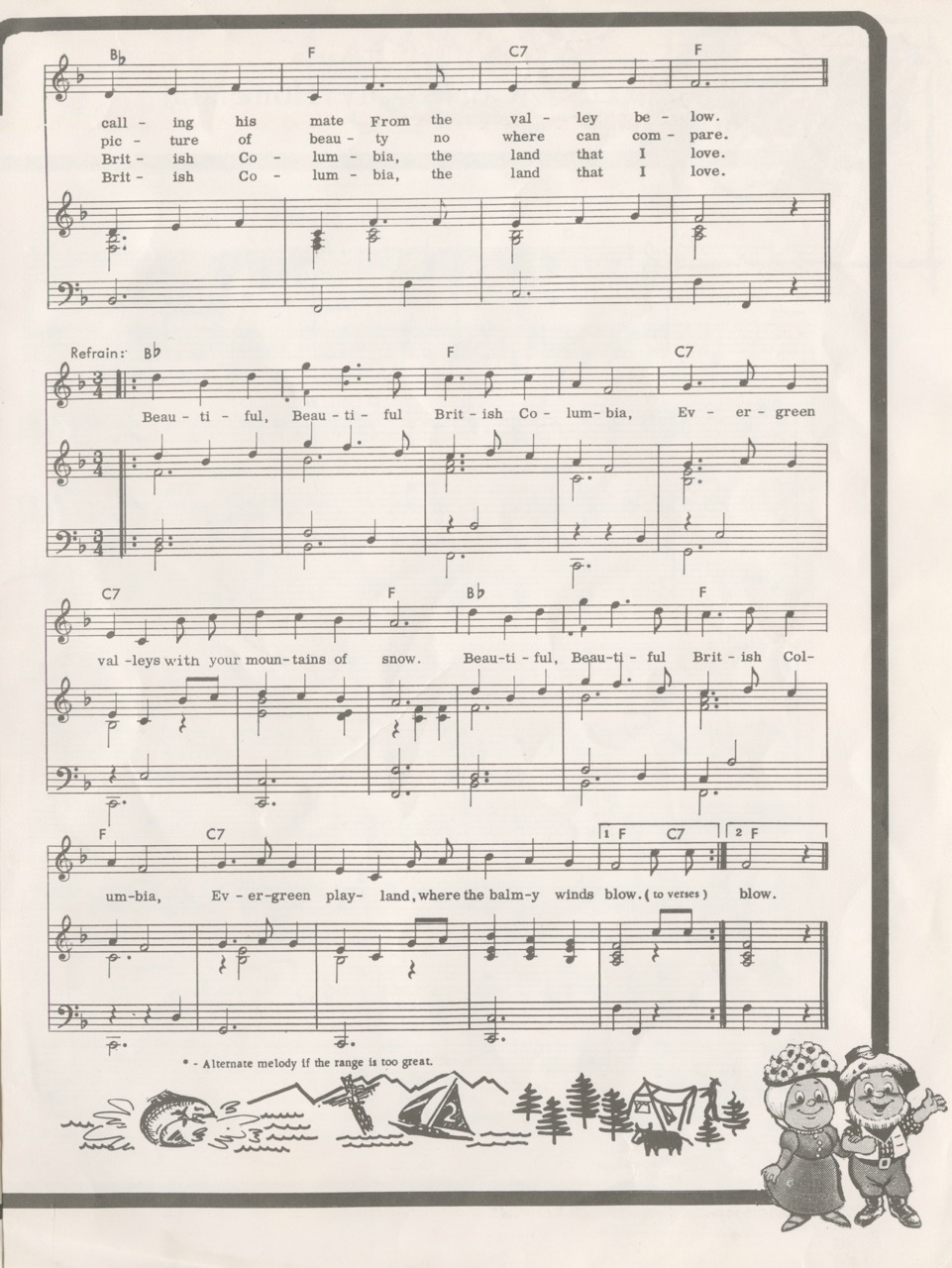
Despite the lack of new recordings, Alberta Slim continued to perform at festivals and jamborees. His most recent releases were CD compilations issued in 1997. He wrote and performed songs celebrating the centennial of the union of the British Columbia mainland and Vancouver Island, and Canada’s centennial in 1967.
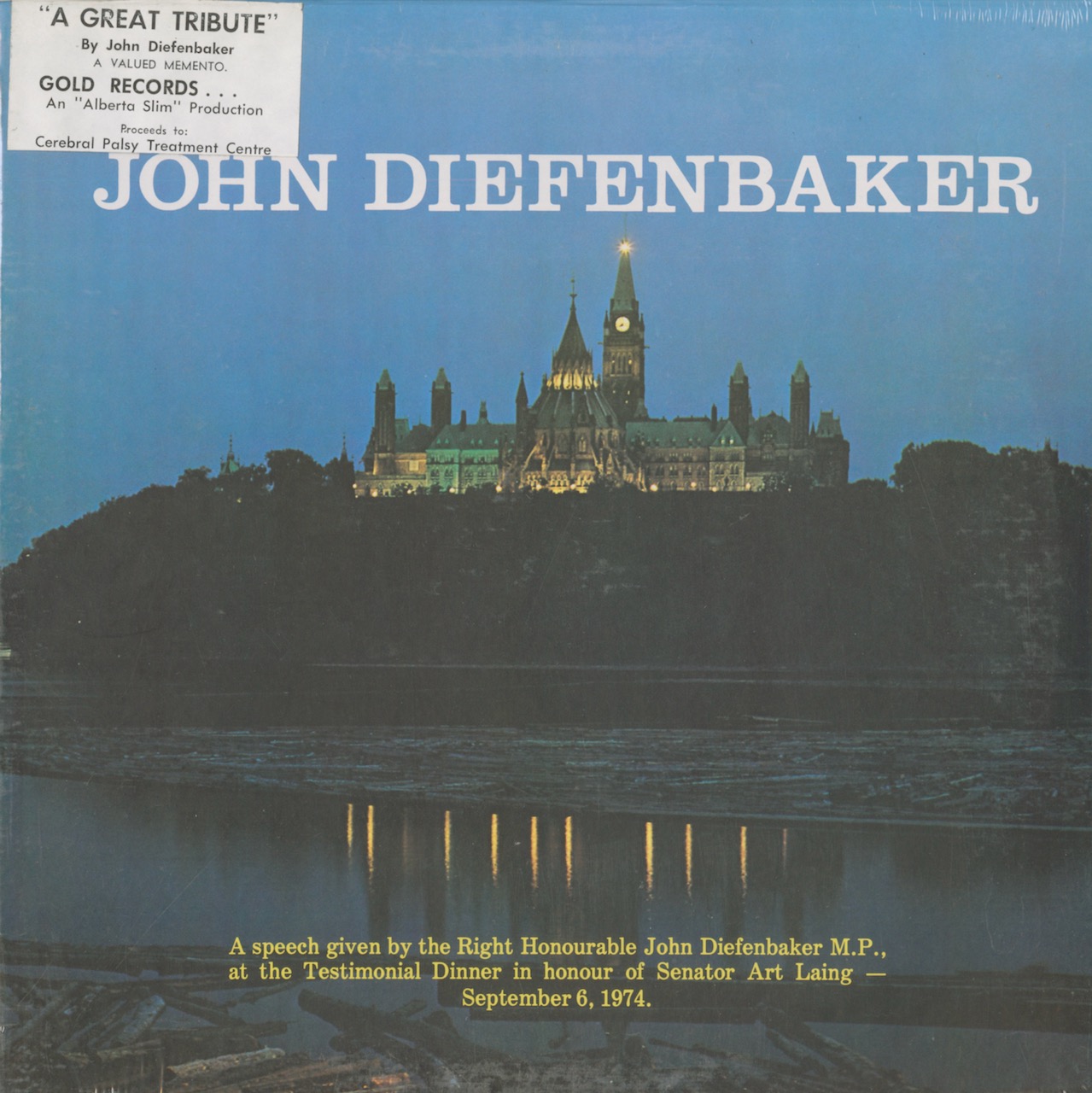
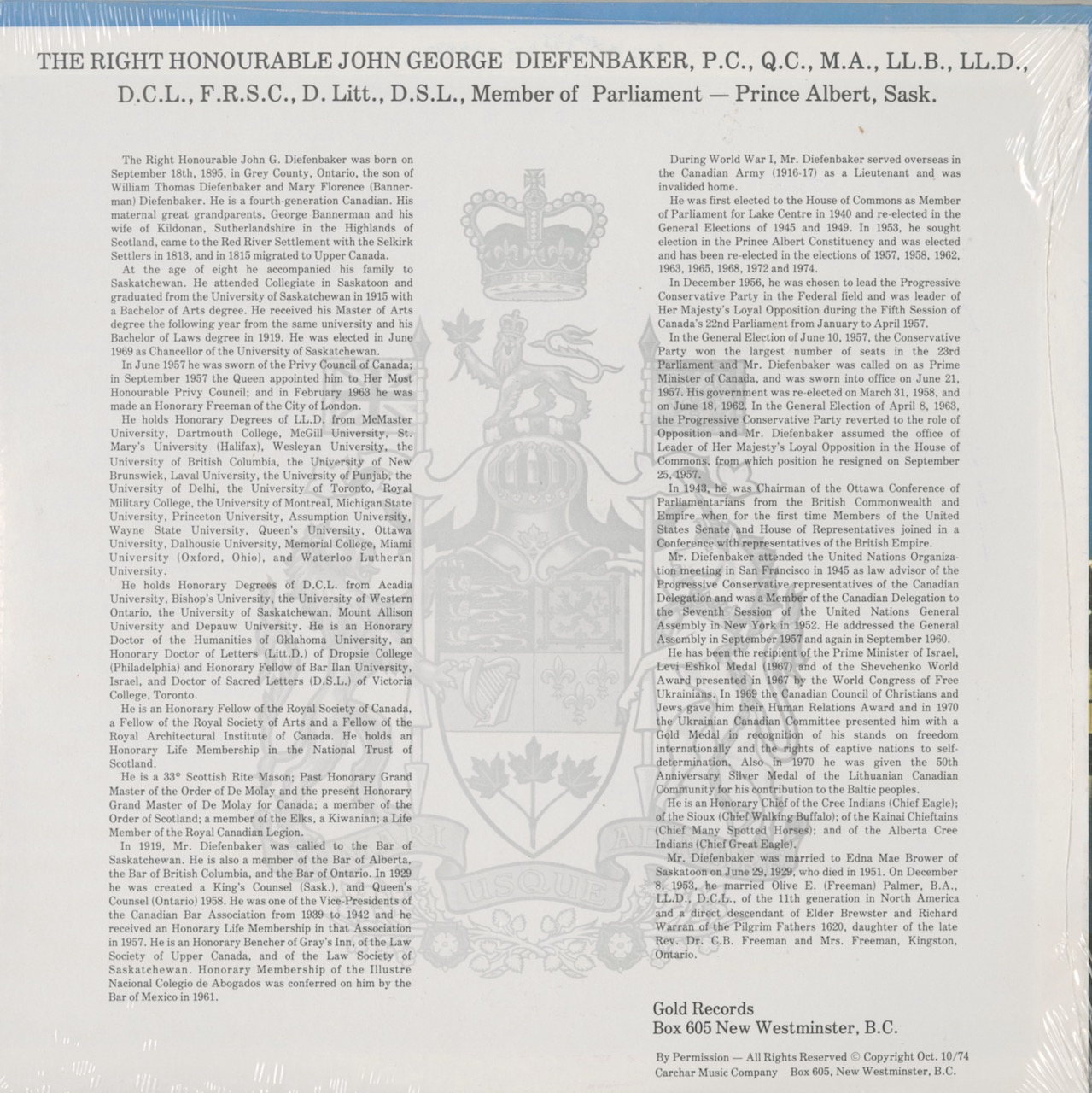
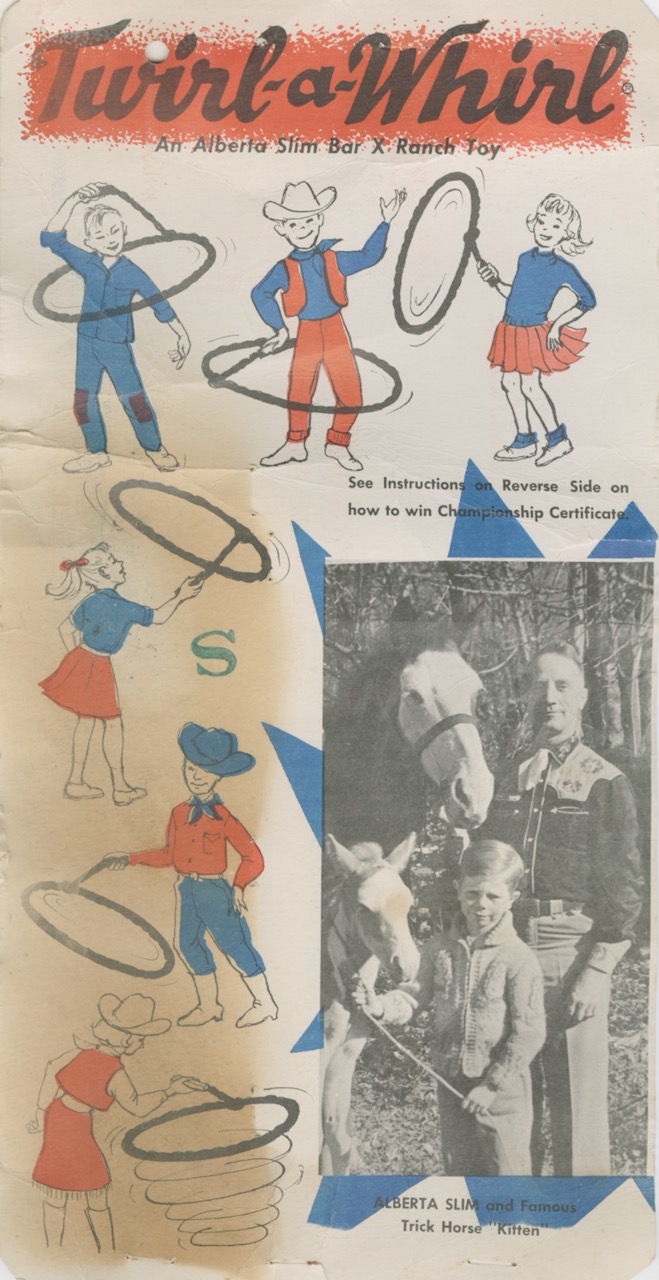
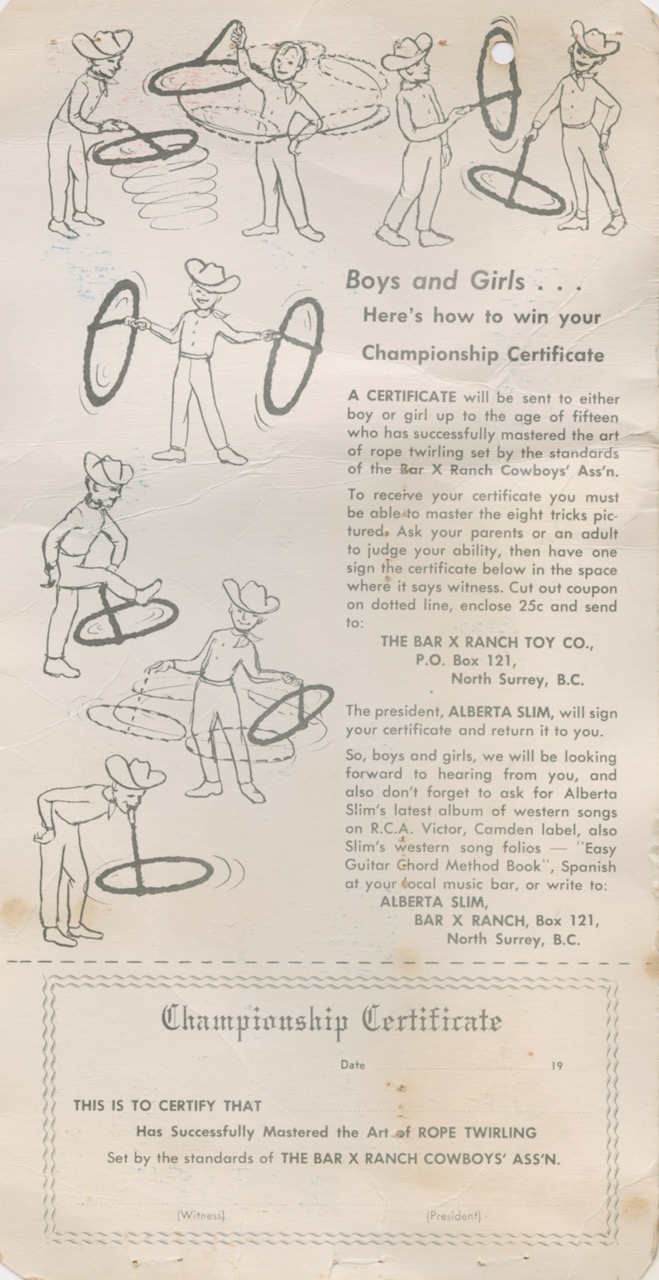
As his music career waned, Eric Edwards turned his attention to Bar-X Enterprises, which included real estate, Gold Records, Cachar Music and toys. Gold Records produced one record—a tribute speech delivered by John Diefenbaker—the proceeds of which went to the Cerebral Palsy Foundation. The Twirl-a-Whirl was a 1950s lasso toy.
Edwards’s music career enjoyed a revival when he was asked to perform at the Vancouver Folk Music Festival in 1997. His final performance was on CBC in 2003 at the age of 93.
Eric Edwards, known to generations of listeners as Alberta Slim, died in 2005 at the age of 95.
From the VinylCentric Gallery and Archive collection.