
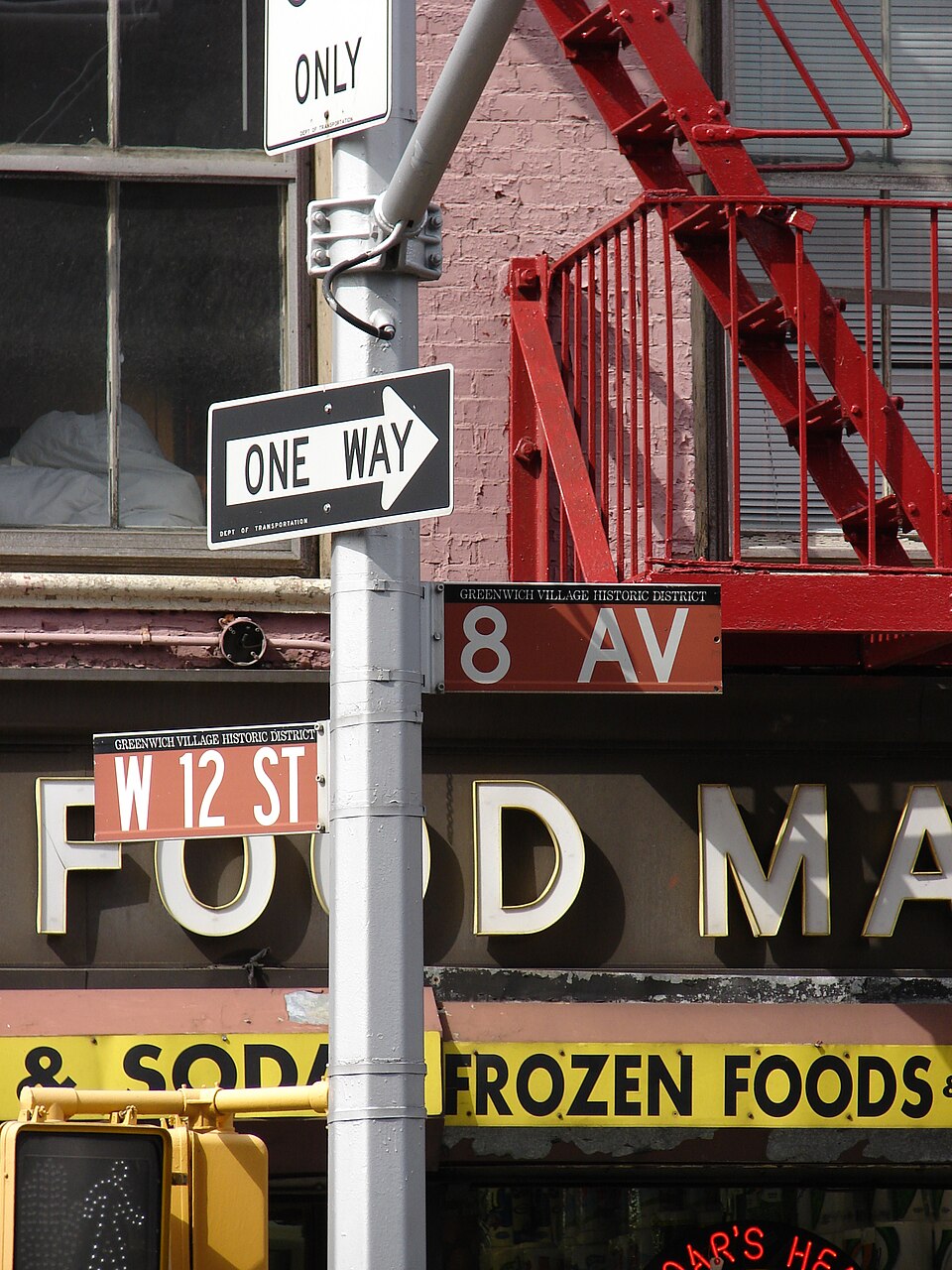
 This photo is of Wikis Take Manhattan goal code S26, One-way traffic. Image by
This photo was taken by participant/team Corn Fed Chicks as part of the Commons:Wikis Take Manhattan project on October 4, 2008.
This file is licensed under the Creative Commons Attribution-Share Alike 3.0 Unported license.
You are free:
to share – to copy, distribute and transmit the work
to remix – to adapt the work
Under the following conditions:
attribution – You must give appropriate credit, provide a link to the license, and indicate if changes were made. You may do so in any reasonable manner, but not in any way that suggests the licensor endorses you or your use.
share alike – If you remix, transform, or build upon the material, you must distribute your contributions under the same or compatible license as the original.https://creativecommons.org/licenses/by-sa/3.0CC BY-SA 3.0 Creative Commons Attribution-Share Alike 3.0 truetrue, via Wikimedia Commons. Licensed CC BY-SA 3.0 |
The One Way StreetOne-way traffic One-way traffic Traffic that moves in a single direction Several terms redirect here. For other uses, see One Way Road, One Way Street, and One Way System. One-way traffic (or uni-directional traffic) is traffic that moves in a single direction. A one-way street is a street either facilitating only one-way traffic, or designed to direct vehicles to move in one direction. One-way streets typically result in higher traffic flow as drivers may avoid encountering oncoming traffic or turns through oncoming traffic. Residents may dislike one-way streets due to the circuitous route required to get to a specific destination, and the potential for higher speeds adversely affecting pedestrian safety. Some studies even challenge the original motivation for one-way streets,… (Source: Wikipedia)
|
