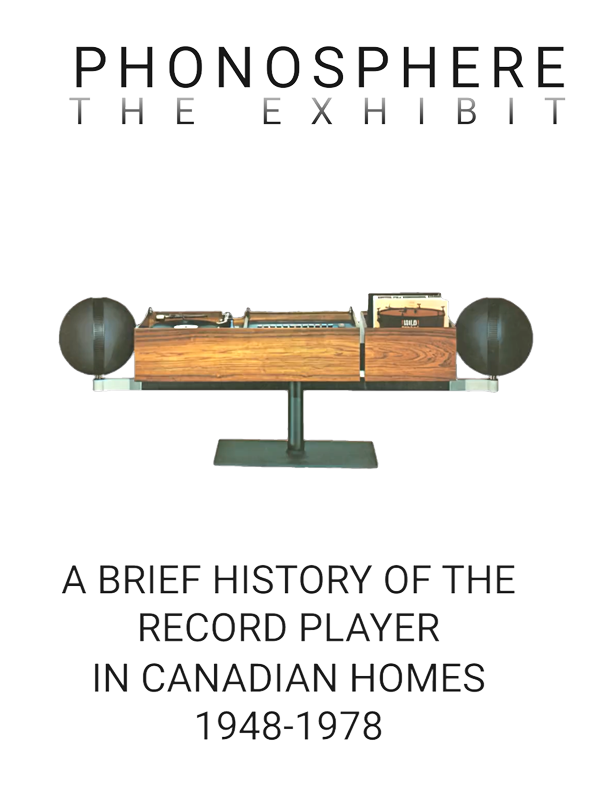
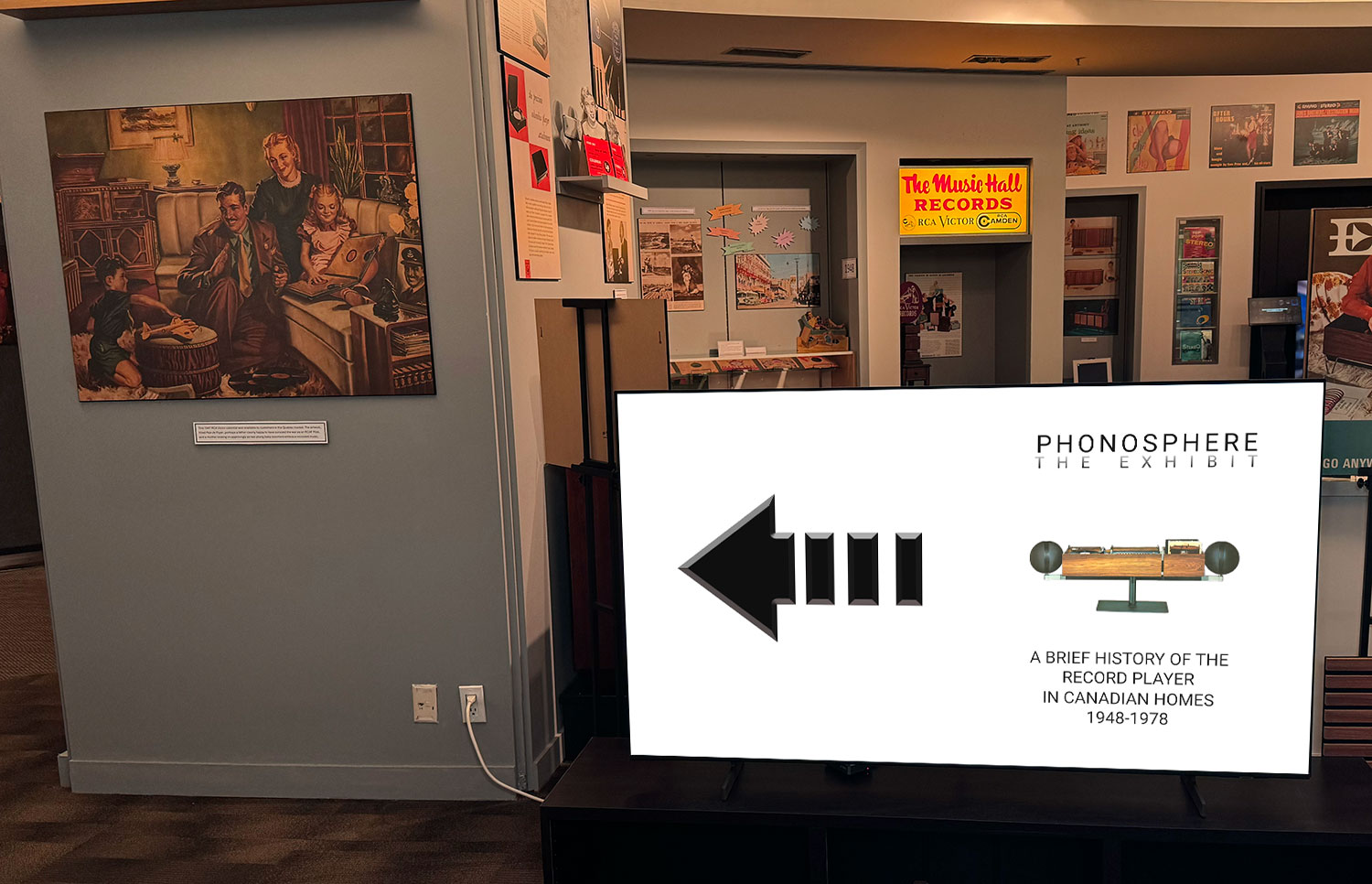
Everything you see in the PhonoSphere exhibit comes from the VinylCentric archive and is either the original artifact or a high-resolution scan of an original artefact. These works are being used to illustrate a brief history of the phonographs – or record players – found in Canadian homes from the late 1940s until about 1978.
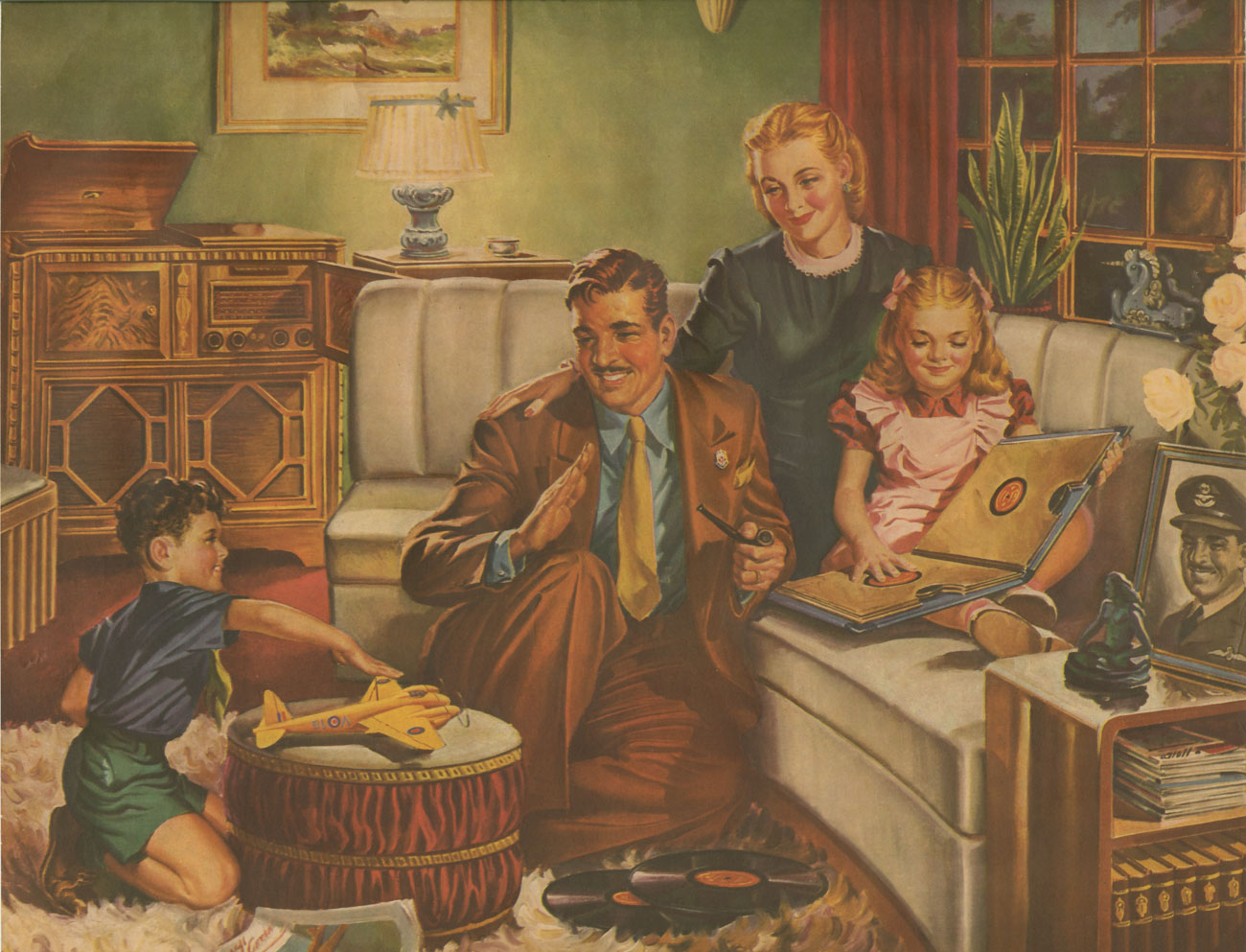
We scan and digitize original musical-related artifacts into our growing database for preservation and conservation. They can be viewed by all on the website.
Point-and-Click: A Brief Refresher on the History of Recorded Music from its Inception in 1877
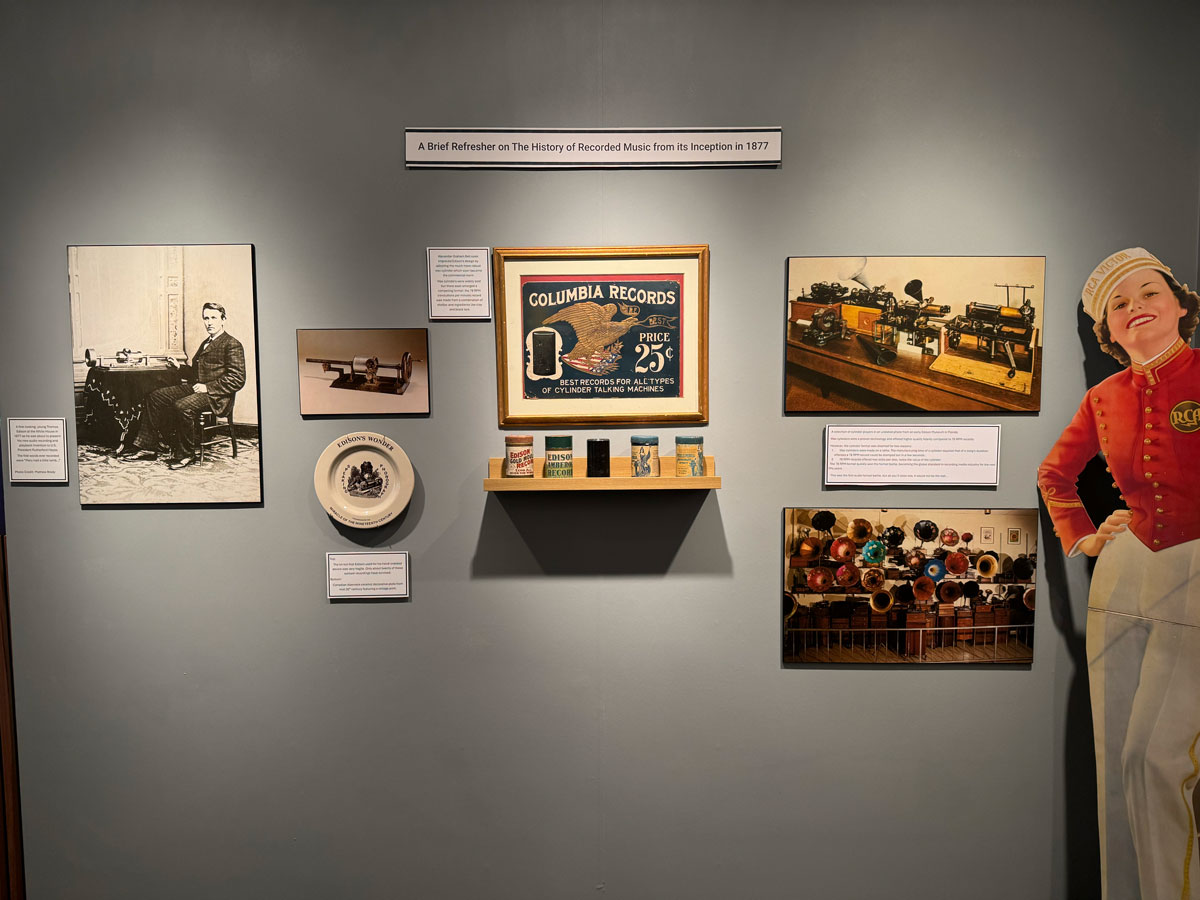
Edison, 1877
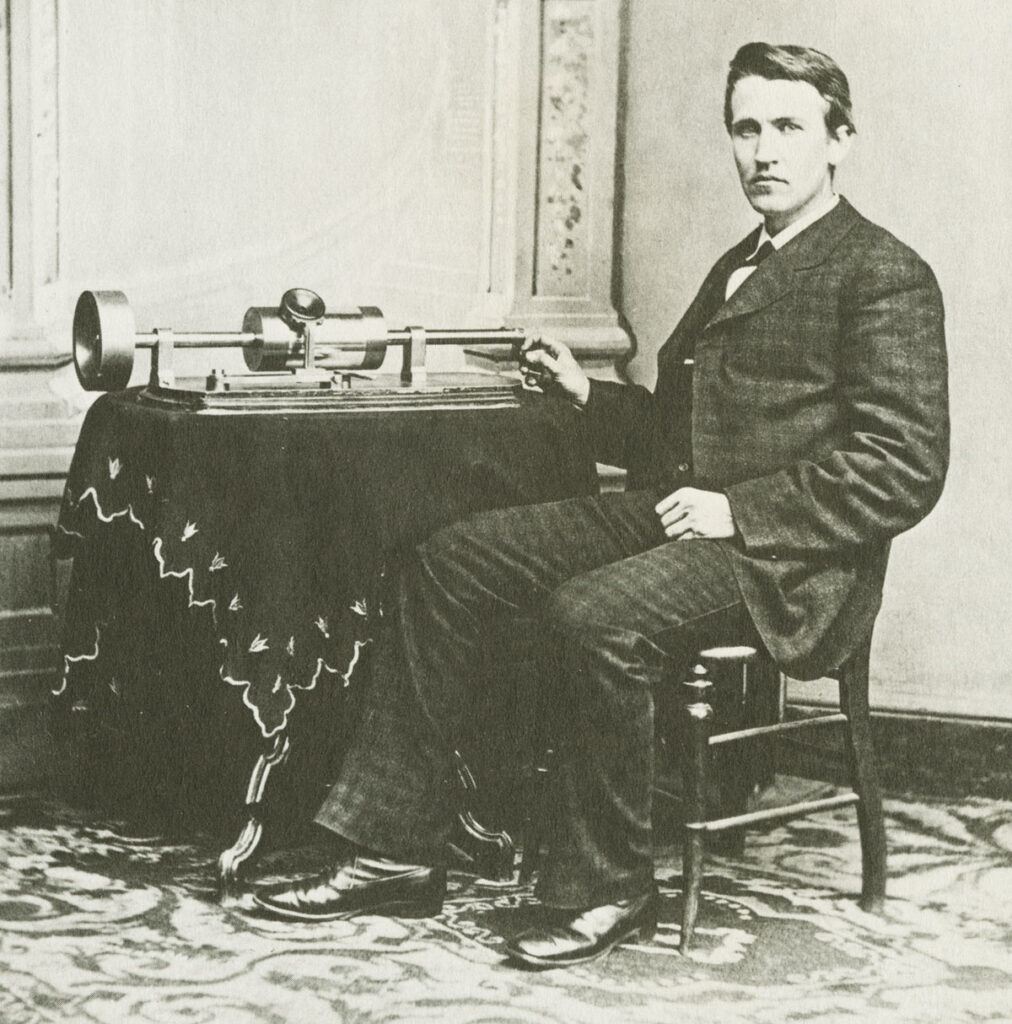
A fine-looking, young Thomas Edison at the White House in 1877 as he was about to present his new audio recording and playback invention to U.S. President Rutherford Hayes. The first words ever recorded were “Mary had a little lamb…”
Photo Credit: Mathew Brady
Bell
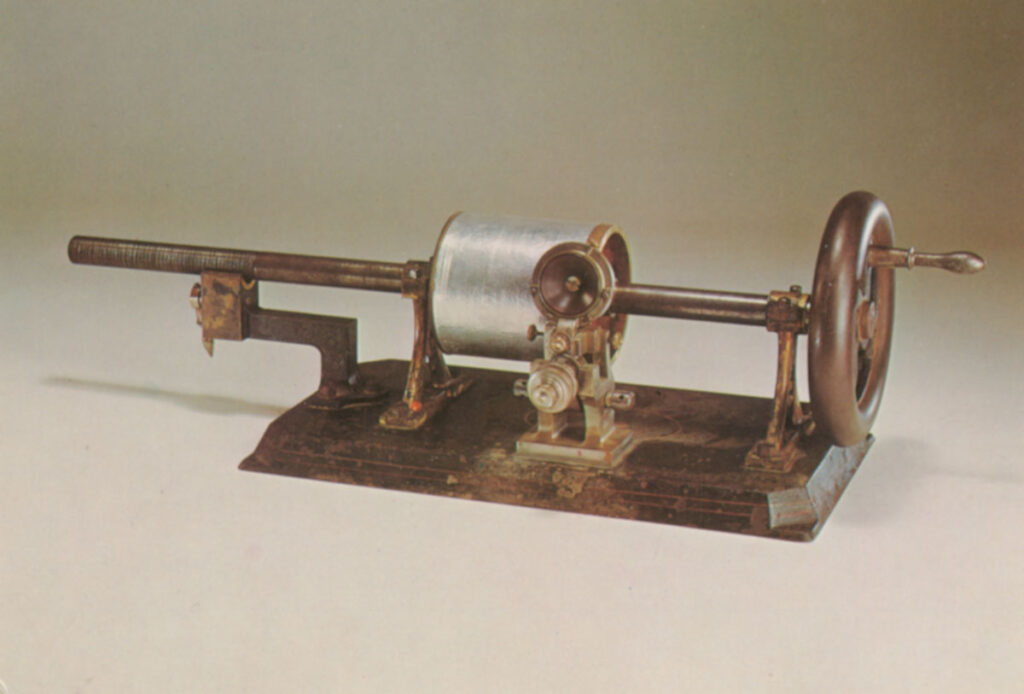
Alexander Graham Bell soon improved Edison’s design by adopting the much more robust wax cylinder which soon became the commercial norm.
Edison Plate
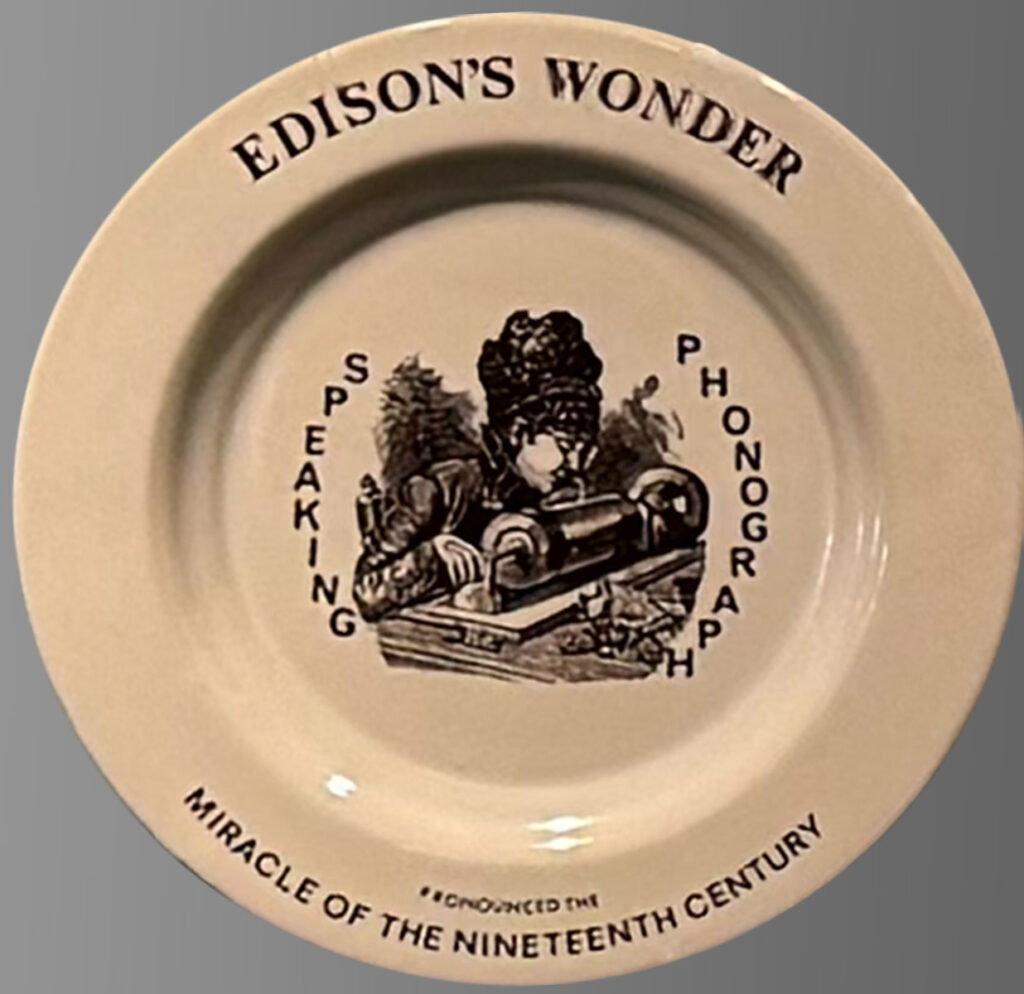
Canadian Abenakis ceramic decorative plate from mid 20th century featuring a vintage print.
Music on Cylinder
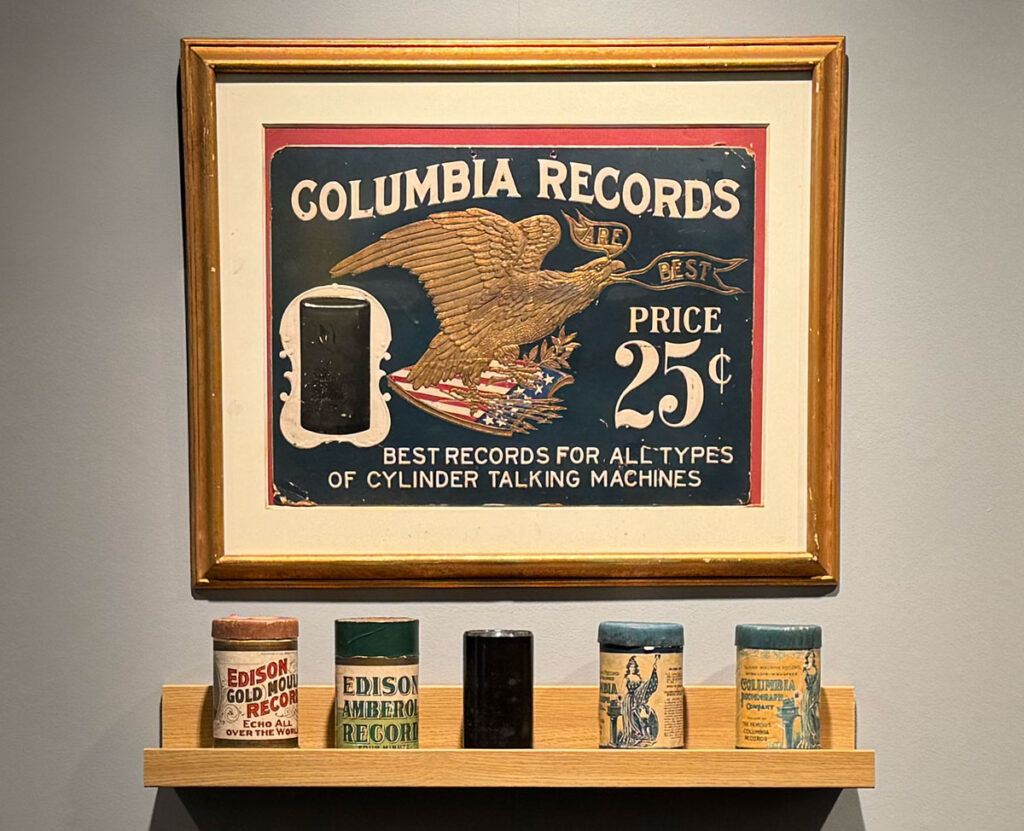
Wax cylinders were a proven technology and offered higher quality fidelity compared to 78 RPM records. However, the cylinder format was doomed for two reasons:
1. Wax cylinders were made on a lathe. The manufacturing time of a cylinder equalled that of a song’s duration whereas a 78 RPM record could be stamped out in a few seconds.
2. 78 RPM records offered two sides per disc, twice the value of the cylinder. The 78 RPM format quickly won the format battle, becoming the global standard in recording media industry for the next fifty years.
This was the first audio format battle, but as you’ll soon see, it would not be the last...
A Selection of Cylinder Players
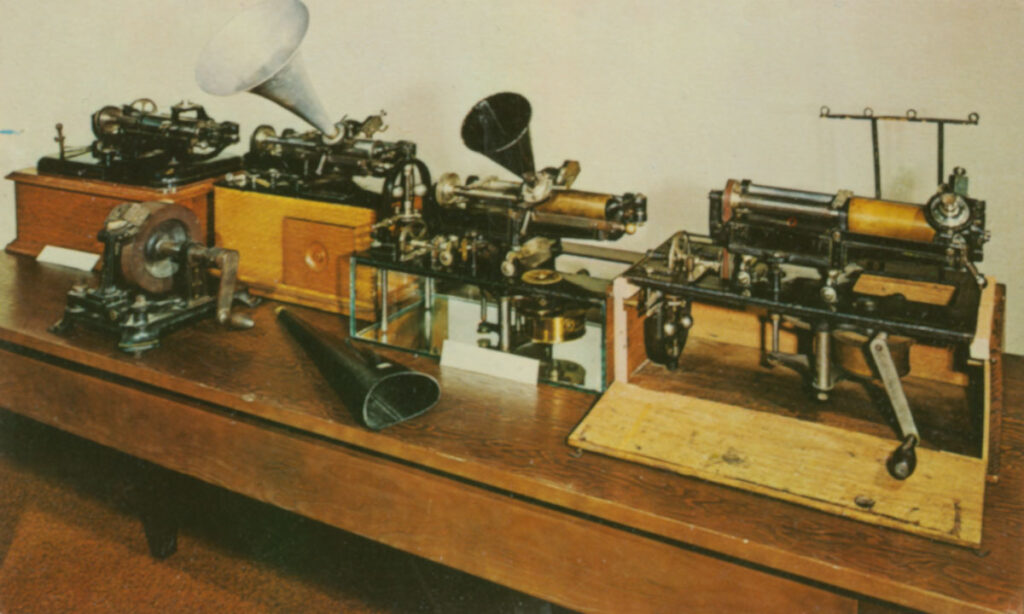
A selection of cylinder players in an undated photo from an early Edison Museum in Florida.
Early Gramophones
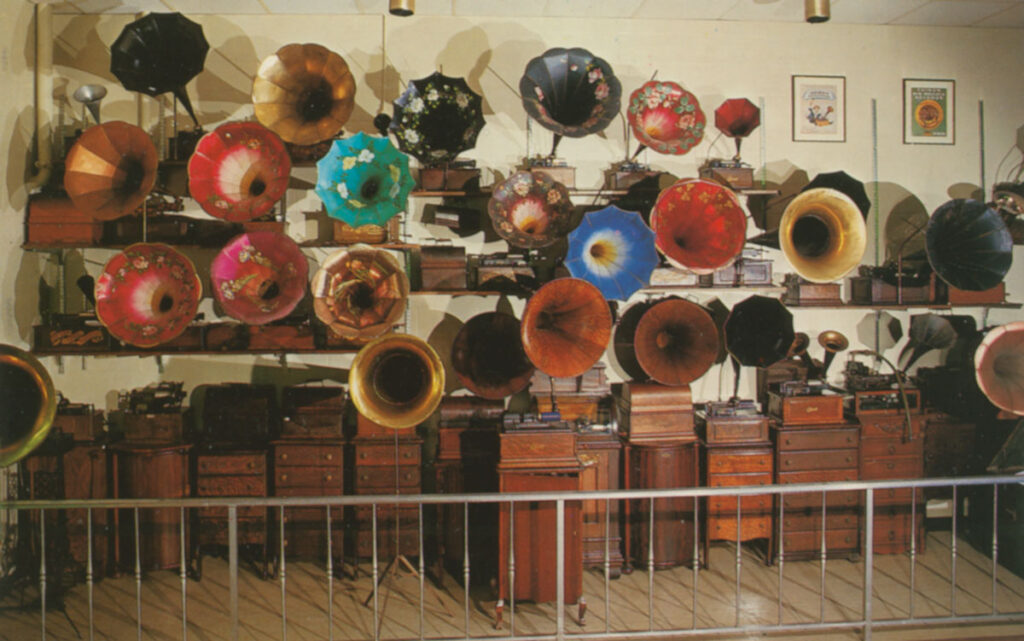
A Wide Assortment of Early Record Players, or "Gramophones"
Point-and-Click: The Birth of the Disc: 78 RPM Records
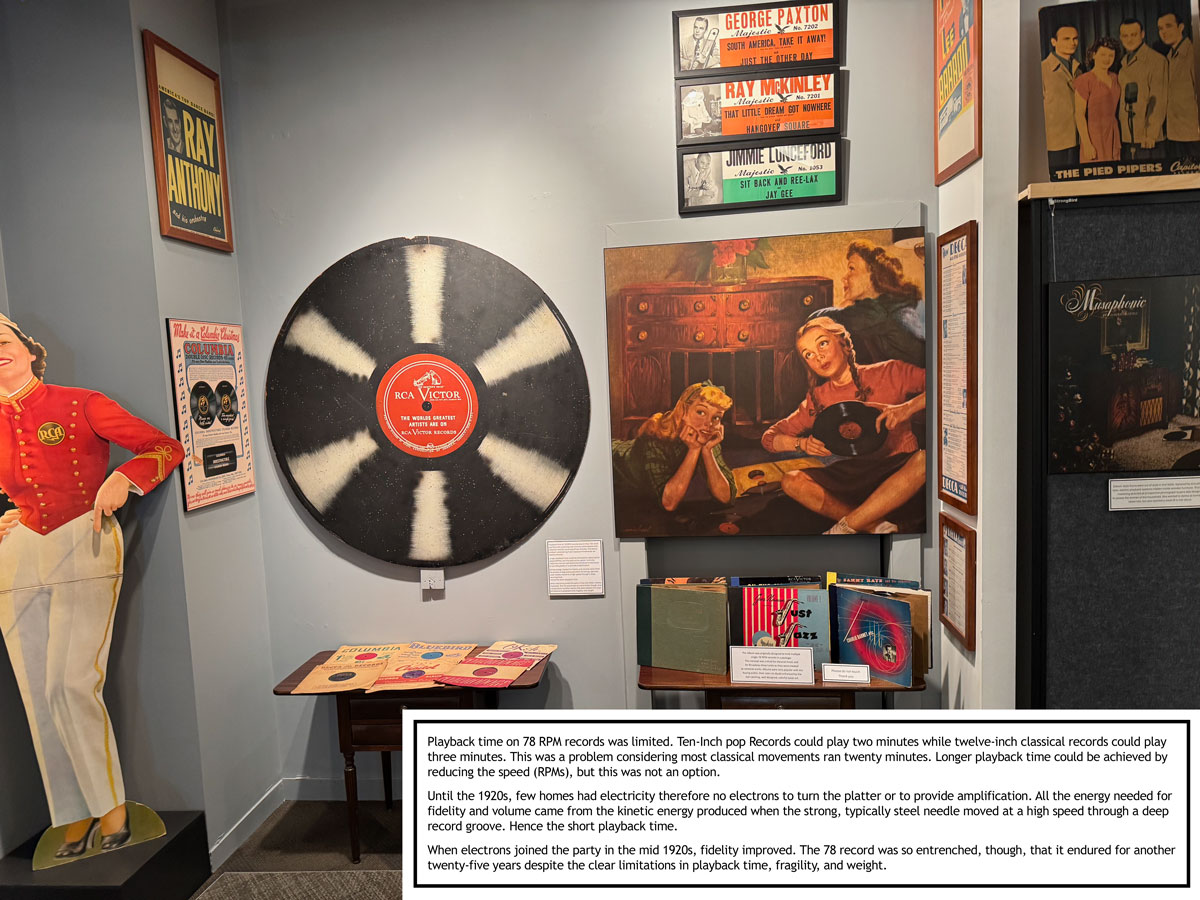
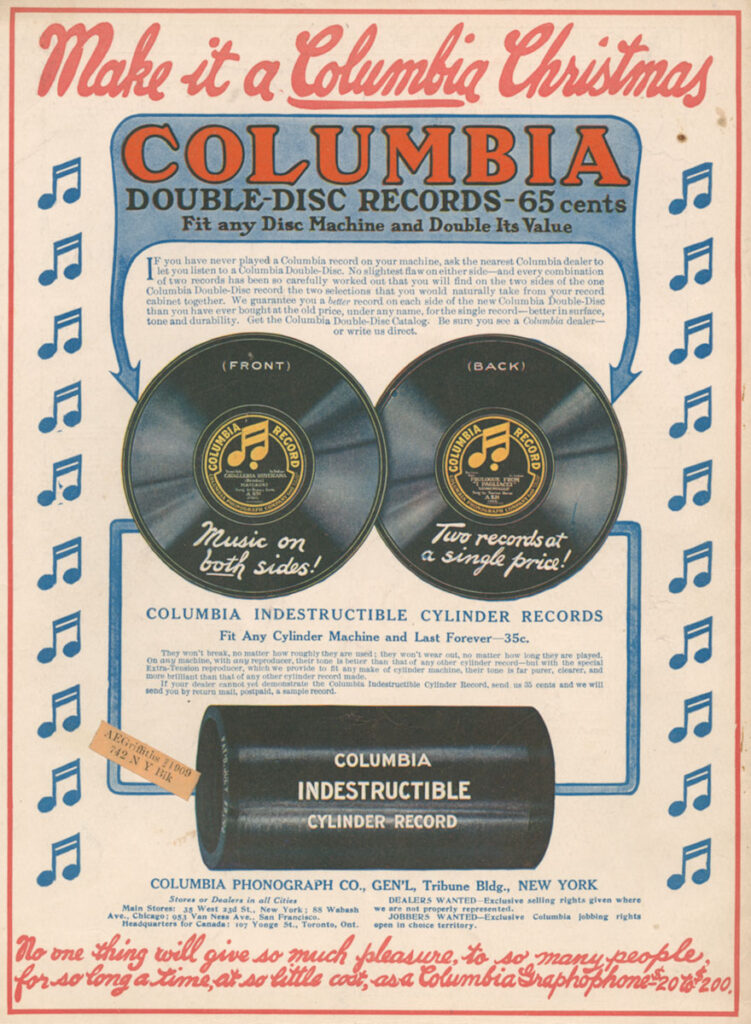
Columbia Double-Disc Records - 65 cents
The 78 RPM Era
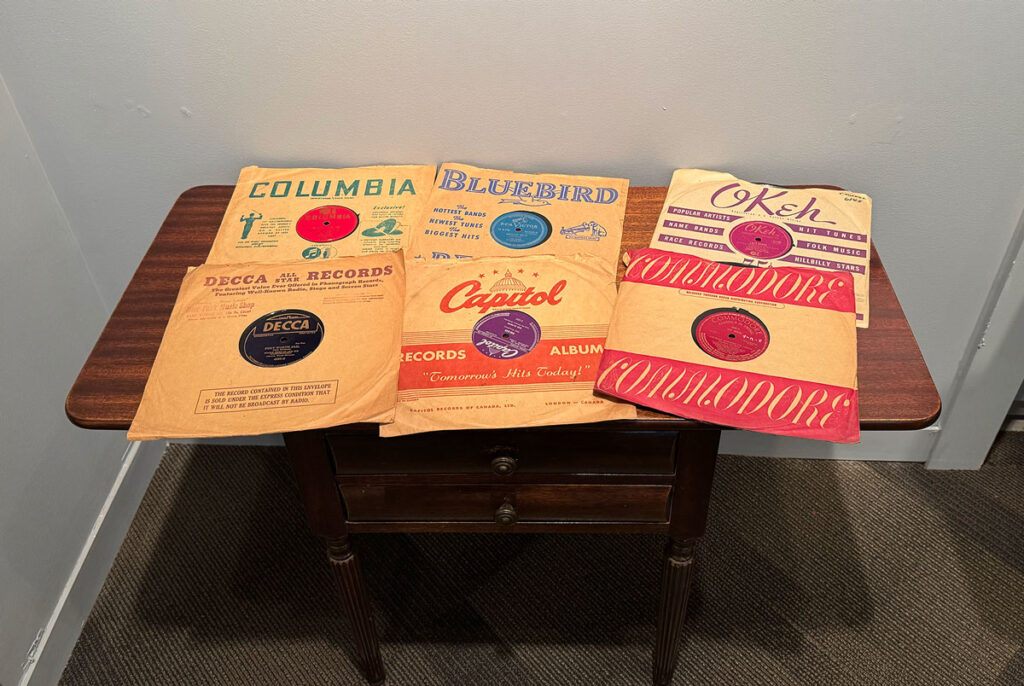
Close-up of some 78 discs
Ad for Sparton console
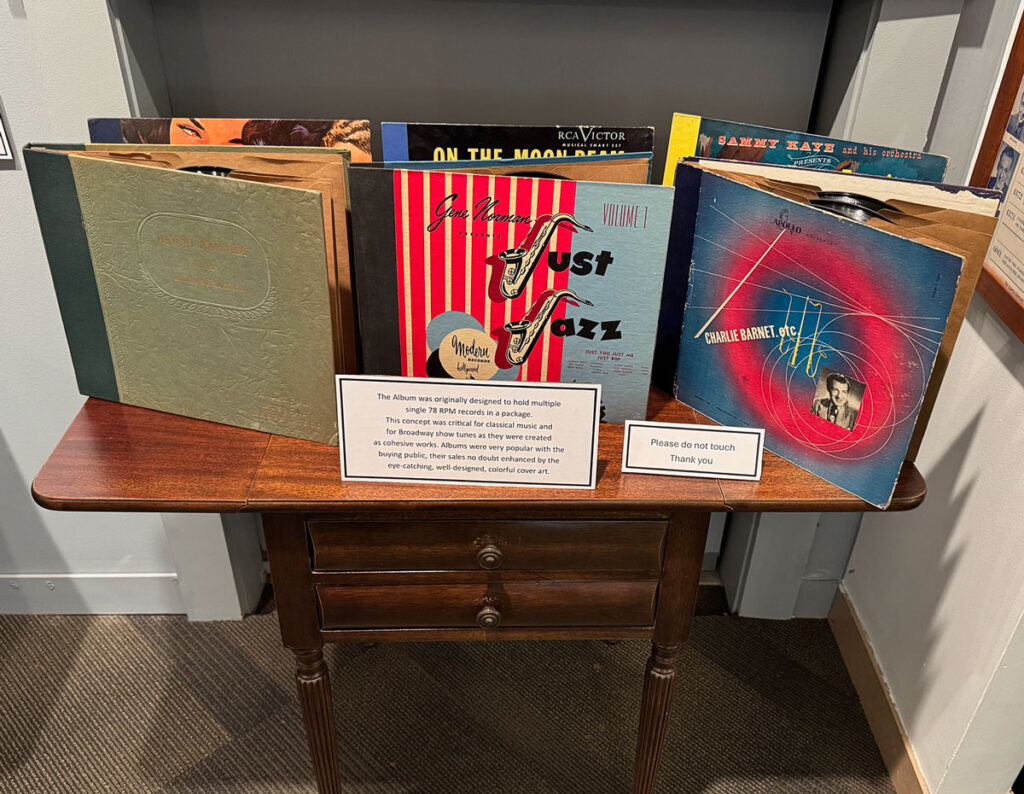
The Album was originally designed to hold multiple single 78 RPM records in a package. This concept was critical for classical music and for Broadway show tunes as they were created as cohesive works. Albums were very popular with the buying public, their sales no doubt enhanced by the eye-catching, well-designed and colorful cover art.
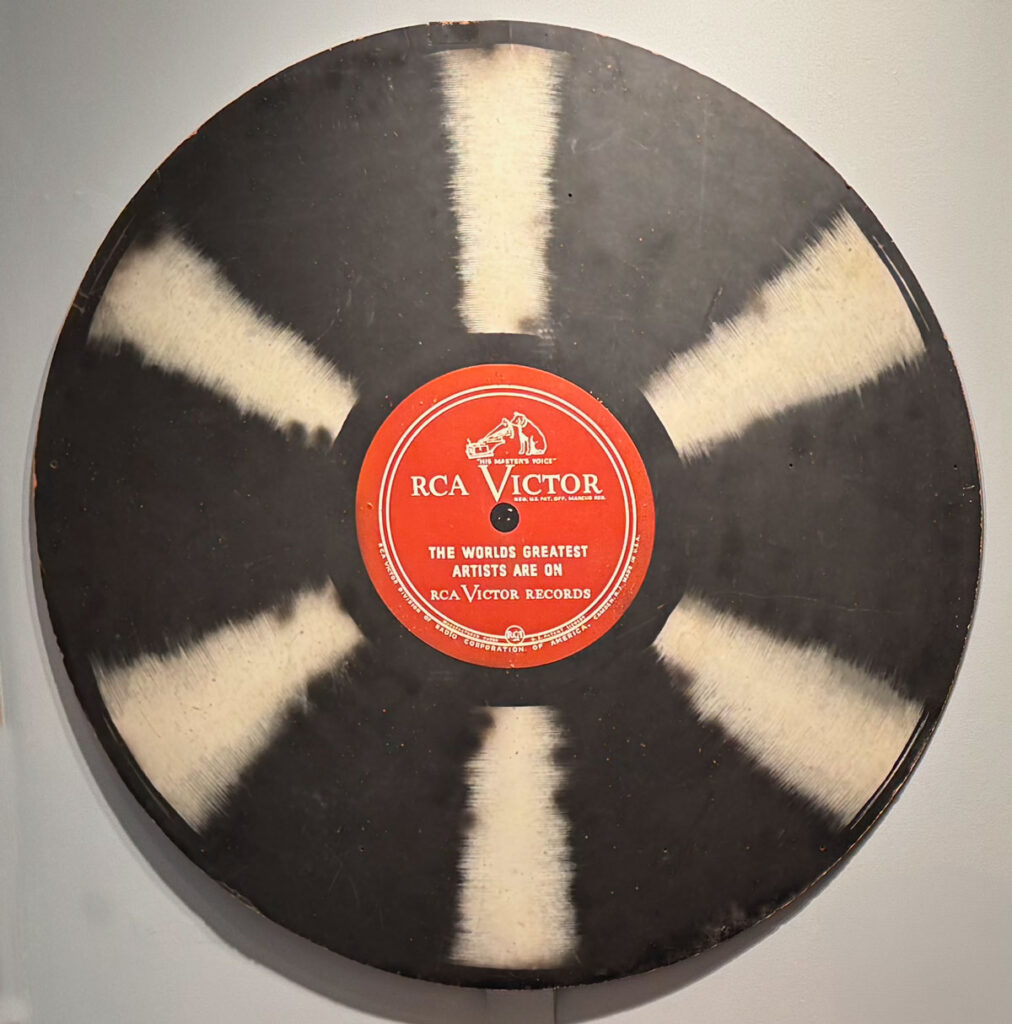
Oversized promotional 78 disc
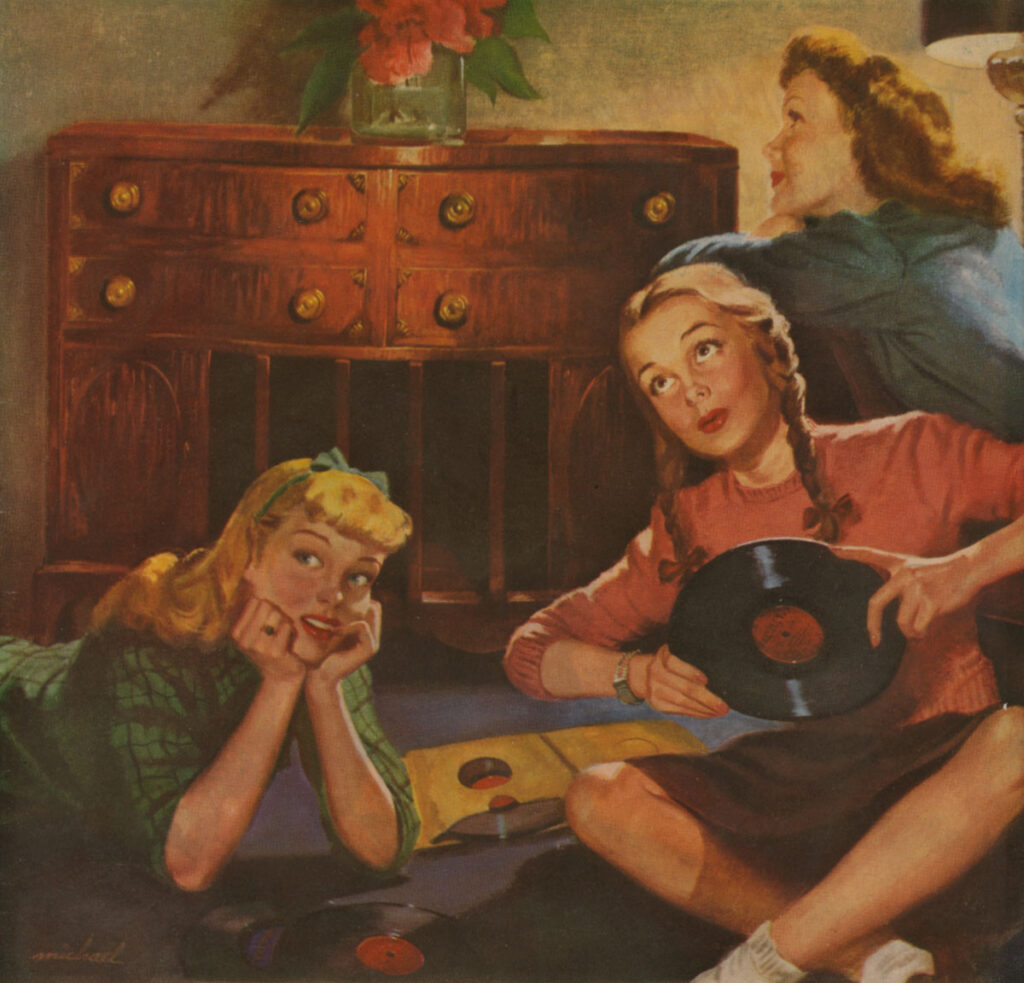
Slideshow: Consoles and the Women Who Loved Them
Point-and-Click: 1948 — A Pivotal Year
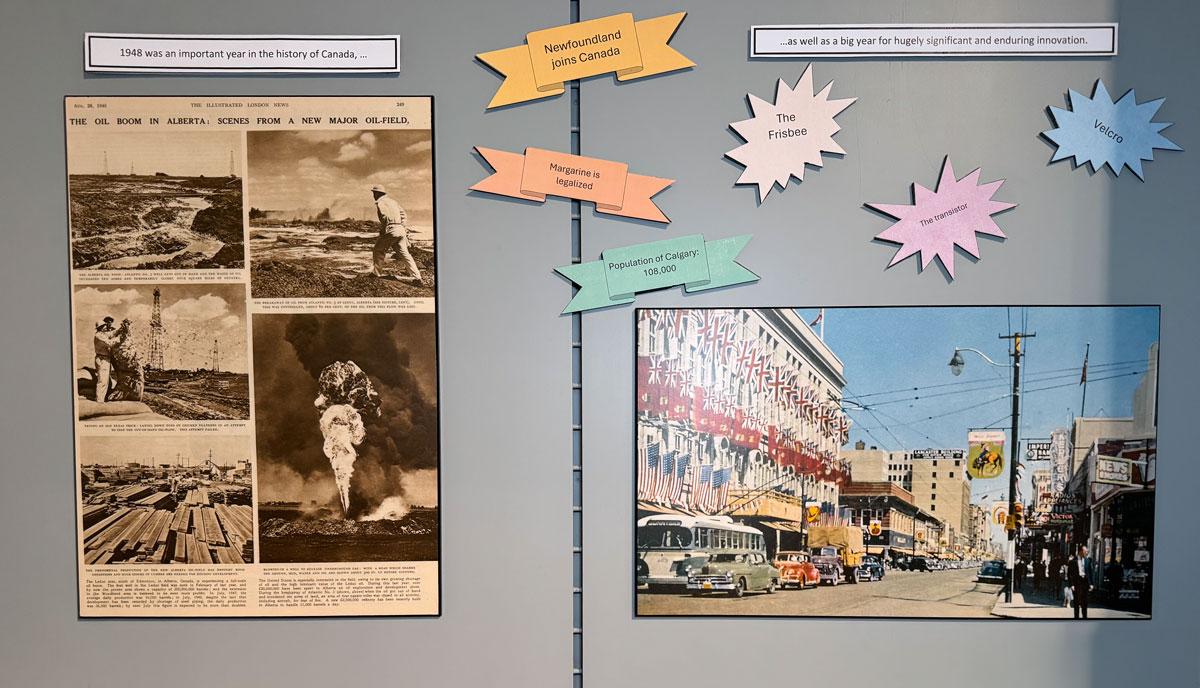
The Oil Boom in Alberta: Scenes from a new Major Oil-Field

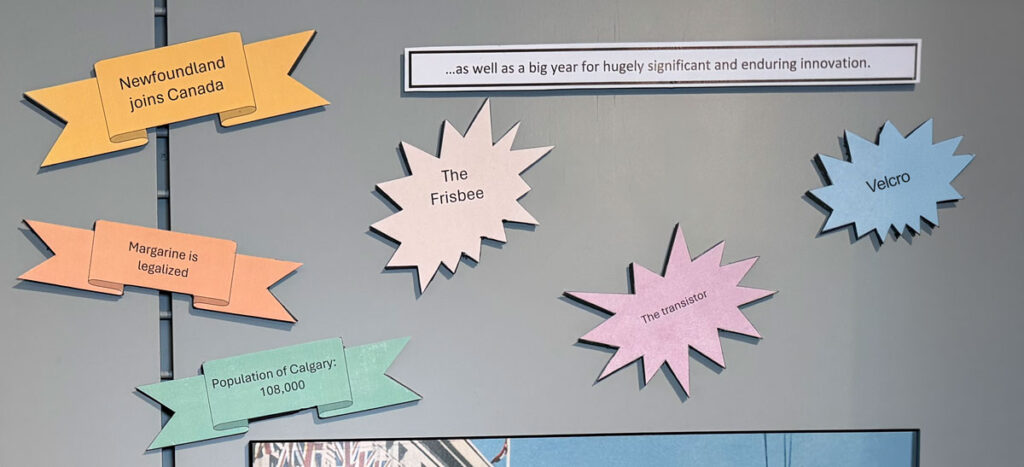
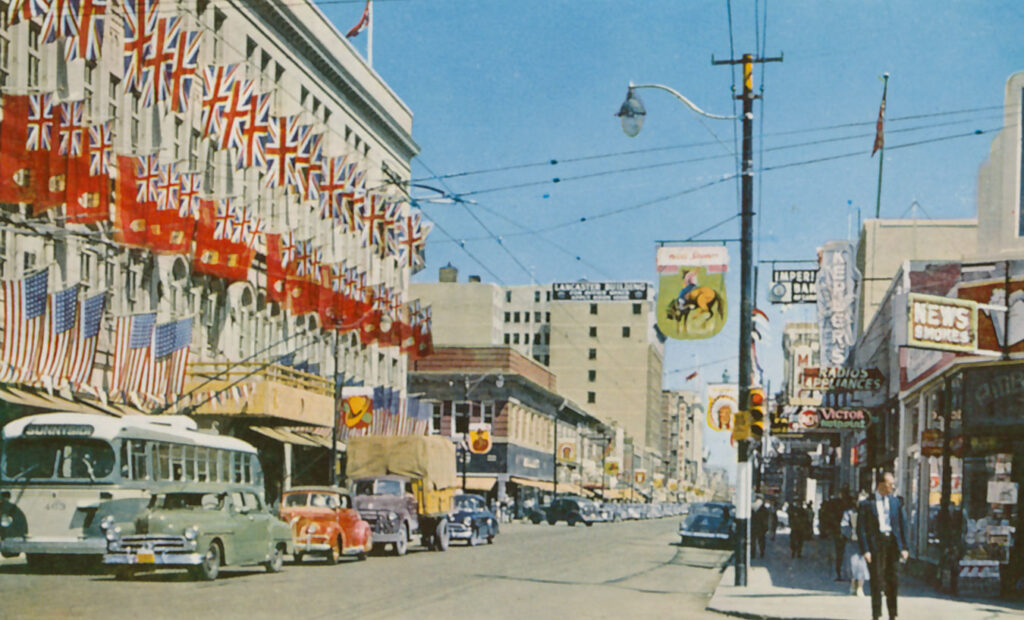
Downtown Calgary, 1948
1948: The Introduction of the Long Playing Record (LP)
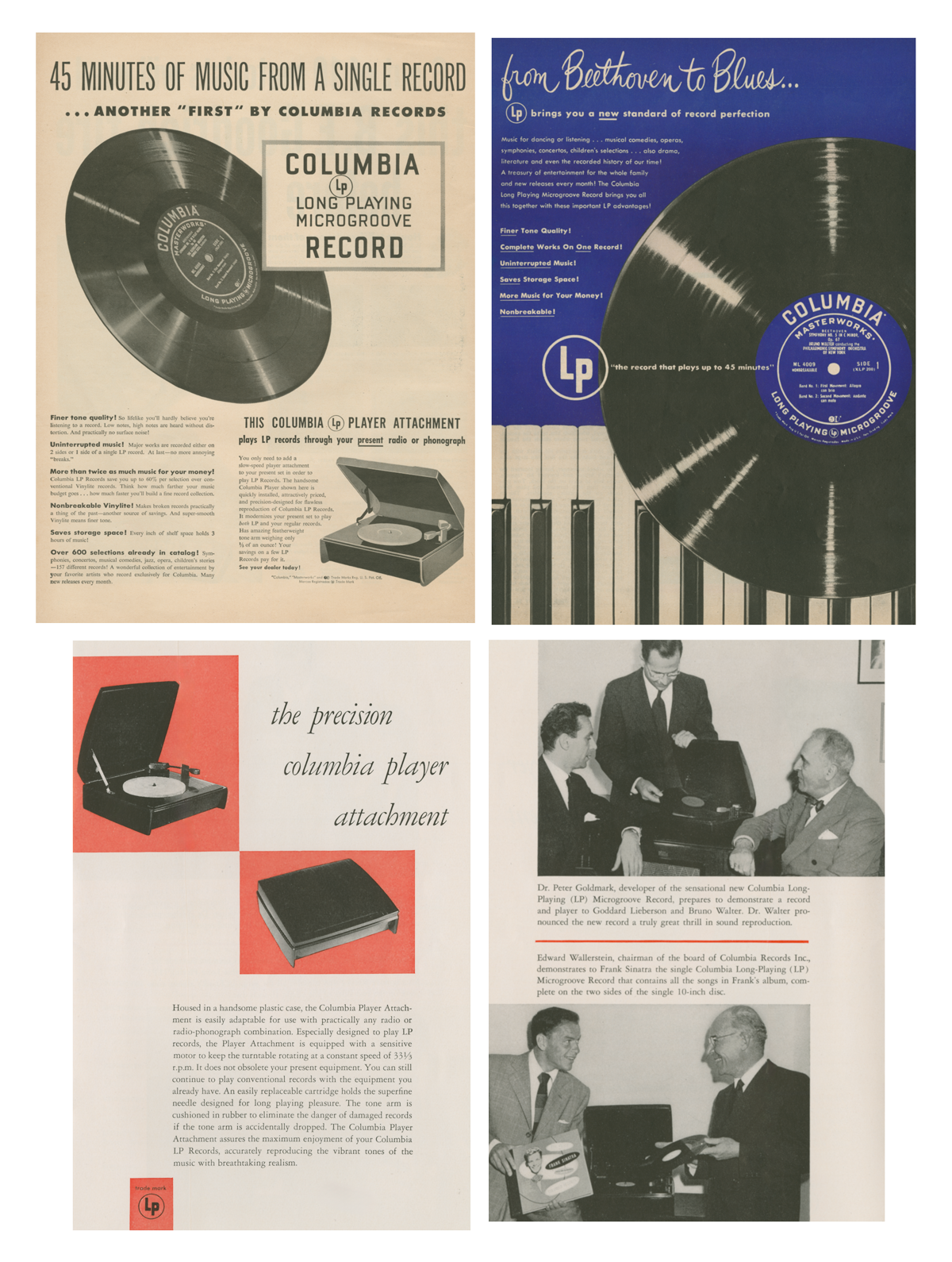
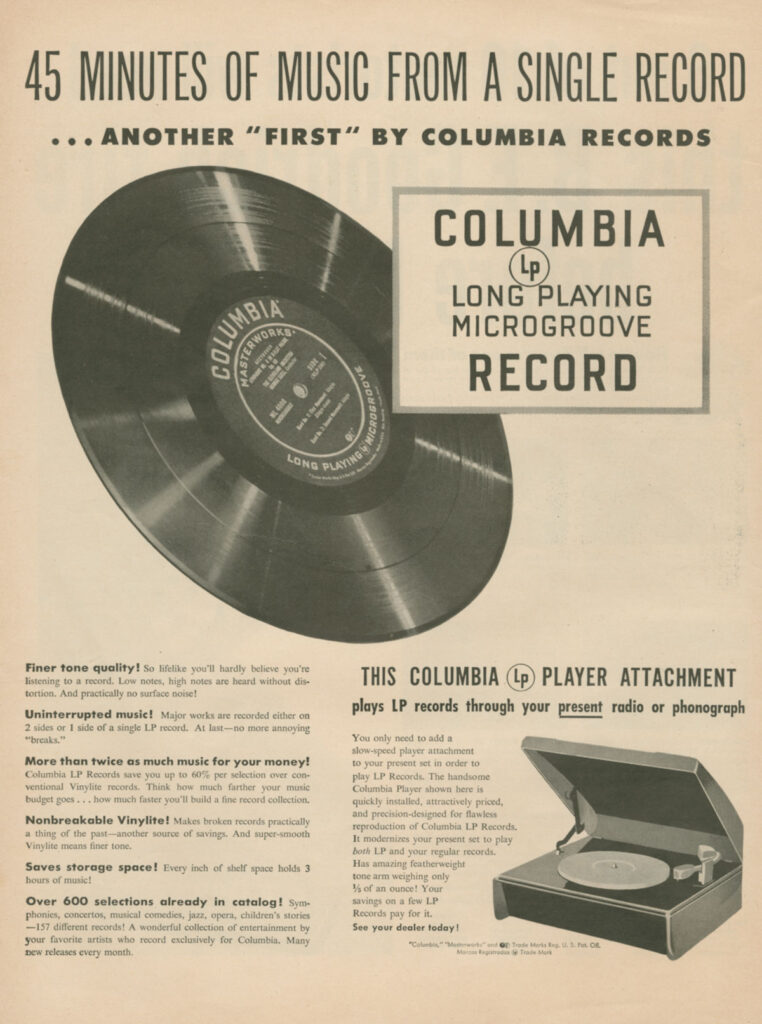
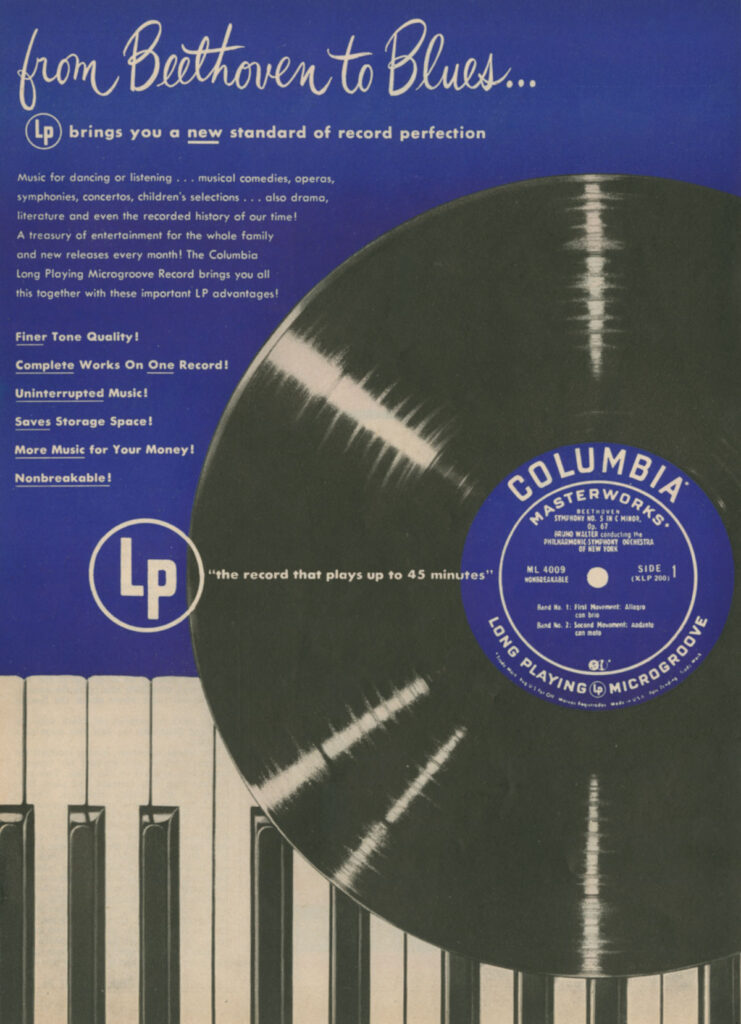
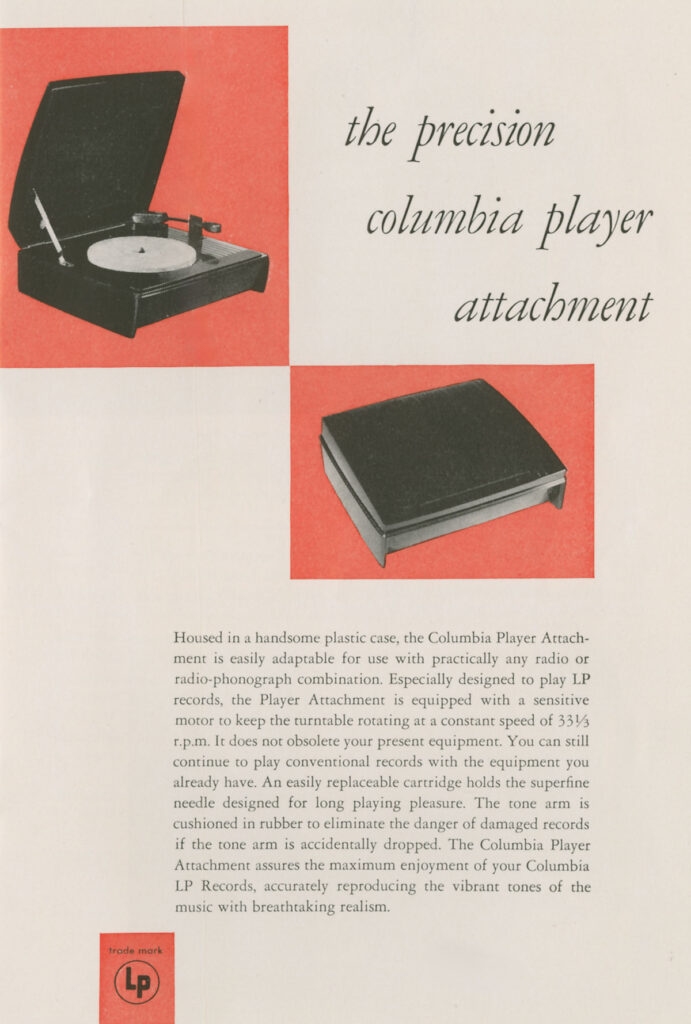
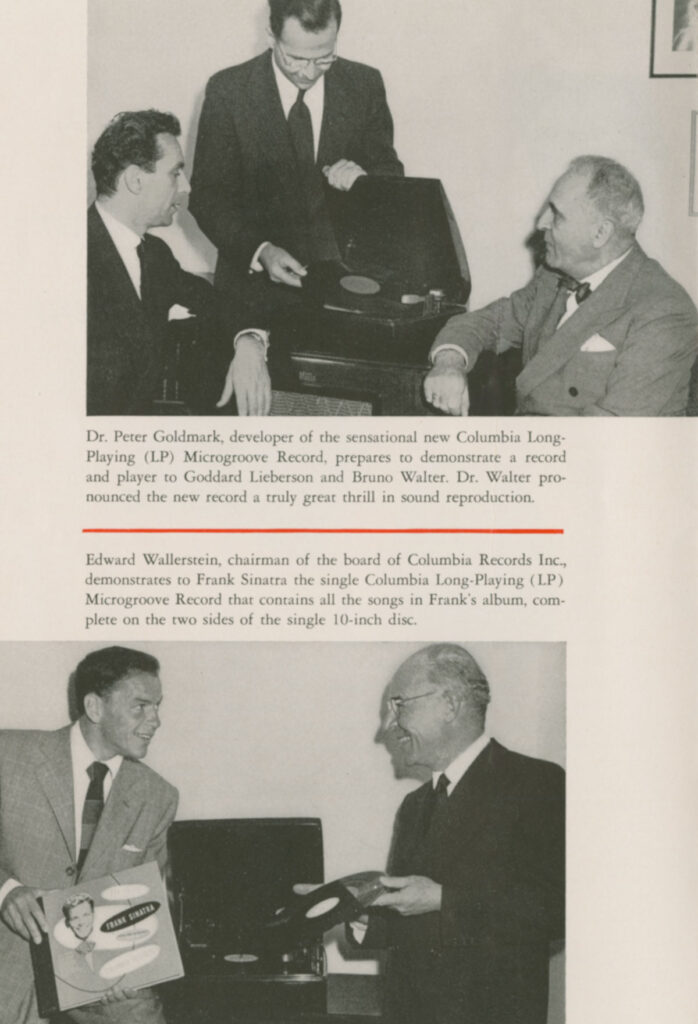
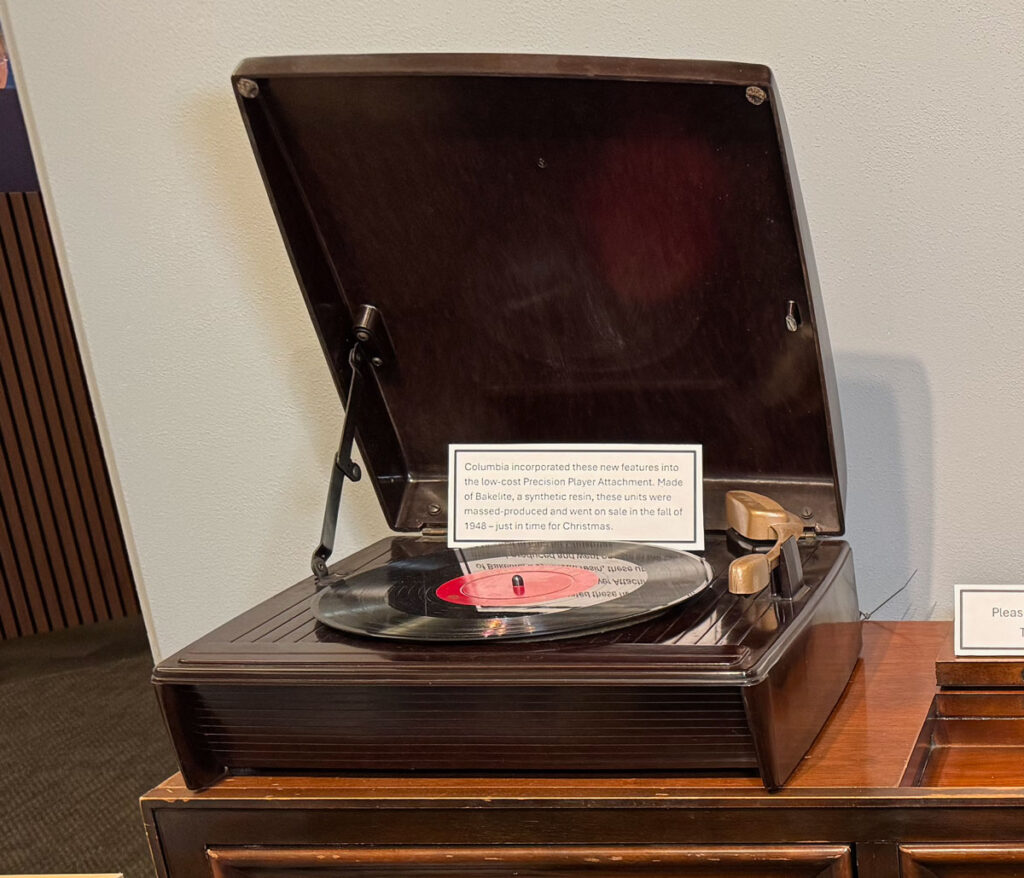
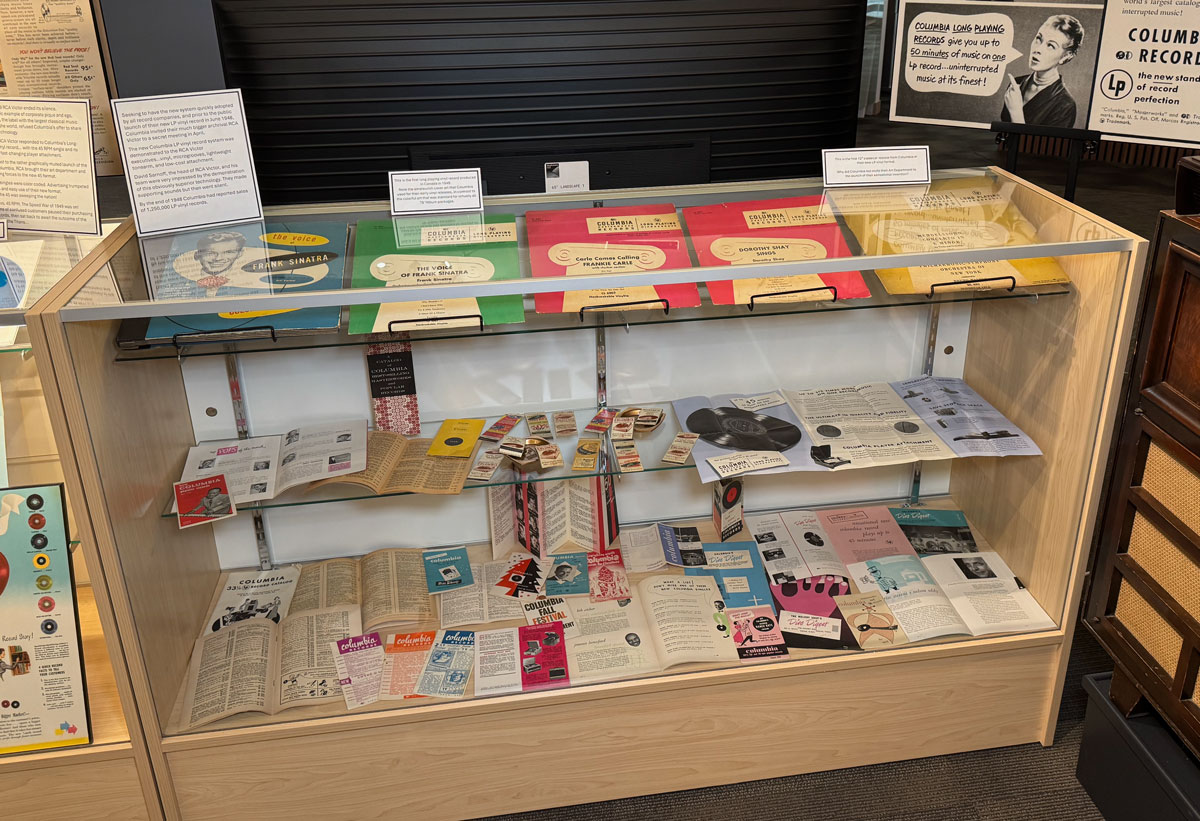
Columbia’s first 3-speed player, its response to the end of the format war. Columbia incorporated these new features into the low-cost Precision Player Attachment. Made of Bakelite, a synthetic resin, these units were massed-produced and went on sale in the fall of 1948 – just in time for Christmas.
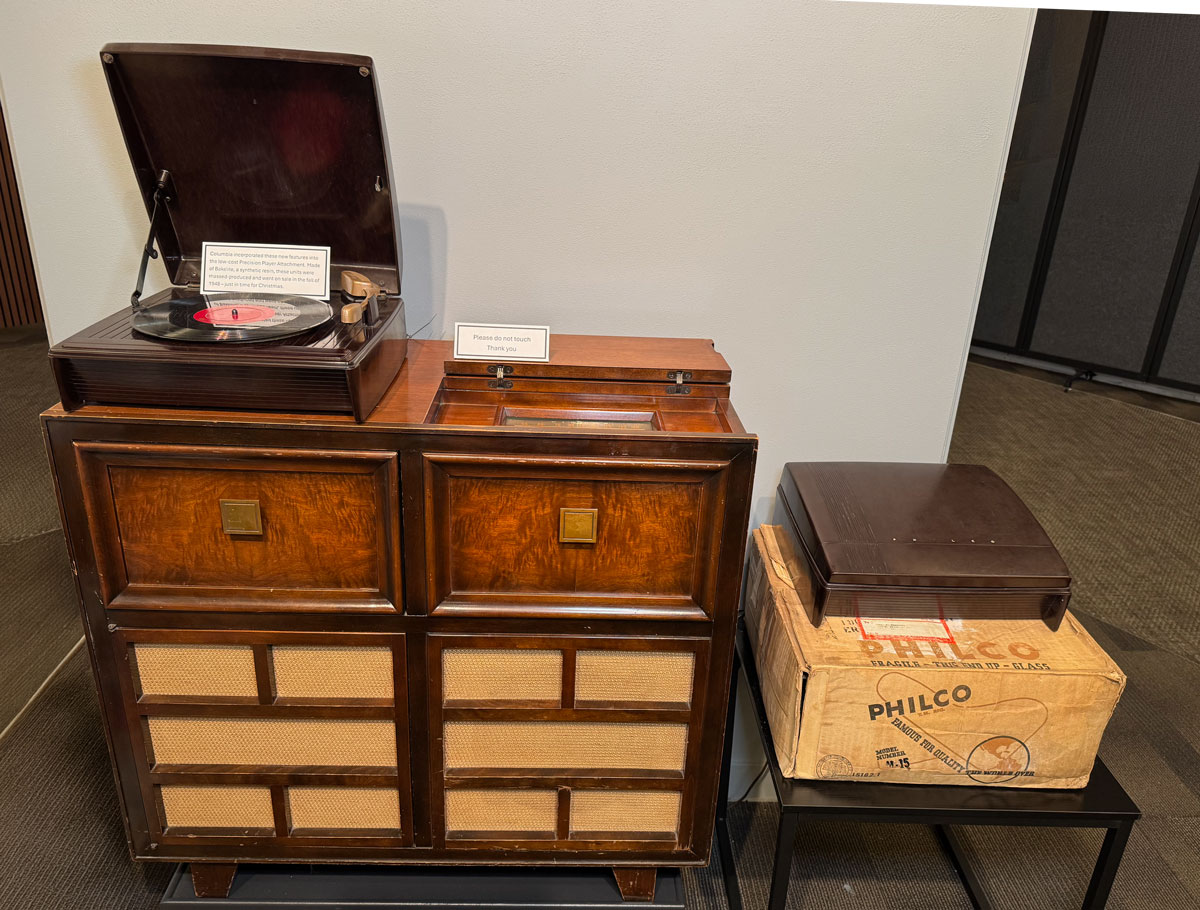
Close-up
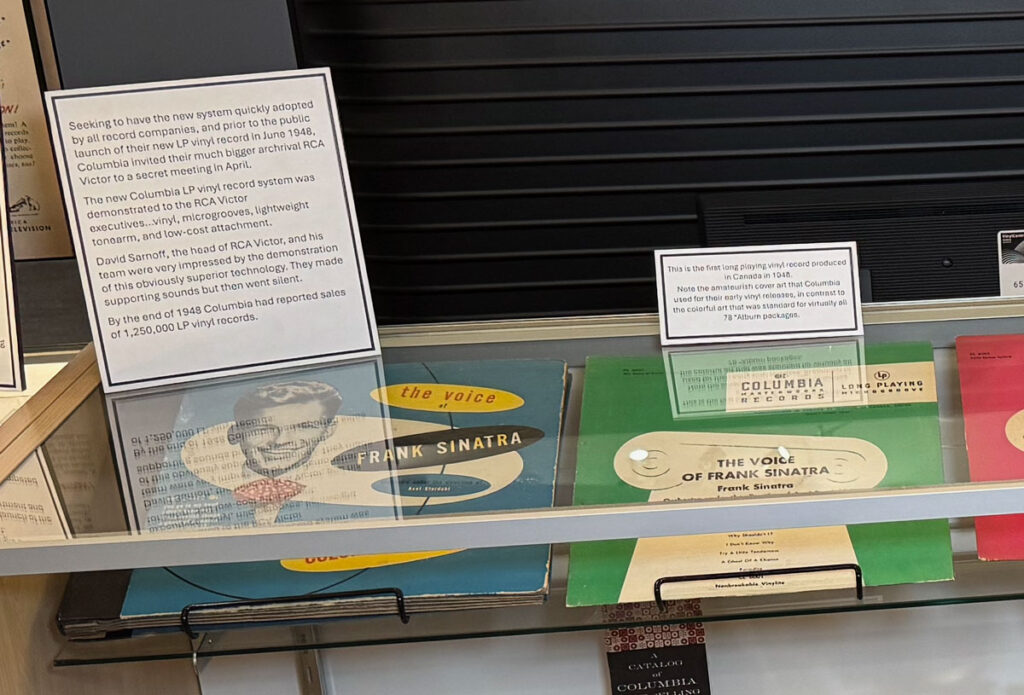
Seeking to have the new system quickly adopted by all record companies, and prior to the public launch of their new LP vinyl record in June 1948, Columbia invited their much bigger archrival RCA Victor to a secret meeting in April.
The new Columbia LP vinyl record system was demonstrated to the RCA Victor executives…vinyl, microgrooves, lightweight tonearm, and low-cost attachment.
David Sarnoff, the head of RCA Victor, and his team were very impressed by the demonstration of this obviously superior technology. They made supporting sounds but then went silent.
By the end of 1948 Columbia had reported sales of 1,250,000 LP vinyl records.
Close-up
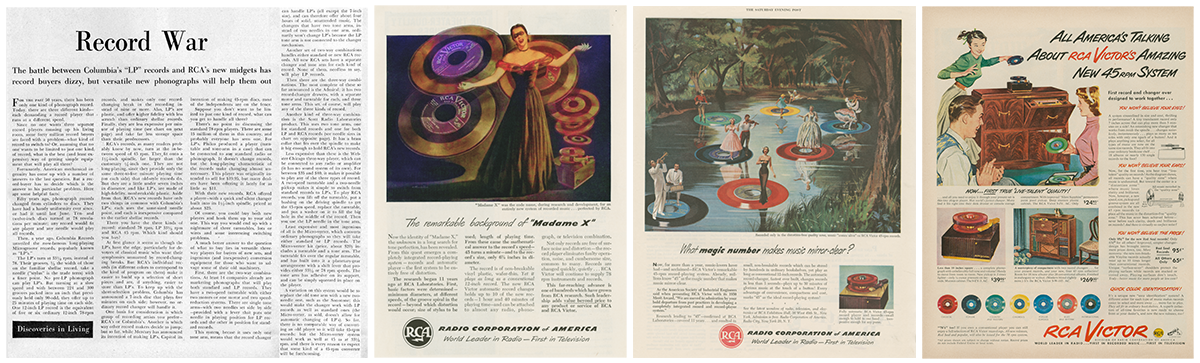
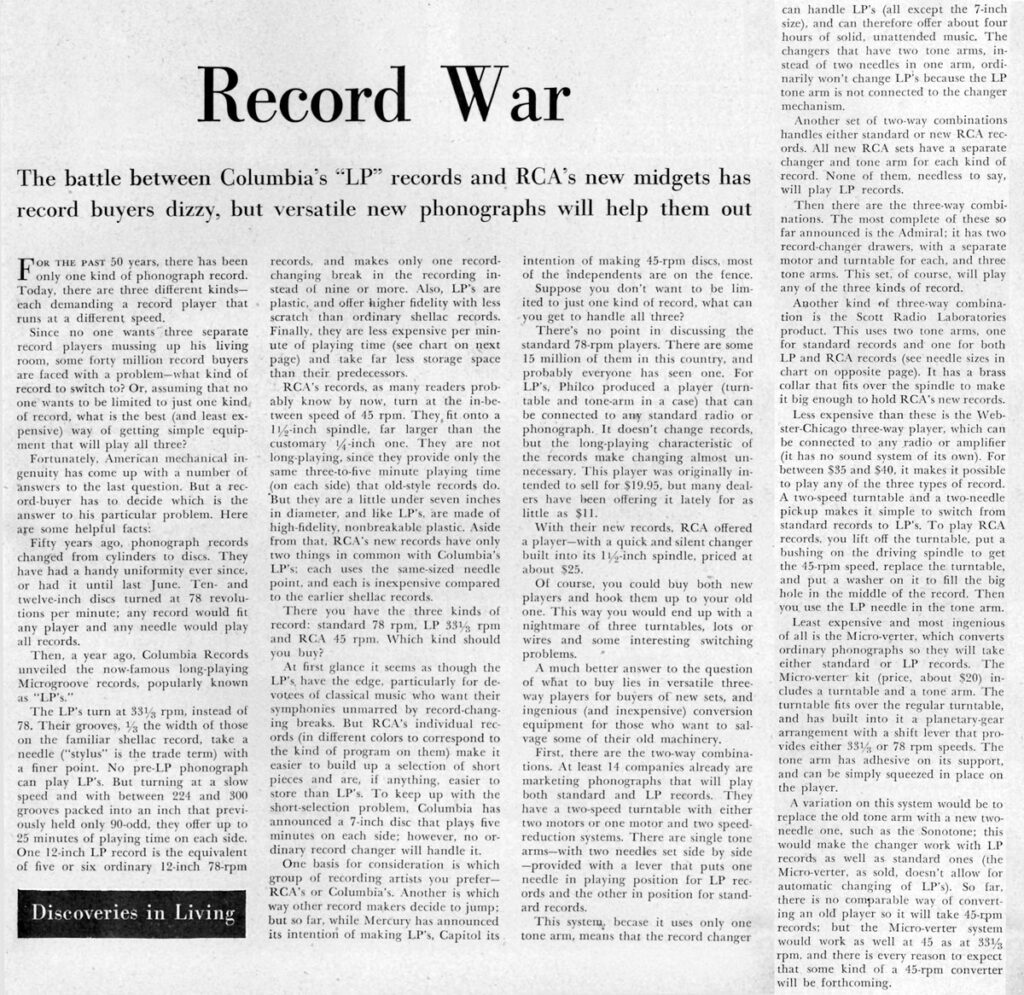
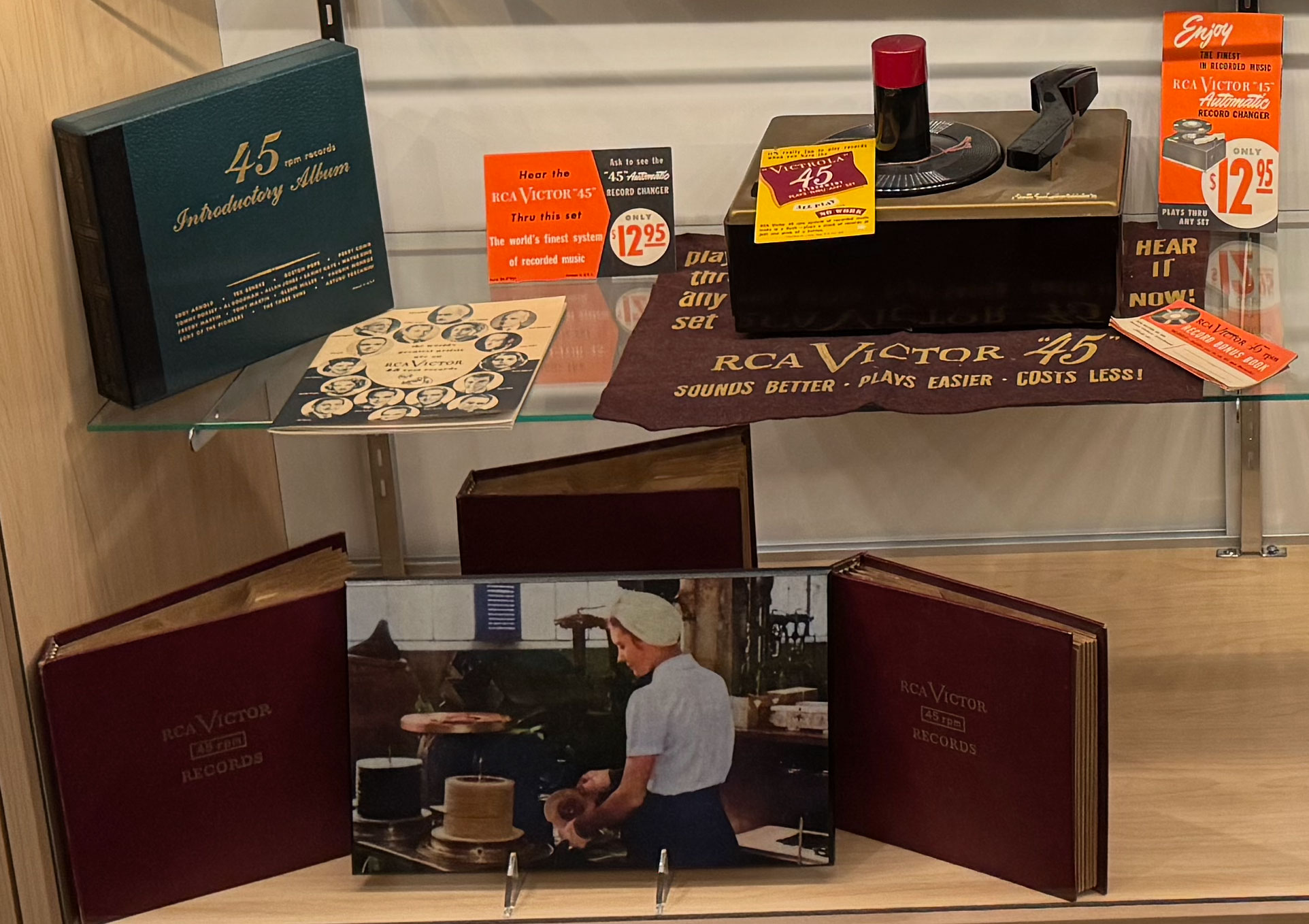
1949: RCA Victor Strikes Back at 45 Revolutions Per Minute (45 RPM)
In April 1949 RCA Victor ended its silence. In an historic example of corporate pique and ego, RCA Victor, the label with the largest classical music catalog in the world, refused Columbia’s offer to share the new technology.
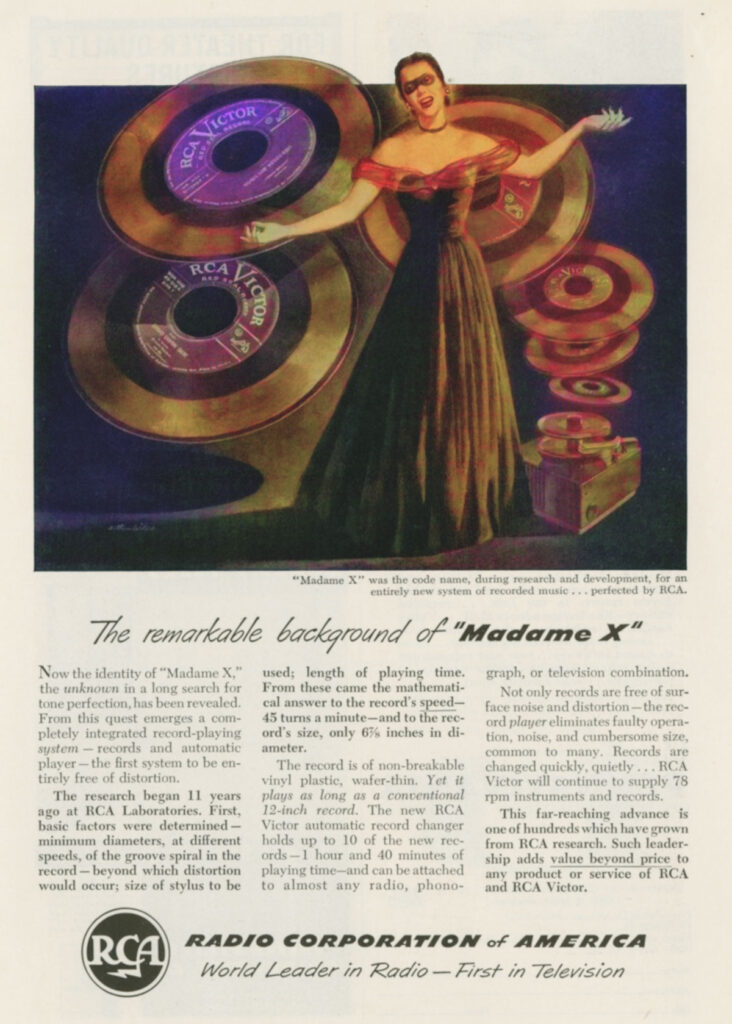
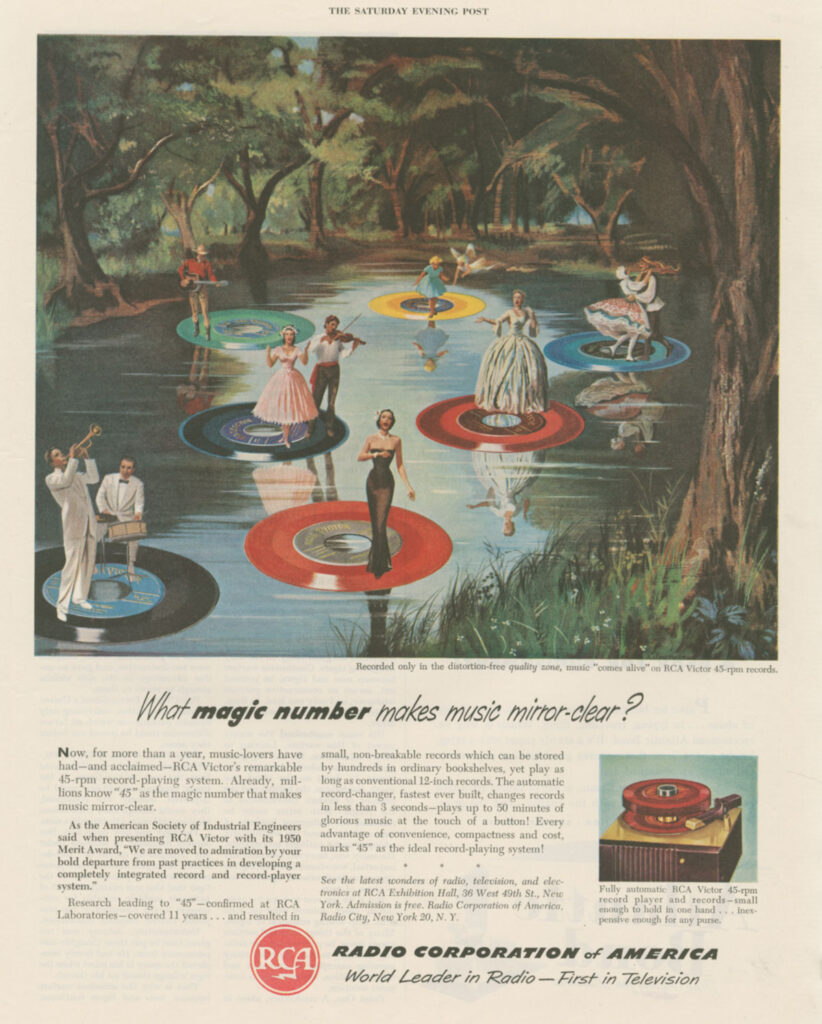
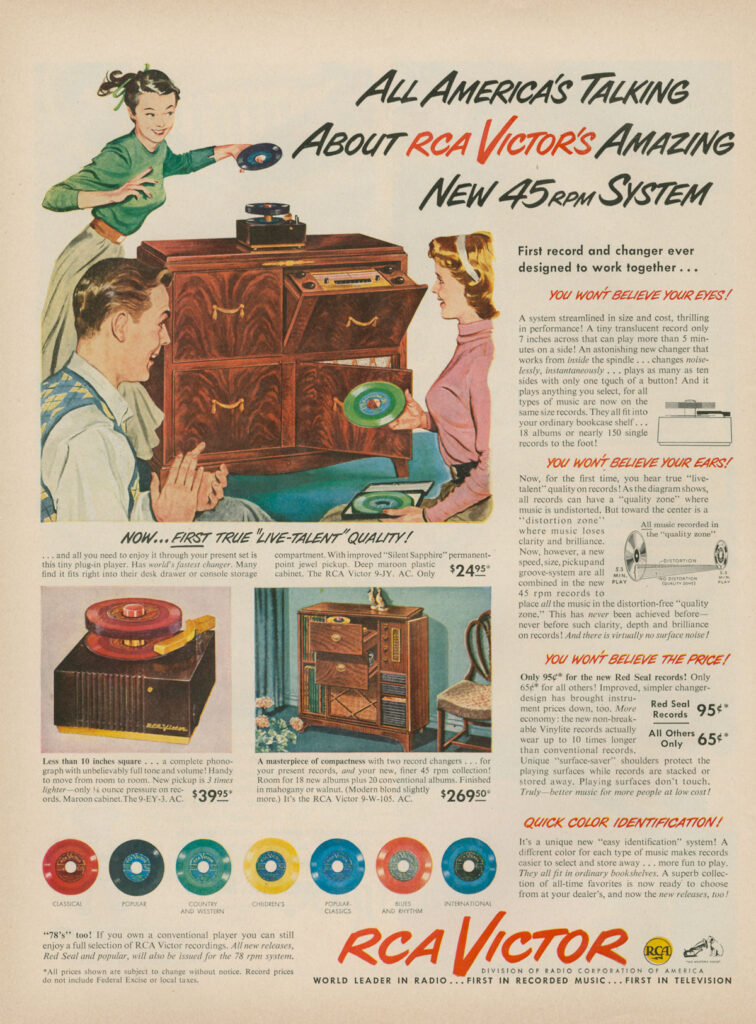
Instead, RCA Victor responded to Columbia’s Long-playing vinyl record… with the 45 RPM single and its
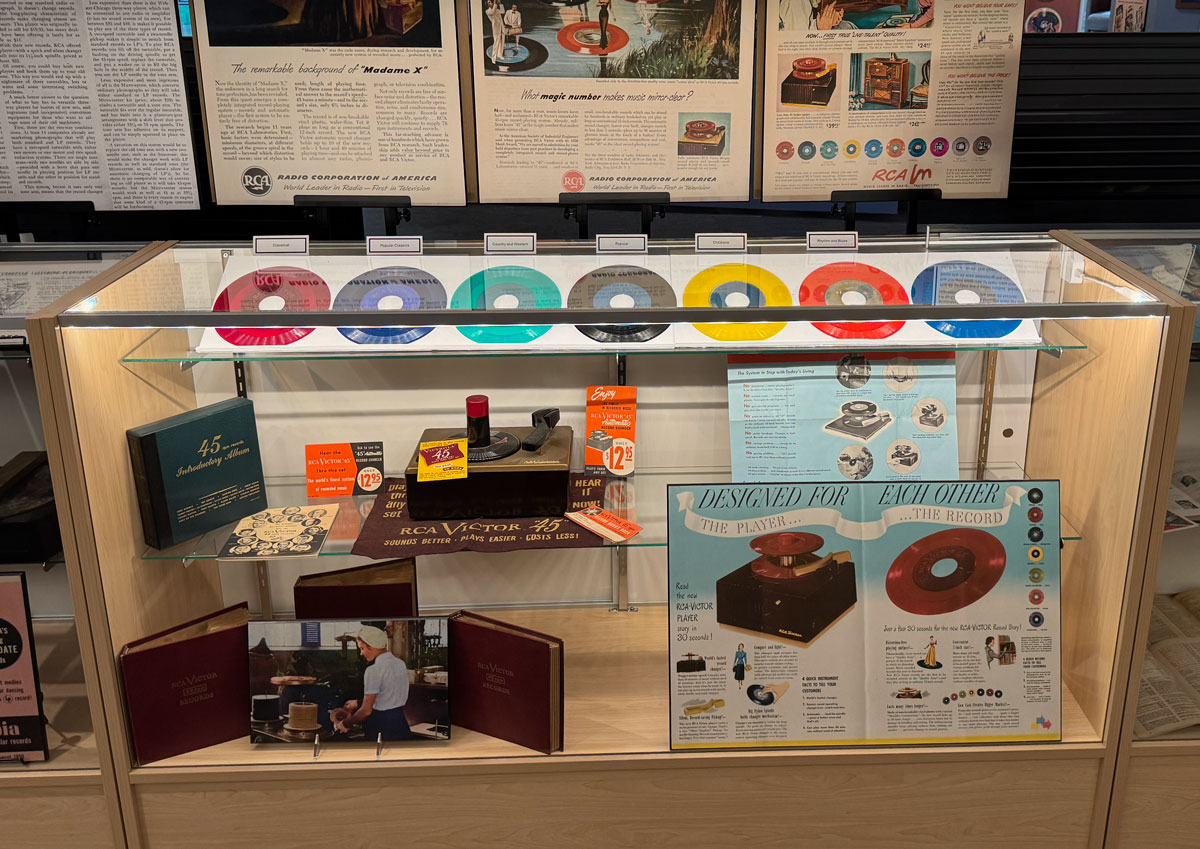
requisite fast-changing player attachment. In contrast to the rather graphically muted launch of the LP by Columbia, RCA brought their art department and marketing forces to the new 45 format.
The 45 singles were color coded. Advertising trumpeted the fun and easy use of their new format. Soon the 45 was sweeping the nation!
33 LP vs. 45 RPM: The Speed War of 1949 was on! Millions of confused customers paused their purchasing
of records, then sat back to await the outcome of the Clash of the Titans…
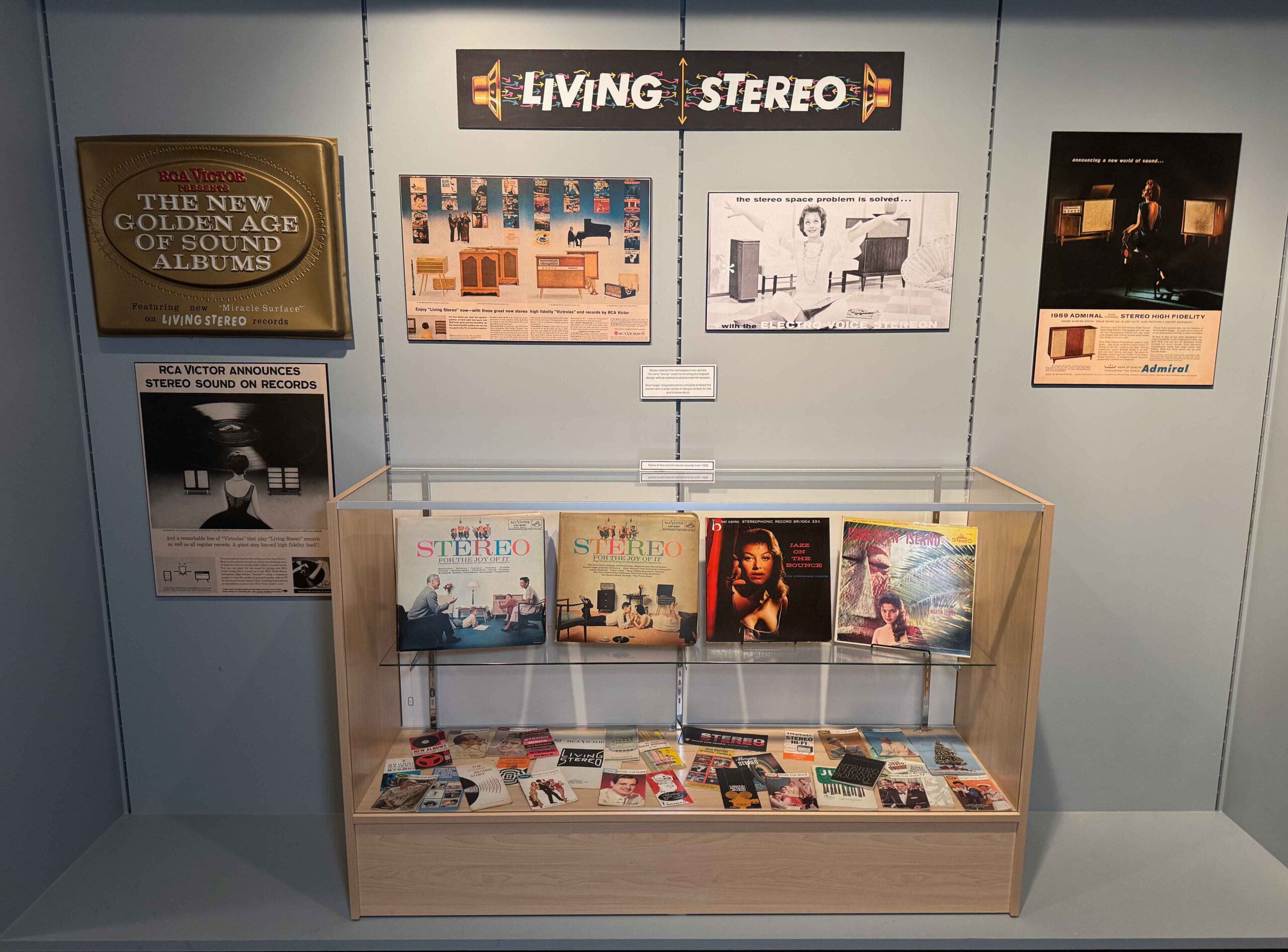
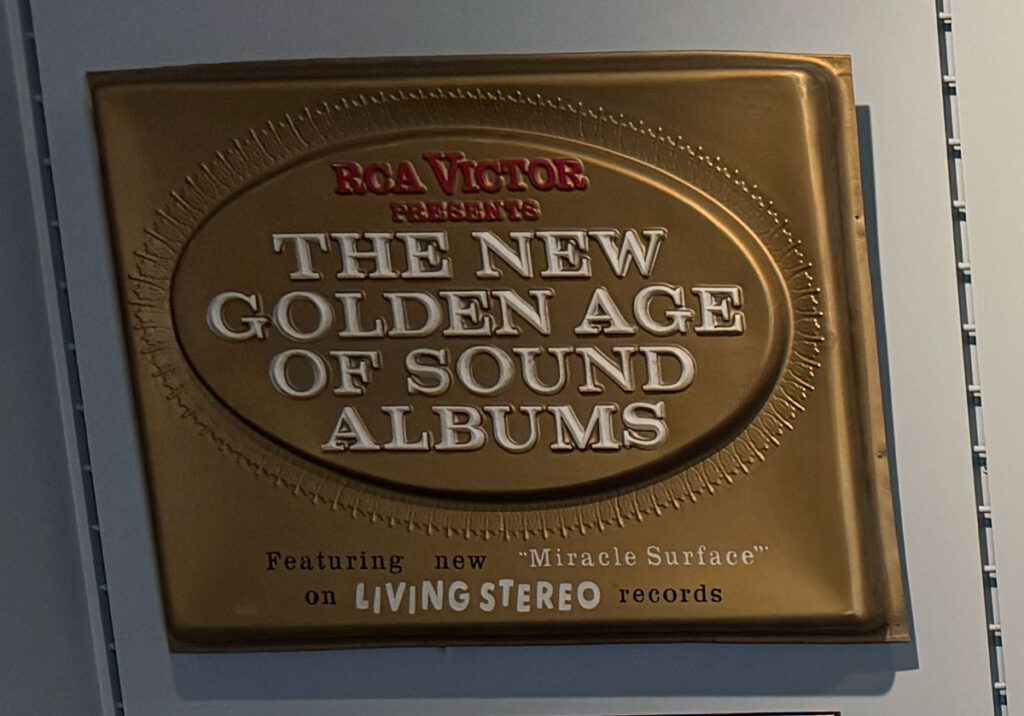
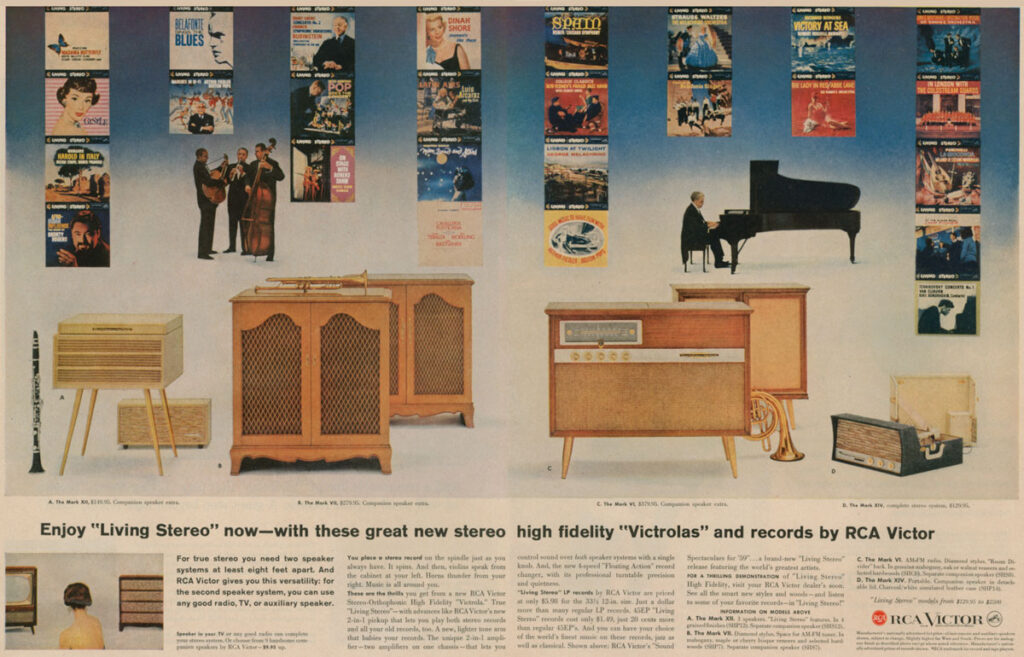
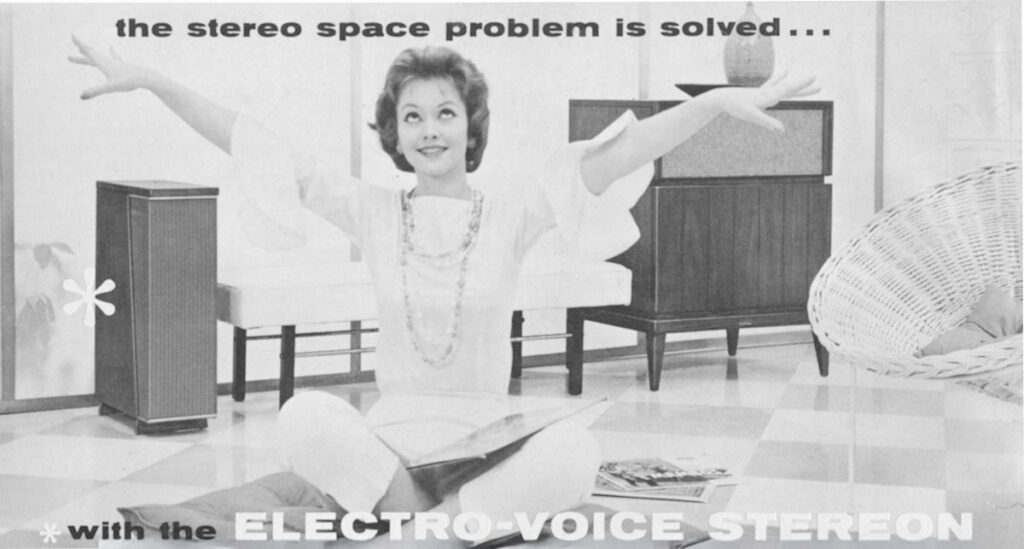
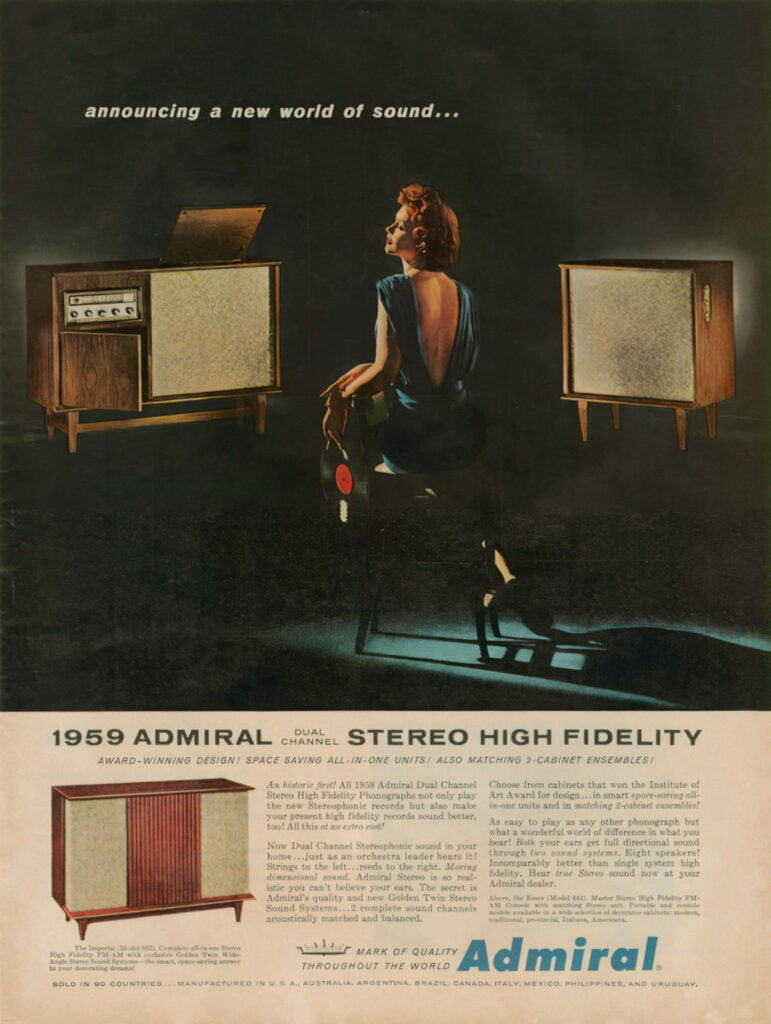
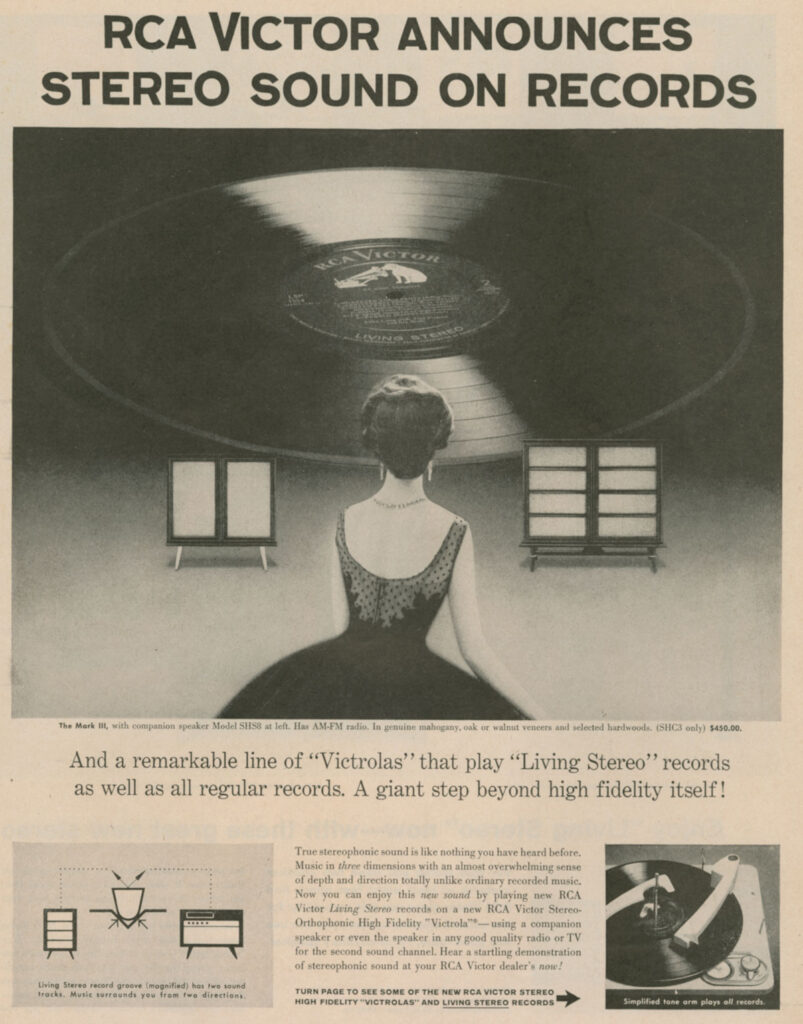
1958: The Arrival of Stereophonic Sound
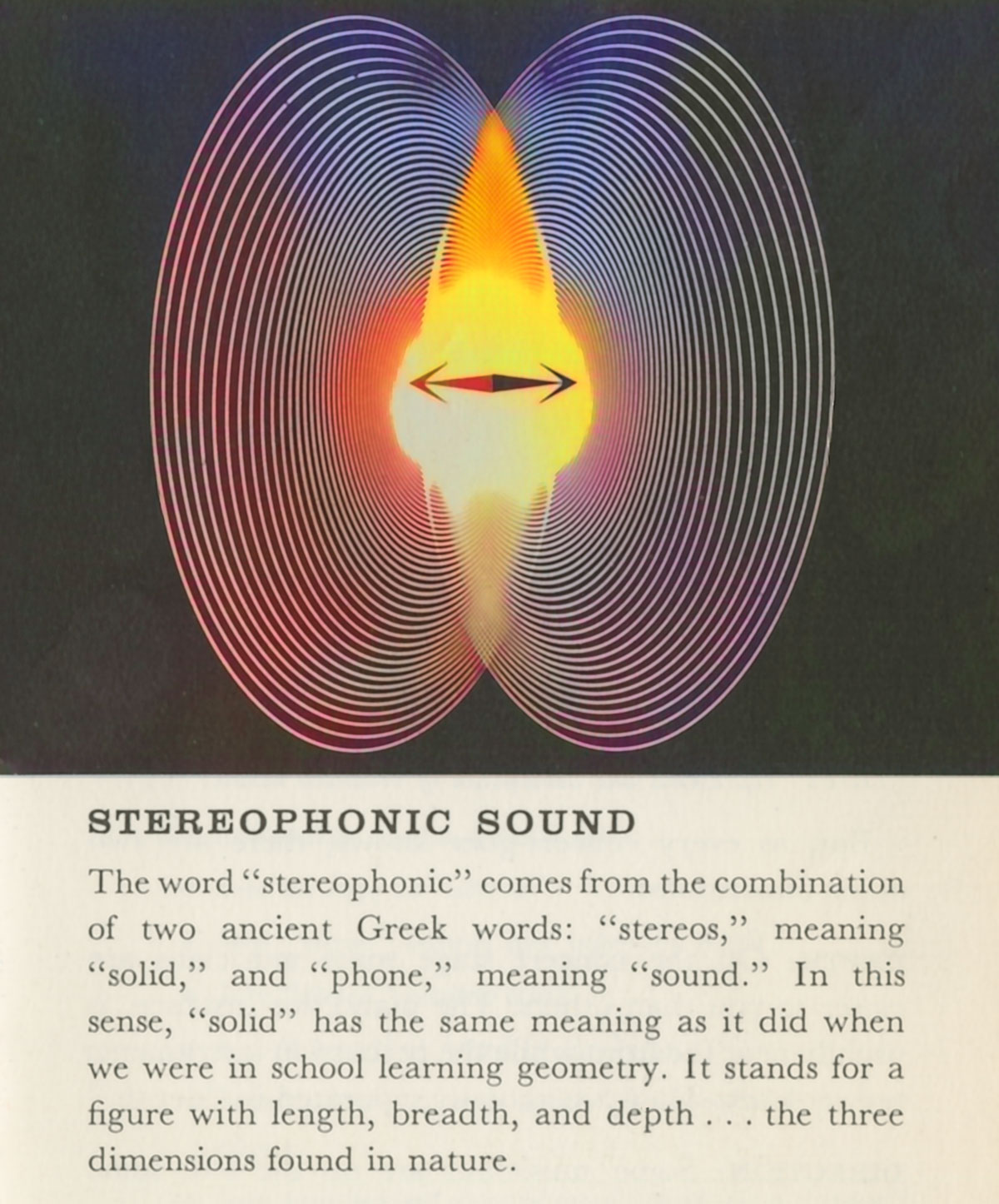
The next engineering challenge facing the recording industry was how to create a two discreet channel stereo system with only one microgroove. Engineering companies had been working on a viable solution for years.
At the meeting of the Audio Engineering Society in NYC in October 1957, Westrex demonstrated its 45/45 system, while in London, Decca demonstrated its own new stereo system. Columbia, the original inventor of the Vinyl LP record, had yet another preferred stereo solution.
Seeking to avoid another War of the Speeds, the major record companies got together and quietly selected the Westrex system, but all agreed more development was needed.
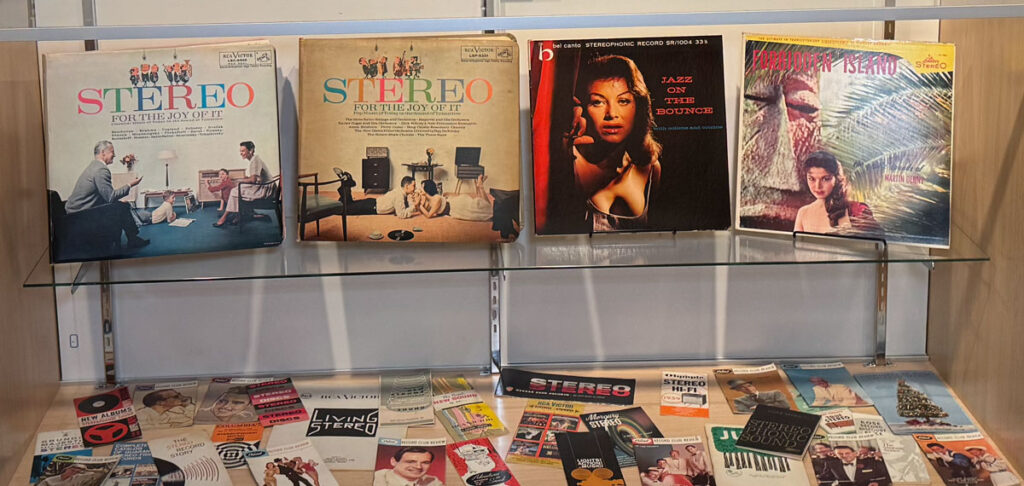
Close-up
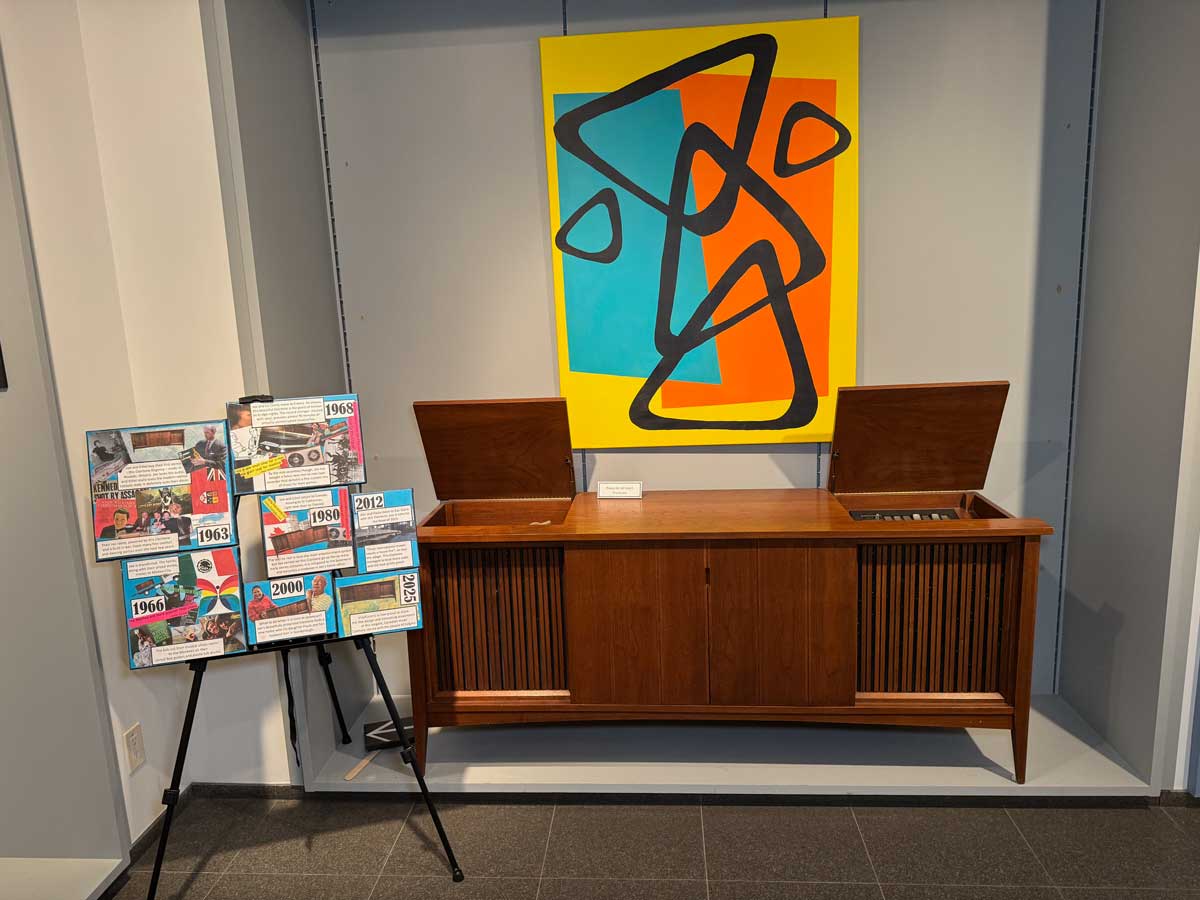
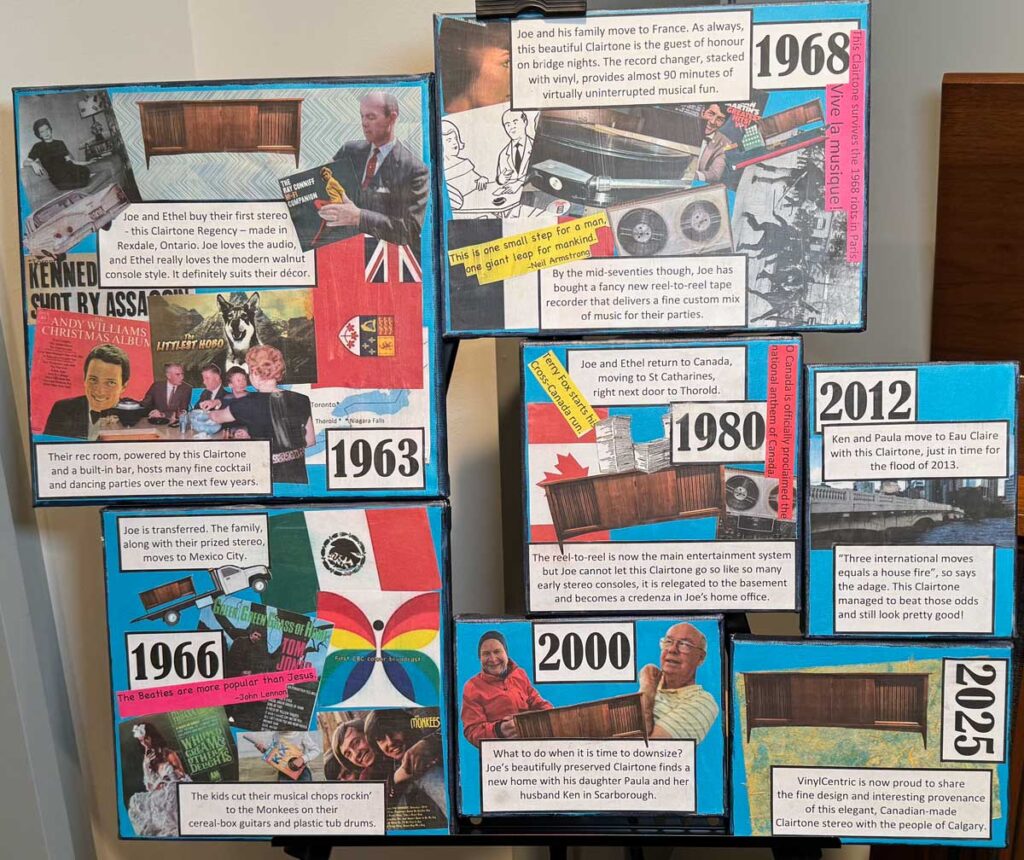
Special Feature: The Travels of One Clairtone Regency Console